
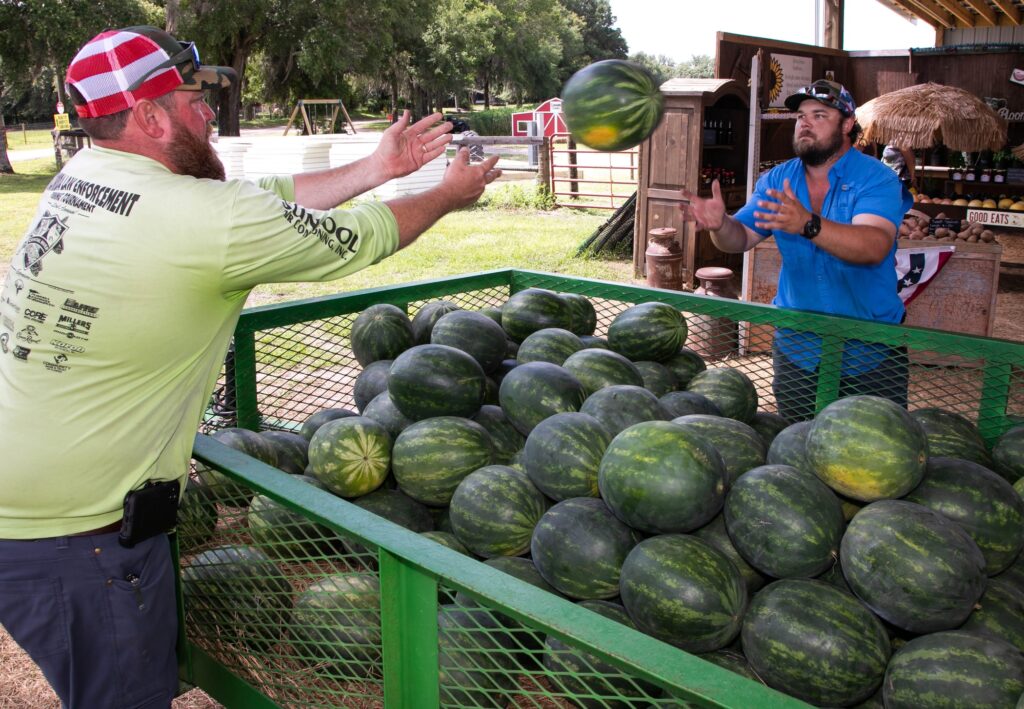
Farmers across southern Mississippi are grappling with major setbacks to their watermelon crops following weeks of relentless heavy rain and widespread flooding. The timing could hardly be worse, as the deluge struck right before the Fourth of July holiday—one of the busiest periods for fresh melon sales.
Watermelons require consistent moisture during growth, but excessive water poses serious problems. Saturated soils prevent timely harvesting, while the fruit itself can take on too much water, leading to splitting, increased susceptibility to disease, and eventual rot in the fields.
Many operations have watched months of careful planning and labor literally wash away.
“It’s been a rough one for sure,” noted Joshua Eubanks, assistant farm manager at Charlie’s U-Pik in Lucedale, reflecting the frustration shared by many in the region.
For countless families, slicing into a juicy watermelon is a cherished summer ritual, especially around Independence Day celebrations. George County MSU Extension agent Heath Steede highlighted this cultural significance: “It’s just kind of tradition during the summer. Everybody wants a watermelon on the 4th of July.”
This year, however, supply shortages threaten to disrupt that tradition for both local consumers and broader markets.
The heavy precipitation has affected fields throughout George and Stone counties, with some locations receiving over 20 inches of rain in a short period. Allen Eubanks, farm manager at Charlie’s U-Pik, described the toll: areas in Wiggins saw more than 20 inches, while most fields endured at least 15 inches—far more than the crops could handle.
Charlie’s U-Pik is a major player in the industry, typically cultivating around 800 acres of watermelons. The farm distributes produce across the Southeast and maintains strong local sales. This season, however, they anticipate harvesting only about 40% of their usual yield. In one 40-acre field that should have produced around 40 loads, workers managed just nine or ten.
The financial repercussions for these operations are substantial. Growers invest heavily in seeds, labor, equipment, and other inputs with the hope of a successful season. Extension agent Steede explained that such weather events can be devastating: “They’re putting all this money into the ground… and then something like this happens and it can be catastrophic for them.”
Despite the challenges, many in the agricultural community draw on a deep well of perseverance. Farming has always demanded optimism and faith in better seasons ahead. The Eubanks family at Charlie’s U-Pik expressed gratitude for customer support and affirmed their commitment to returning stronger next year.
Interestingly, not all aspects of the farm suffered. Charlie’s U-Pik has recently diversified into grain-finished beef production, and the abundant rainfall has actually boosted grass growth in their pastures, providing a silver lining for their cattle operations.
As the region assesses the damage, this situation underscores the vulnerabilities of agriculture to extreme weather patterns. South Mississippi’s watermelon farmers are a vital part of the local economy and food traditions.
While this season brings hardship, their determination to continue highlights the enduring spirit of family farms in the face of nature’s unpredictability. Consumers may see higher prices or limited availability this Independence Day, but support for these growers now can help ensure the tradition continues in years to come.