
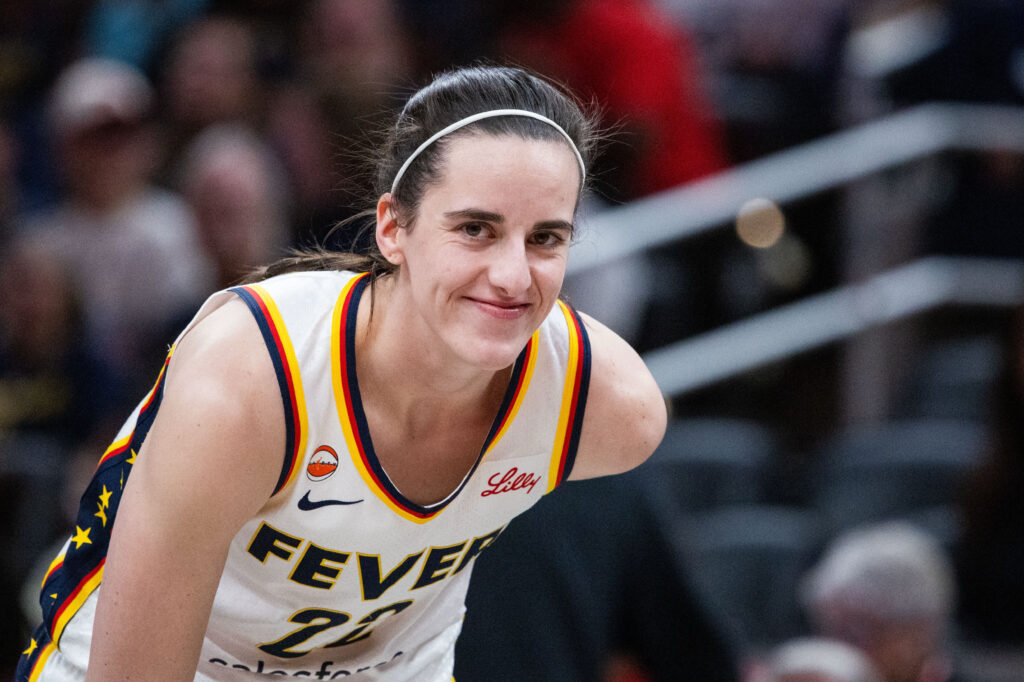
Few athletes in recent memory have drawn the volume of media attention that Indiana Fever guard Caitlin Clark has faced since entering the professional ranks.
The No. 1 overall selection in the 2024 WNBA Draft has become the league’s biggest draw, yet she has repeatedly found herself addressing topics beyond her own performance on the court.
Questions about how other players are treated and the consistency of officiating in her games have become regular parts of her interactions with reporters.
During All-Star Weekend, Clark made clear she has grown tired of certain coverage and delivered a direct message to those who write about her. She told members of the media and others following the league that any reporting on her should stop short of questioning her personal character.
Clark expressed frustration with opinion columns and pieces that appear to claim insight into her private thoughts and motivations.
“I think there’s just like a false characterization of who I am sometimes,” Clark said. “And I get it, like as a reporter or as a blogger, you can write an opinion piece and that’s your job and whatever, but at the same time, you don’t know me. We’ve never had a conversation.”
The Fever star continued by acknowledging the demands of the profession while drawing a firm line.
“I get people have a job to do, but at the same time, like don’t make accusations about my characters and who I am when you don’t know me.”
"I get people have a job to do, but at the same time, don't make accusations about my character and who I am when you don't know me."
— SportsCenter (@SportsCenter) July 24, 2026
Caitlin Clark sits down with @malika_andrews for a candid conversation. pic.twitter.com/IA0jLReHOd
Clark’s decision to push back publicly reflects a growing awareness that silence does not always quiet the conversation surrounding high-profile athletes.
Stars across major sports leagues routinely encounter intense scrutiny once they reach the international stage, and Clark is navigating that reality earlier than most. Some competitors choose to avoid engaging with outside noise entirely, hoping it fades over time.
In Clark’s situation, the volume of discussion has reached a level that makes avoidance nearly impossible. By speaking up, she is asserting her own perspective into a narrative that has often been shaped by others.
The Indiana standout understands that her comments will not halt every critical piece written about her. Still, her willingness to insert her voice into the discussion carries weight given her status as the league’s most visible player.
Clark’s remarks arrive at a moment when the WNBA continues to experience heightened interest driven in large part by her presence. Her ability to command attention both on and off the court has elevated the entire league, even as it has subjected her to an unusual degree of examination.
Standing up for herself in this way allows the All-Star to reclaim some control over how her story is told.
As the season progresses, Clark is likely to face continued questions, but her message from All-Star Weekend signals she will not remain silent when coverage crosses into personal territory.