
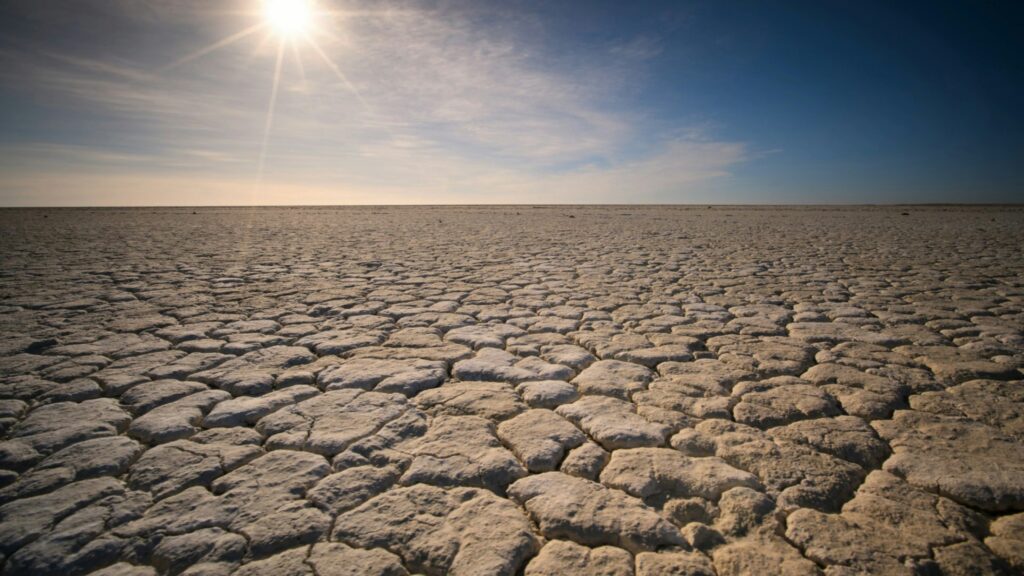
The United Nations and its specialized agencies are raising alarms over a rapidly strengthening El Niño event that could bring widespread extreme weather to many parts of the world in the coming months.
Experts warn that this climate pattern, already developing in the tropical Pacific, carries a high probability of triggering severe droughts, devastating floods, and intense storms, potentially exacerbating food insecurity for millions of people.
According to recent assessments, there is an 80 to 90 percent likelihood that El Niño will intensify throughout 2026, possibly ranking among the strongest episodes in recorded history.
The World Meteorological Organization indicates that the phenomenon is expected to reach its peak between July and September, driven by continuing rises in sea surface temperatures across the central and eastern equatorial Pacific. These warmer waters disrupt normal atmospheric circulation, leading to dramatic shifts in rainfall patterns and temperature extremes far beyond the ocean itself.
Humanitarian organizations emphasize that the window for effective preparation is narrowing. Acting swiftly now could shield vulnerable populations from the worst effects, particularly in regions where communities depend heavily on subsistence farming and have few resources to cope with sudden shocks.
The 2015-2016 El Niño event, for instance, pushed around 60 million people deeper into hunger, illustrating how quickly climate disruptions can spiral into broader crises when combined with existing pressures such as elevated energy and fertilizer costs.
Regional consequences are expected to vary but will likely hit hardest where weather extremes overlap with pre-existing vulnerabilities. Southern Africa and the Sahel region face heightened risks of prolonged drought that could slash crop yields and reduce available grazing land.
In the Horn of Africa, unusually heavy rains may cause flooding that damages infrastructure and disrupts food markets. Parts of Central America, the Caribbean, Asia, and the Pacific islands could experience a mix of extended dry spells and sudden deluges, threatening staple crops and local livelihoods.
Marine and atmospheric scientist Dr. Mohsen Abdullah Al Yafei of Qatar University describes El Niño as a recurring but increasingly dangerous phenomenon that typically appears every two to seven years. He points to global warming as the key factor amplifying its strength, with warmer ocean surfaces allowing seasonal winds to push heat toward landmasses.
This process contributes to more frequent and intense heatwaves, altered precipitation, and broader environmental stress. Dr. Al Yafei notes that the current event could be more than 60 percent stronger than the previous one and might persist into early 2027.
Beyond immediate weather impacts, the professor highlights longer-term concerns. Rising global temperatures and extended heatwaves could increase mortality rates, especially in areas lacking adequate cooling or healthcare infrastructure. Droughts raise the danger of wildfires and air pollution, while heavy rainfall events often lead to flash floods and landslides.
In marine ecosystems, elevated water temperatures threaten coral reefs—vital habitats supporting around 90 percent of ocean life—which struggle to survive once temperatures climb above 32 degrees Celsius. Repeated episodes could push many reefs toward irreversible decline by mid-century. Fish populations may also shift or suffer mass die-offs, disrupting food chains and coastal economies.
The economic toll is equally concerning. Reduced agricultural output drives up food prices, while insurers face mounting claims related to crop damage, property loss, and disaster response. Dr. Al Yafei stresses that proactive measures, coordinated at the international level, are far more effective than reactive aid after disasters strike.
Every dollar spent on early interventions—such as distributing drought-resistant seeds, adjusting planting schedules, or organizing timely evacuations—can prevent several times that amount in eventual losses. He advocates for stronger collaboration between the United Nations, donor nations, and local governments to prioritize early warning systems for heatwaves, floods, and dry spells.
As El Niño gains momentum, the message from climate and humanitarian experts is clear: timely preparation remains the most powerful tool available. Governments and aid organizations that act on forecasts now have a genuine opportunity to protect lives, preserve livelihoods, and reduce the overall burden on global food systems already strained by multiple challenges. The coming months will test how effectively the international community translates these warnings into concrete action.