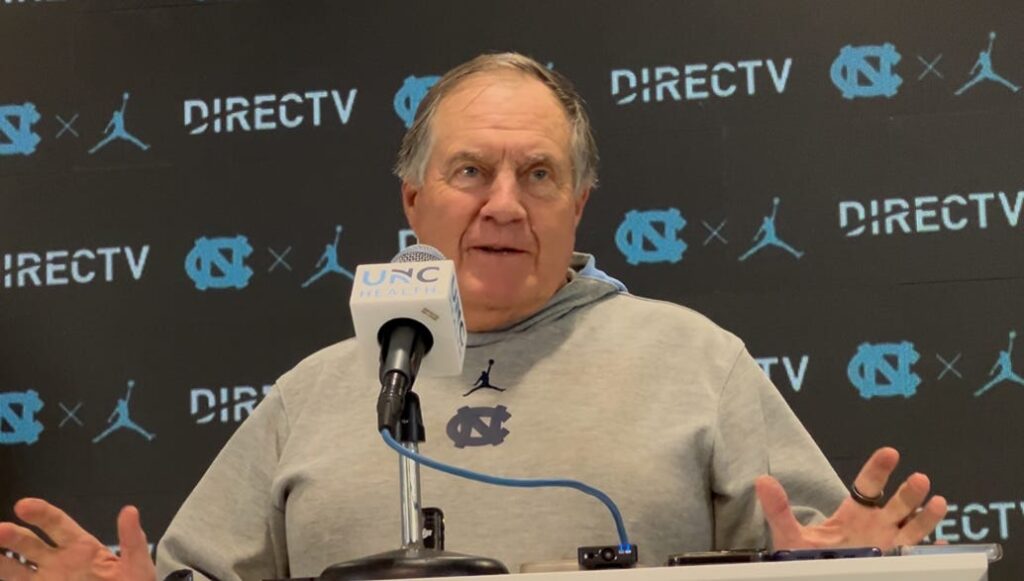
Bill Belichick’s debut campaign as head coach of the North Carolina Tar Heels fell far short of expectations, marking a challenging transition back to the college ranks for the legendary former NFL strategist.
Many observers were caught off guard when the multiple-time Super Bowl winner opted to return to the sidelines at the collegiate level after years of dominating professional football. The season began with promise on Labor Day night but quickly unraveled, starting with a tough home opener against TCU.
Struggles continued throughout the schedule, culminating in a lopsided 42-19 defeat at rival North Carolina State to close out the year. Amid the on-field difficulties, off-field tensions emerged, including speculation about whether Belichick would even see the campaign through in Chapel Hill.
Despite the questions swirling around the program, he remained committed and completed the full slate of games. Now entering the 2026 season, Belichick returns with renewed determination to rebuild the Tar Heels. Significant adjustments have been made to both the player roster and the coaching personnel during the offseason, moves the veteran leader believes will set a stronger foundation moving forward.
Athlon Sports analyst Steve Lassan recently released his preseason rankings of all 138 FBS teams for the upcoming year. His placement of North Carolina came as little surprise given the previous year’s results, landing the Tar Heels at No. 56 overall.
Few anticipated a 4-8 finish when Belichick first arrived in Chapel Hill, yet that became the reality and prompted immediate shifts in personnel. Lassan highlighted several key additions on the offensive side that could generate positive momentum for the program.
“New play-caller Bobby Petrino should spark an offense that averaged only 18.4 points in ACC play. Also helping optimism of an improved attack is Wisconsin transfer quarterback Billy Edwards Jr., who provides a veteran option under center,” Lassan wrote.
The hiring of Petrino alongside Belichick initially raised eyebrows across the college football landscape. Last year’s Tar Heel attack sorely lacked production and has significant room for growth. Key departures include former quarterback Gio Lopez, who transferred to Wake Forest, and freshman Bryace Baker, who joined James Franklin’s program at Virginia Tech.
Edwards Jr. brings valuable experience after a limited role at Wisconsin, where he went 7-for-16 for 113 yards. His stronger 2024 season at Maryland saw him complete 65 percent of his passes while recording 15 touchdowns against nine interceptions, though he was sacked 17 times that year.
Defensively, the Tar Heels performed more respectably than their overall record might suggest, surrendering an average of 24.5 points per contest. Maintaining that level of resistance could prove pivotal if the offense finds consistency.
“If coach Bill Belichick can keep the defense performing at a high level (24.5 points a game allowed in ‘25), an improved offense will help the Tar Heels push for a bowl trip,” Lassan added.
Reaching bowl eligibility will require navigating a demanding 2026 schedule. Non-conference opponents include TCU, Notre Dame, East Tennessee State, and UConn, presenting mostly stiff challenges outside of the matchup with ETSU. In ACC play, the Tar Heels face road tests at Clemson, Pittsburgh, Duke, and Virginia.
Home contests against Syracuse, Miami, Louisville, and NC State offer opportunities, but securing enough victories across this gauntlet remains a tall order. With a full year of program-building behind him and targeted improvements in place, expectations have shifted toward at least six wins for Belichick’s squad.
Another subpar finish around 4-8 or 5-7 could force difficult conversations within the athletic department.
Overall, optimism persists that the adjustments will finally yield progress for North Carolina in the upcoming campaign.