
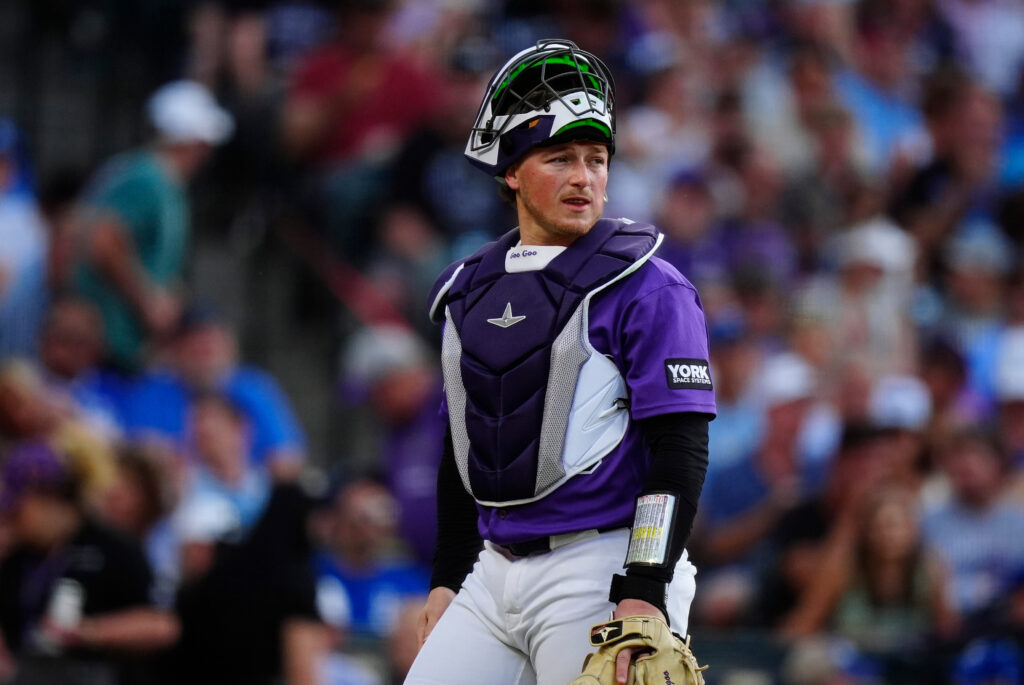
The New York Yankees entered the 2026 MLB trade deadline with clear needs, particularly at catcher and in the bullpen, yet walked away without addressing either spot.
One of the more intriguing storylines that never fully materialized involved Colorado Rockies catcher Hunter Goodman, a two-time All-Star whose power bat and years of remaining team control made him an obvious fit for a Yankees lineup searching for right-handed production behind the plate.
Talks between the clubs took place, but they ultimately collapsed, and the primary sticking point, according to reporting from Jon Heyman of The New York Post, was Colorado’s firm insistence on receiving top shortstop prospect George Lombard Jr. as part of any package.
Goodman had been one of the more productive hitters in baseball throughout the season, ranking among the league leaders in home runs while providing the kind of offensive upside that stood in stark contrast to the struggles of New York’s own catching group.
At 26 years old and under club control through 2029, he represented far more than a rental. For a Rockies team mired in another losing season and still deep in a rebuild, dealing him would have required an overwhelming return.
Heyman’s reporting made clear that almost every seller with a high-end piece available zeroed in on Lombard (who just made his big-league debut), the Yankees’ consensus top prospect who had just been called up to the majors around the deadline. The Rockies were no exception in their discussions involving Goodman.
The Yankees, under general manager Brian Cashman, have long demonstrated a reluctance to part with their highest-ceiling young talent unless the return is exceptional. Lombard, a first-round pick out of high school with tools that project as plus on both sides of the ball, had been viewed internally as a potential long-term cornerstone at shortstop or elsewhere in the infield.
Including him in a deal for Goodman would have meant surrendering a player many in the organization believe could develop into a star for a catcher who, while excellent, still carried questions about his defensive consistency and high strikeout rate. That calculus never aligned for New York.
Heyman’s notes from the deadline period underscored how widespread the demand for Lombard truly was. Sellers across the league, including the Padres in conversations about closer Mason Miller, treated the young shortstop as a non-negotiable centerpiece.
The Rockies’ stance on Goodman fit the same pattern. Without Lombard in the conversation, the two sides could not bridge the gap, and the deal never advanced to a serious stage.
As a result, Goodman remained in Colorado, continuing to mash in a Rockies uniform, while the Yankees turned elsewhere for deadline additions, acquiring right-handed bats Luis García Jr. and Heliot Ramos but leaving the catching situation unresolved.
The episode illustrated both the value the Yankees place on their top prospect and the elevated asking prices that accompanied controllable talent in a relatively quiet trade market. For a club with championship aspirations, missing out on Goodman left a clear hole.
Yet holding onto Lombard preserved a significant piece of the organization’s future, a decision that Heyman’s reporting framed as consistent with how multiple clubs approached negotiations involving New York’s most coveted young player.
The talks fell apart not for lack of interest on either side, but because the Rockies would not move off their demand for Lombard, and the Yankees would not meet it.