
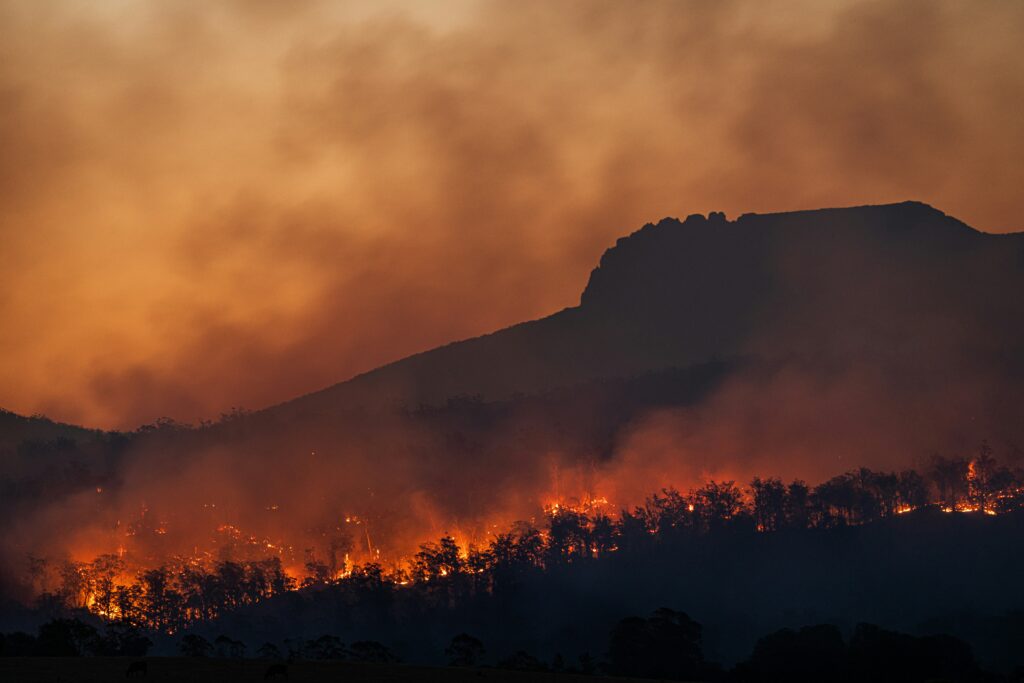
In the rugged terrain of New Mexico’s Gila National Forest, a sudden lightning strike on June 21 ignited what has become known as the Sacaton Fire. The strike occurred about 15 miles east of the small community of Glenwood, in a remote area of the Gila Wilderness, where dry fuels and steep slopes allowed the fire to take hold quickly.
Lightning-caused fires are a natural part of the ecosystem in this region, but they only make up around 10 to 15 percent of wildfire ignitions. They can also rapidly grow challenging when conditions align against suppression efforts.
In the case of the Sacaton Fire, hot, dry, and windy weather in the days following its discovery fueled its spread through areas still recovering from previous burns, including the massive 2012 Whitewater-Baldy Fire. Dead standing trees and downed timber provided ample fuel, enabling the flames to back downslope or expand laterally along the fire’s edges.
As of the latest reports, the fire has scorched approximately 9,590 acres and stands at 17% containment. Crews have faced difficult working conditions in steep and hazardous terrain, but recent weather has offered some relief.
Beneficial rain and helicopter water drops have aided ground teams in protecting nearby structures, particularly in the Willow Creek area where evacuation orders remain in effect.
Firefighters have been proactive in their defense strategies, deploying nearly 100 sprinkler kits and thousands of feet of hose around homes and other vulnerable sites.
They have also completed hazard tree removal along key roads like Bearwallow Road to reduce risks from falling debris. With 166 personnel assigned to the incident, operations continue to focus on assessing fire behavior and preparing contingency lines, including around the Bearwallow Lookout.
The lightning origin of the Sacaton Fire highlights the ongoing vulnerability of western forests to natural ignitions, especially amid patterns of heavy thunderstorm activity that have sparked multiple fires across the Gila National Forest in recent weeks. While some of these starts were quickly contained, others like Sacaton demand sustained attention.
For residents and visitors, safety measures are paramount. Willow Creek remains under a “GO!” evacuation status, urging immediate departure for those in the zone.
Roads such as Bursum Road and NM 159 are closed in affected sections, and a temporary flight restriction helps manage aerial operations. The Gila National Forest continues Stage 1 fire restrictions, limiting campfires and banning open burning to prevent additional human-caused incidents.
Smoke from the fire remains visible from surrounding communities, prompting advice to limit outdoor exposure during periods of poor air quality.
As crews monitor the situation and prepare for potential defensive actions, the Sacaton Fire serves as a reminder of nature’s dual role—both creator and destroyer—in shaping the wild landscapes of the Southwest. Updates from officials will be essential in the days ahead as containment efforts progress.