
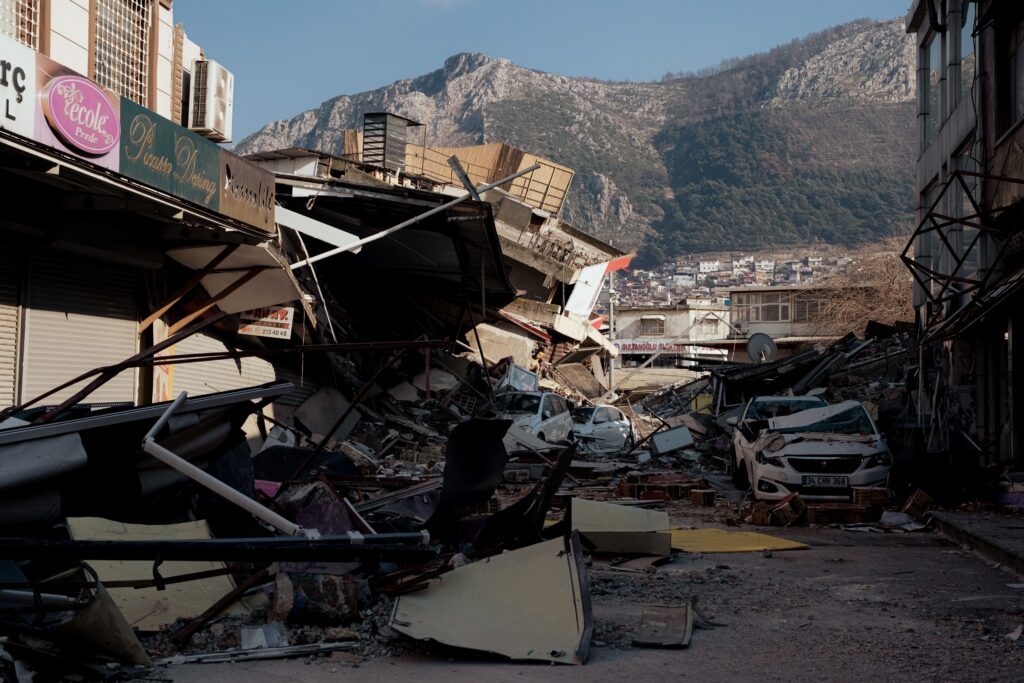
On July 23, 2026, residents across parts of western Texas felt the ground shake once again when a moderate earthquake struck the Permian Basin area in the early afternoon. This marked the second seismic event to hit the state within hours, following an earlier, stronger jolt in the Panhandle region.
The U.S. Geological Survey reported the 3.9-magnitude quake centered near Westbrook, a small community northwest of Big Spring. It struck shortly after 12:15 p.m. Central Time at a relatively shallow depth of about 4.7 miles (7.7 kilometers).
According to officials, the shaking was noticeable in nearby communities, including as far as Midland.
Earlier that morning, around 5:20 a.m. Central Time, a significantly larger 5.1-magnitude earthquake had rattled the Texas Panhandle, the largest quake the area experienced in over 100 years. This set a tense tone for the day in a state not typically known for frequent seismic activity.
Earthquakes occur when built-up stress along faults in the Earth’s crust is suddenly released, sending waves of energy through the ground. The planet’s outer shell, known as the lithosphere, consists of massive tectonic plates that slowly shift over time. When these plates interact, friction can cause the ground to slip, resulting in tremors of varying intensity.
While today’s events might raise concerns, scientists emphasize that earthquakes cannot be reliably predicted in advance. Monitoring agencies like the USGS continue to track activity using advanced seismic networks, but precise forecasting remains beyond current capabilities.
Some observers might wonder if seismic events are becoming more common. In reality, the global rate of earthquakes has stayed fairly consistent over long periods.
Advances in detection technology simply allow experts to record more minor quakes that might have gone unnoticed in the past. Major earthquakes—those of magnitude 7.0 or higher—average around 16 per year worldwide, though the exact number fluctuates.
Texas, particularly areas involved in oil and gas operations like the Permian Basin, has seen occasional induced seismicity in recent years linked to human activities such as wastewater injection. However, officials have not yet provided specific details on the cause of today’s pair of quakes.
In the event of shaking, safety experts recommend dropping to your hands and knees, seeking cover under sturdy furniture to protect your head and neck, and holding on until the motion subsides. Staying indoors is generally advised unless you are in a coastal area at risk of tsunamis.
These back-to-back tremors serve as a reminder of the dynamic forces beneath our feet, even in regions where such events are relatively uncommon.
Residents in affected areas are encouraged to stay informed through official channels for any updates on aftershocks or further activity.