
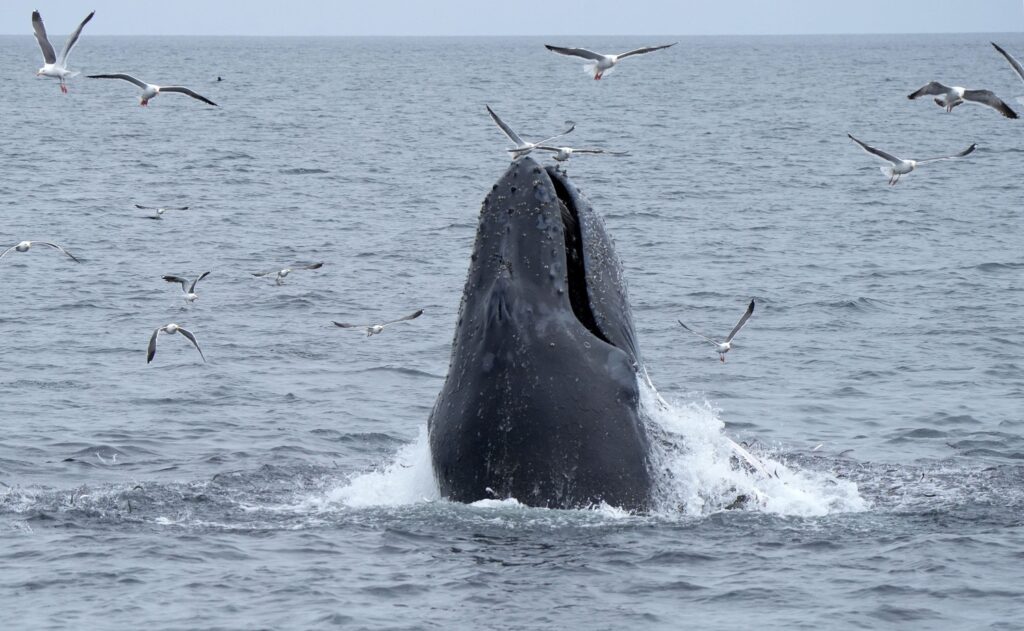
In a heartening display of quick thinking and coordinated teamwork, rescuers liberated a young humpback whale from a dangerous entanglement in southeast Alaska.
The incident highlights both the vulnerabilities faced by these majestic marine mammals and the effectiveness of community reporting combined with expert intervention.
The event unfolded in Endicott Arm, a remote yet busy fjord roughly 50 miles southeast of Juneau. This narrow waterway attracts cruise ships and commercial fishing operations, increasing the chance of human-wildlife conflicts in an area frequented by whales.
On the evening of May 10, several mariners spotted the juvenile whale struggling with fishing gear. It had become wrapped in lines connected to two heavy commercial Tanner crab pots. Each pot weighs approximately 800 pounds, effectively turning them into underwater anchors that severely restricted the whale’s movement.
The observers promptly contacted the NOAA Fisheries Alaska Marine Mammal Stranding Network hotline, providing crucial real-time details that helped shape the rescue strategy.
NOAA Fisheries Marine Mammal Specialist Suzie Teerlink emphasized the value of this collaboration: the network of vessels sharing updates allowed responders to understand the entanglement’s severity and plan a safe approach.
The very next day, a specialized team—including biologists from NOAA Fisheries, the Alaska Department of Fish and Game’s Marine Mammal program, and partners from Alaska Sea to Shore—arrived on scene.
Over the course of more than five hours, the crew carefully executed four targeted cuts to remove the crab pots and the bulk of the entangling lines.
Working with large marine animals demands caution; team members used extended poles equipped with specialized knives to maintain a safe distance from the roughly 40-ton whale. NOAA research fisheries biologist John Moran noted that this equipment helps minimize risks to both the responders and the animal during these high-stakes operations.
While some remnants of the lines may still be attached, responders are optimistic that they will naturally shed over time as the whale moves and grows.
Incidents like this serve as reminders of the need for continued efforts to reduce fishing gear conflicts, improve gear designs, and support rapid response networks.
For humpback whales (Megaptera novaeangliae), which are known for their acrobatic breaches and complex songs, every saved individual contributes to the recovery of populations that were once pushed toward the brink by historical whaling/
Stories of rescue and survival like this one offer hope, showing how human ingenuity and cooperation can help protect the ocean’s giants.