
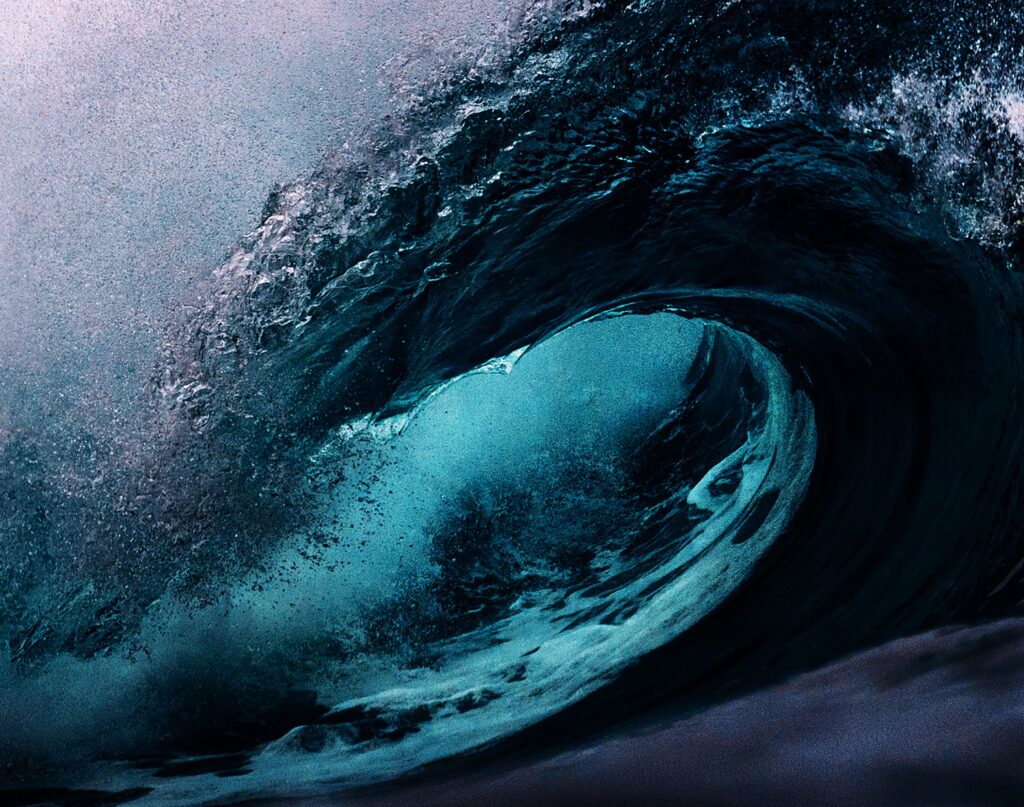
In the remote reaches of Southeast Alaska lies Lituya Bay, a place whose dramatic history includes one of nature’s most extraordinary displays of power. On the evening of July 9, 1958, a massive earthquake shook the region, unleashing a landslide that generated a tsunami reaching an astonishing 1,720 feet in height—the tallest ever recorded.
The quake, registering a magnitude of 7.8 along the Fairweather Fault near Elfin Cove, sent roughly 40 million cubic yards of rock plunging into the deep waters of the bay. As geologist Barrett Salisbury explained, the falling material carried air with it, creating a colossal wave that surged up the nearby shoreline.
The unique T-shaped geography of Lituya Bay, flanked by glaciers and positioned directly over the active fault, set the stage for this extreme event. The wave’s impact was largely contained within the bay itself, but its scale defies easy comprehension. For context, it stood far taller than six of Anchorage’s tallest buildings stacked atop one another.
Tragically, the event claimed lives. Two fishermen, Orville and Mickey Wagner, perished when their boat, the Sunmore, was swamped near the bay’s entrance. Three others—Jeanne Walton and Robert and Blanche Tibbles—were lost on nearby Khantaak Island when the ground reportedly collapsed beneath them. Yet amid the devastation, remarkable stories of survival emerged.
Howard Ulrich and his eight-year-old son, Sonny, were anchored in the bay that night aboard their fishing boat. Years later, Howard shared vivid accounts of the ordeal in interviews with the BBC and National Geographic before his passing in 2014. His words, preserved through family, capture the sudden terror of that moment.
“The date was July the 9th, 1958. We came into Lituya Bay about 8 o’clock in the evening,” Howard recalled. The family had settled into their routine, eating supper and turning in for the night around nine o’clock. Then the quake struck, some 45 miles away. “There was a slight pause. I thought that everything was over with, but some movement up there caught my attention out of the corner of my eye, and so I looked directly up there and what I observed was like an atomic explosion. Of this big splash came a huge wave. It looked like just a big wall of water.”
Howard threw his son a life preserver and urged him to pray. As the wave approached, the water beneath their boat turned ominous. “Just coal-black and full of logs, just straight up and down,” he described. “It was actually a pretty horrifying looking sight. I just thought you know, this is, this is the end. No, no way you’re going to get out of this.”
With the anchor chain snagged on the bay floor, Howard acted decisively. “I started pulling all the anchor chain out and when it got to the end of the chain, it just, I thought it was going to pull the bow of the boat under, but it snapped that chain just like it wasn’t even there.” Miraculously, he managed to guide the vessel over the crest of the wave. Looking back from the stern, he saw treetops far below. “I looked down over the stern of the boat, and we were looking down on the trees and I figured that’s where we were going to end up.”
Bruce Ulrich, Howard’s other son, later recounted his father’s determination: “He got the boat over the top of the wave. So did his job.” Howard kept the boat pointed into the chaotic waters, navigating through backwash and debris as logs formed floating rafts that pushed them toward the bay’s exit. Once he felt they were safe, he searched for the other boats in the bay, aware of the friends and fellow fishermen who had also sought shelter there.
Another survivor, Bill Swanson aboard the Badger, also lived through the nightmare, though he would later pass away near the same entrance to Lituya Bay years afterward.
USGS geologist Don Miller arrived on the scene shortly after and documented the scene in haunting terms: “In Lituya Bay the destruction is unbelievable.” The event stood out as a rare, localized catastrophe, more akin to an asteroid impact in its suddenness than a typical seismic wave.
Lituya Bay had seen large waves before, with evidence of major events in the 1800s and early 1900s, but the 1958 tsunami erased much of the prior geological record. Scientists note that the combination of the fast-moving Fairweather Fault, steep glacial slopes, and the bay’s deep fjord-like waters makes future incidents possible, though the precise conditions for another record-breaker are not guaranteed. Salisbury emphasized the ongoing risks along Alaska’s coastlines: “Alaska’s coastlines are hazardous. And if you enjoy them, which we all do, then you do put yourself at a calculated risk.”
He added that earthquakes in the region will continue, and “the likelihood for more large waves is almost inevitable,” urging awareness of natural warning signs like strong quakes or landslides. The story of Lituya Bay serves as both a testament to nature’s raw power and a reminder of human resilience in the face of it. Howard Ulrich’s final reflection captured the awe: “I had never heard or seen of anything like this. It was unbelievable. I couldn’t imagine what could have caused anything. I kept wondering just what mechanism could cause something like that.”
Today, the bay stands as a powerful symbol of Alaska’s dynamic and sometimes dangerous geology—a place where the forces shaping our planet remain vividly alive.