
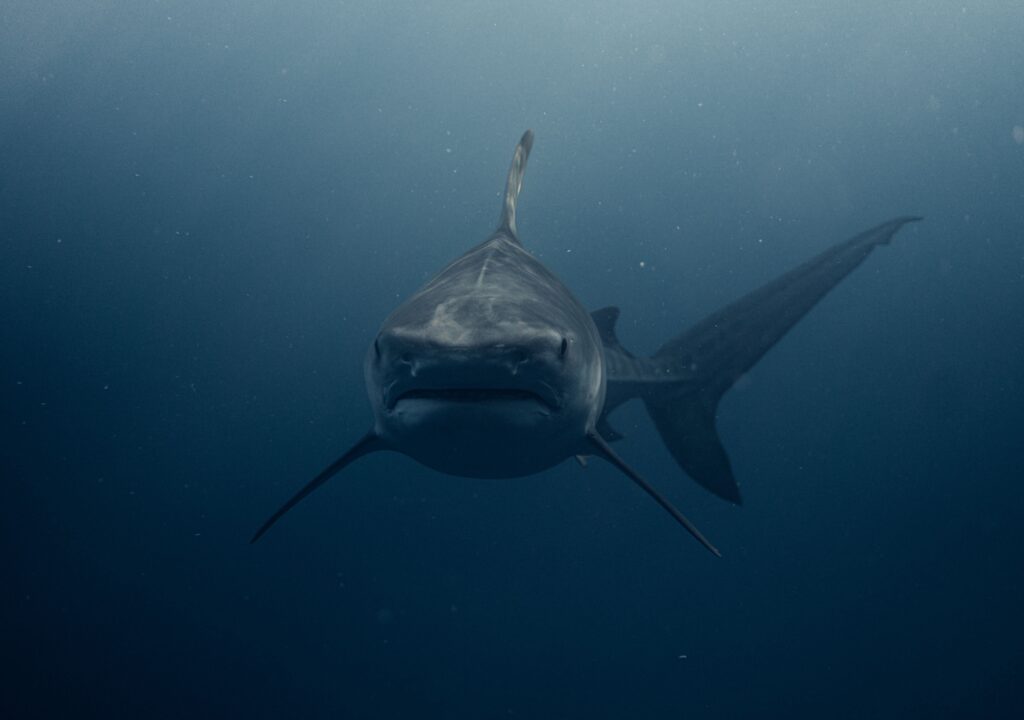
As temperatures warm up and humans increasingly share the water with apex predators, a vital coastal safety shield is on the verge of disappearing.
The California Beach Shark Safety program, an initiative run out of the long-standing Cal State Long Beach Shark Lab, is rapidly running out of funding. If new sources of financial backing are not secured, the tracking equipment that warns lifeguards of nearby great white sharks will be pulled from the ocean this September.
Since 2018, the safety program has actively monitored the 500-mile stretch of coastline stretching from Morro Bay down to the Mexican border.
Utilizing a $3.75 million state grant along with a subsequent $800,000 grant from a private foundation, the lab has successfully tagged 380 great white sharks.
Currently, roughly 250 of those sharks carry live transmitters that beam location data directly to acoustic receivers and a system of 16 specialized buoys.
This allows real-time data to reach local lifeguards, providing them with an early warning system when juvenile great whites—which frequently congregate near popular beaches to feed on stingrays—swim too close to humans.
Without these funds, lifeguards will lose their digital eyes under the surface. Pulling the monitoring equipment introduces a substantial risk of rising shark incidents, as officials will no longer have the necessary data to advise the public or initiate targeted beach management.
Christopher Lowe, the director of the shark lab, notes that tracking these movements is critical for preventative safety and avoiding massive economic disruptions from blind beach closures. Lowe emphasized the danger of losing this capability, stating, “If we’re not monitoring, how will we be able to tell the public what to expect and maybe how to change their behavior to keep them safe?”
Beyond the tracking technology, the program serves a crucial educational purpose by teaching children about ocean safety and altering the public perception of these marine animals.
Though the 60-year-old university shark lab itself is stable, the beach safety program requires an annual budget of roughly $1 million to remain operational.
Lowe is currently searching for assistance from corporations, foundations, or private donors to keep the project alive.
Explaining the vital nature of the operation, Lowe said, “Our program is really dedicated to understanding what sharks are doing, and then making sure that information gets to lifeguards routinely, and then out to the public,” before adding a stark warning about a future without it: “If it wasn’t for all of this technology, lifeguards would be flying blind.”