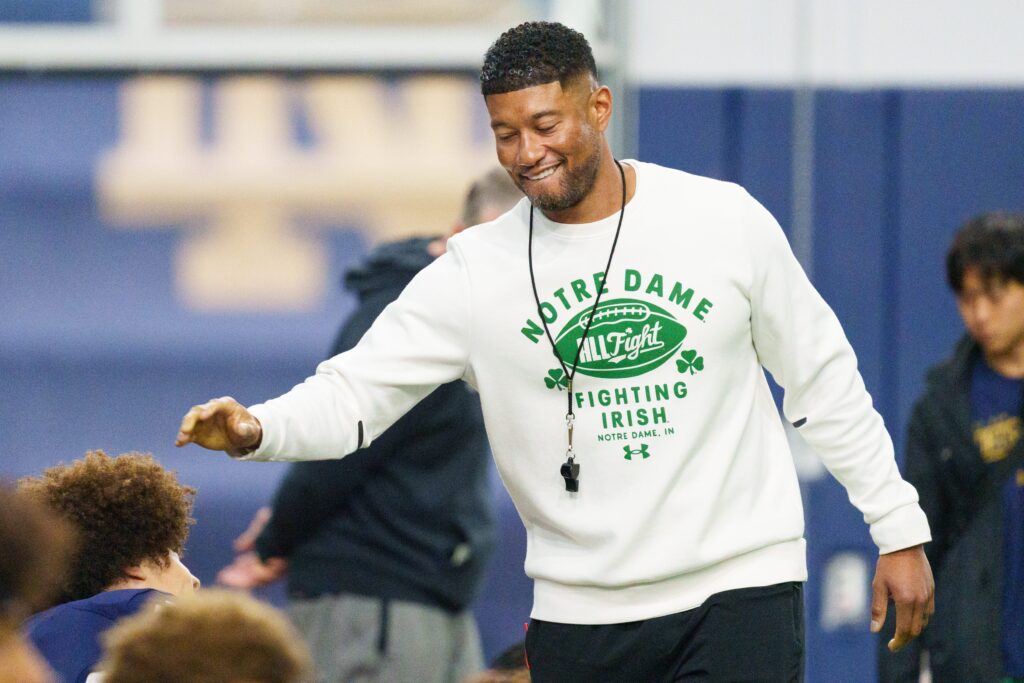
Marcus Freeman, the head coach of Notre Dame, found himself in the middle of widespread attention across the NFL this offseason as 10 head coaching positions opened up around the league.
Despite the flurry of interest from professional teams, Freeman ultimately chose to remain in South Bend, turning down opportunities that many would consider once-in-a-lifetime chances. His decision highlighted the unique appeal of his current role in college football and the significant factors required to pull him away from a program he deeply values.
Luring Freeman to the NFL would demand an exceptional combination of elements, including substantial financial incentives, supportive ownership, significant autonomy in decision-making, and a roster situation that offered genuine potential rather than major rebuilding challenges. Without that ideal alignment, staying at Notre Dame proved far more attractive for the young coach.
Two years ago, the Chicago Bears showed strong interest in Freeman before ultimately selecting Ben Johnson for their vacancy. This most recent coaching cycle saw renewed pursuit from several prominent franchises, including the New York Giants, Tennessee Titans, Cleveland Browns, and Pittsburgh Steelers. Yet again, Freeman opted against making the leap to the professional ranks.
In a recent interview on “Josh Pate’s College Football Show,” Freeman opened up about his thought process and the reasons behind declining NFL overtures.
“For me, it was the opportunity to be the head coach of this university was one that I wasn’t ready to let go,” Freeman said. “And I love this place. I love, more importantly, the people here, the opportunity to coach these young men, many of them you’ve recruited for multiple years. Like, that’s just something I’m not ready to let go of.”
He emphasized the personal connections and long-term investment in his players as central to his commitment. Freeman described his position at Notre Dame as something truly special, one he continues to cherish even amid external temptations from the NFL.
Additionally, Freeman pointed to the broader impact of team achievements on individual careers.
“And it’s the opportunity of a lifetime and, you know, again, the other thing I use it to tell the team, ‘With team success comes individual opportunities.’ And the head coach is a reflection of the players of other coaches. We’ve had some coaches get opportunities to go coach in the NFL, and I’m happy for them. But if we weren’t having team success, if we didn’t win those last ten games, then my name or nobody else’s name would be floating around here.”
Transparency played a key role in how Freeman handled the speculation. He made it a point to communicate openly with his team and university leadership throughout the process, ensuring no one was left in the dark about the conversations taking place with NFL organizations.
Notre Dame has worked diligently to retain Freeman, recently finalizing a contract extension that ties him to the program through the 2031 season. This move underscores the university’s commitment to building sustained success under his guidance and reflects confidence in his leadership.
This cycle marked a shift for Freeman, who engaged more thoughtfully with the NFL inquiries than in previous years.
“I took a minute to really say, ‘What is this opportunity of being an NFL head coach?’” Freeman said. “I’ve never coached in the NFL. I wanted to know what they look for, what they think it takes to be successful. And I gained some valuable knowledge.”
Looking ahead, while Freeman appears settled for the immediate future, the growing interest from professional teams suggests it may only be a matter of time before the right situation prompts a move. At just 40 years old, his trajectory remains one of the most intriguing in coaching circles, blending proven college success with untapped potential at the highest level of the sport.
Notre Dame fans can enjoy his presence now, but the NFL landscape continues to watch closely for any signs of change.