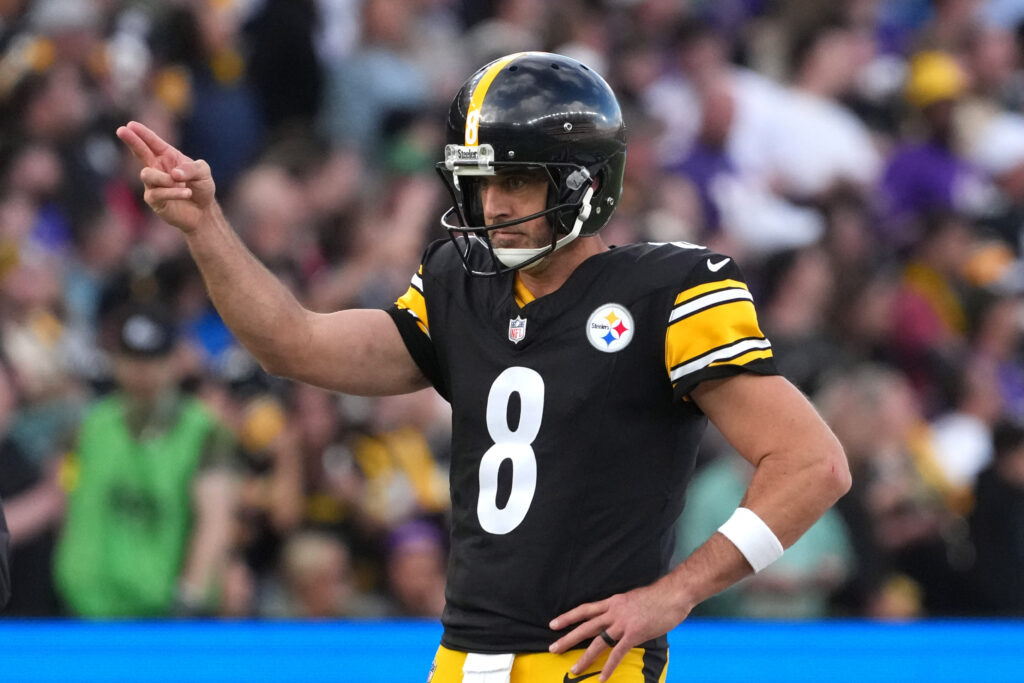
Aaron Rodgers finds himself in a familiar but less flattering spot this summer as the Pittsburgh Steelers prepare for what many view as one last push with the veteran quarterback under center.
In the latest annual ranking of NFL quarterbacks compiled by The Athletic, Rodgers landed at No. 19 overall. That marks a drop of three spots from his position a year earlier and keeps him firmly in the third tier for a second straight season.
For a player who once dominated the top level of these rankings, the decline stands out.
Rodgers spent a full decade in the highest group before a single season in the second tier. Now he sits among those considered solid starters who still need strong supporting casts to succeed.
The rankings come from a survey of about 50 coaches and executives across the league. Voters placed Rodgers all over the board. One kept him in the top group. Nineteen put him in the second tier. Twenty-six assigned him to the third. Four dropped him into the fourth.
One defensive coordinator summed up the prevailing view with little hesitation. He described Rodgers as a third-tier player at best. The coach praised the quarterback’s toughness and remaining arm talent but pointed to clear limitations. Rodgers holds the ball longer than he once did and no longer creates the same kind of magic with his legs, the coordinator said.
That assessment matches how Rodgers’ first year in Pittsburgh ended. In the wild-card playoff game, Houston forced turnovers that turned into touchdowns and sacked him four times. The Steelers’ season closed with questions about whether the 42-year-old still possessed enough of his old game to lead a contender.
Not every voice in the survey shared the same doubts. Coaches as a group rated Rodgers higher than executives did, creating the largest gap of that kind for any quarterback in the poll. All eight general managers who participated placed him no higher than the third tier, and some put him lower.
One defensive coordinator rejected the idea of ranking him so far down. He asked simply whether anyone would prefer Jalen Hurts running an offense over Rodgers. Another coach blamed the Steelers’ offensive approach last season more than the quarterback himself.
The scheme limited Rodgers, the coach said, and while his mobility has declined, he remains dangerous as a pure dropback passer, especially in two-minute situations if the pieces around him improve.
A third voter offered a tempered vote of confidence. He called Rodgers a third-tier player who still has the ability to climb back into the second group. The coach noted that Rodgers avoids contact more than he once did, describing it with a touch of humor as having a bit of a soccer flop in him.
Still, the coach insisted Rodgers can beat defenses when given the chance.
The Steelers are banking on exactly that version of Rodgers this season. They want the quarterback who can deliver wins, whether it resembles his peak years in Green Bay or simply the experienced version still capable of making plays. Having Mike McCarthy back on the sideline as head coach adds another layer of familiarity.
Rodgers spent more than a decade with McCarthy in Green Bay, and the reunion offers hope that the offense will better suit the veteran’s strengths.
For now, the conversation around Rodgers centers on what remains of his game rather than the dominance that once defined it. League coaches and executives have delivered a clear message through their rankings: Rodgers is still a starter, but the margin for error has grown thinner.
The Steelers will find out soon enough whether that assessment holds or whether the quarterback can rewrite the narrative one more time.