
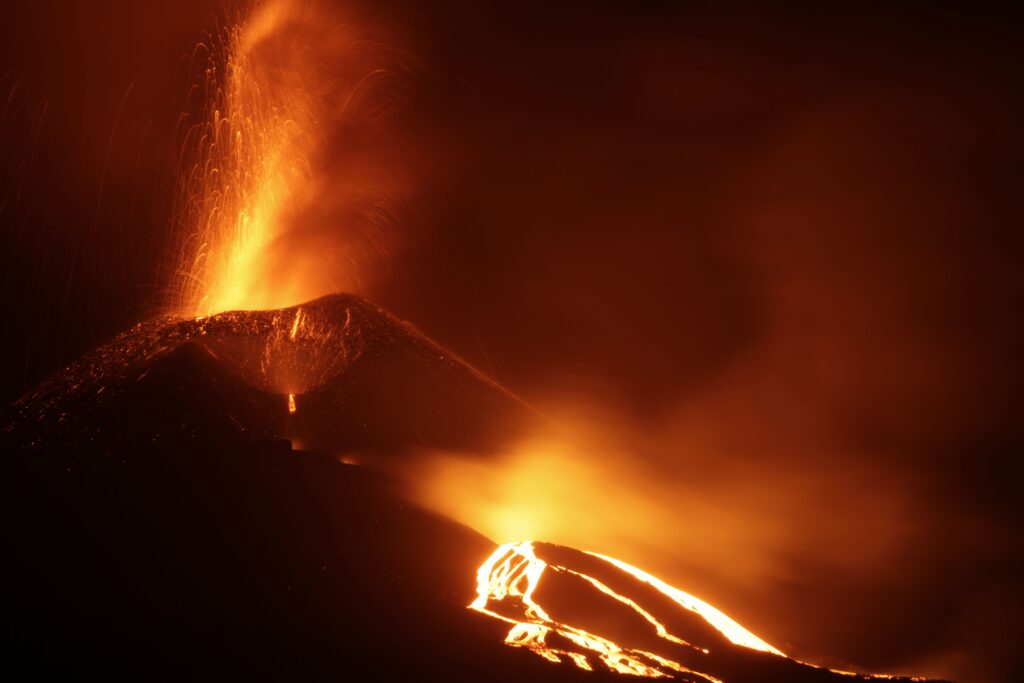
Travelers in Alaska faced unexpected disruptions this week after a powerful volcanic eruption in Russia sent a plume of ash drifting across the Bering Sea and into Alaskan airspace.
The incident highlights the far-reaching effects of volcanic activity in the volatile Ring of Fire region, where even distant eruptions can impact daily life thousands of miles away.
On July 21, Shiveluch Volcano on Russia’s Kamchatka Peninsula erupted with notable force. Located in one of the world’s most geologically active zones, the volcano has maintained a high level of activity throughout the month.
However, this particular event stood out, propelling a massive ash cloud upward to an altitude of approximately 35,000 feet. Strong winds in the jet stream then carried the fine volcanic particles eastward, crossing over the Bering Sea and entering airspace over western Alaska.
Authorities quickly responded to the airborne hazard. Volcanic ash is particularly dangerous for aviation because it can melt inside jet engines at high temperatures, potentially causing them to fail, and it can also scour aircraft windows and surfaces.
In response, multiple Volcanic Ash Advisories were issued, spanning from Tokyo to Anchorage, as officials worked to protect flights operating in the affected corridors.
The ash cloud led to several flight cancellations, especially in western parts of the state. Among those impacted was Alaska Airlines flight AS 7011, scheduled from Anchorage to Nome.
Passengers experienced delays and last-minute changes to their travel plans, underscoring how vulnerable remote Alaskan communities can be to such atmospheric events.
By Wednesday afternoon, the situation had begun to improve. The National Weather Service indicated that no additional ash advisories were expected in the immediate future. A
s the jet stream continued its path, the ash plume shifted away from Alaska, now tracking through the Yukon and into parts of Canada.
This event serves as a reminder of the interconnectedness of global weather patterns and geological forces. While Shiveluch’s ongoing activity is not unusual, larger bursts like this one demonstrate how quickly conditions can change for pilots and air traffic controllers monitoring the North Pacific routes.
Residents and travelers in Alaska are advised to check with airlines for the latest updates, especially during periods of heightened volcanic activity in the region.