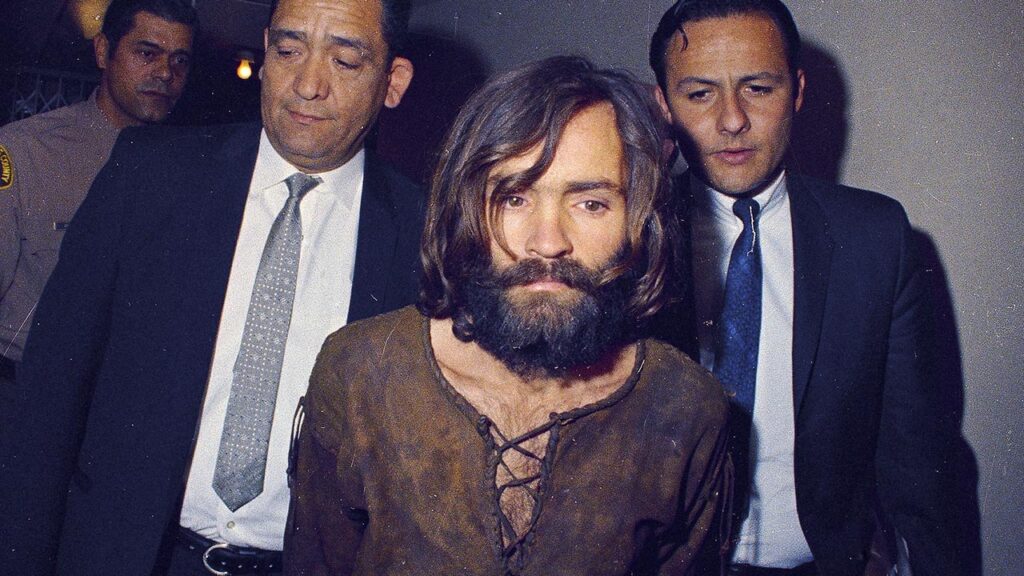
In a striking development this week, an investigative journalist appeared before lawmakers to share newly examined documents that appear to connect the notorious Charles Manson murders with covert CIA initiatives aimed at psychological manipulation.
The testimony, delivered during a specialized House panel focused on government transparency, has reignited debates over the agency’s historical MKUltra project, which conducted hidden experiments on American citizens during the Cold War era. These revelations underscore ongoing efforts to uncover the full extent of federal programs that once operated in secrecy.
The House Oversight Committee’s Task Force on the Declassification of Federal Secrets convened the session, where members heard from journalist Tom O’Neill and historian Stephen Kinzer. Republican leaders on the panel pushed aggressively for the public release of fresh CIA materials related to MKUltra, a program notorious for administering drugs and other experimental techniques without subjects’ knowledge.
The discussions highlighted persistent concerns about accountability and the potential concealment of sensitive activities by intelligence officials.
Task Force Chair Anna Paulina Luna, a Republican from Florida, emphasized the public’s right to complete disclosure. She criticized the CIA for conducting unauthorized tests on U.S. citizens and then attempting to erase traces of those operations. Luna further disclosed that the agency has begun releasing additional materials, including records on a previously undisclosed forgery initiative tied to the broader mind-control efforts.
O’Neill, who penned the book “Chaos: Charles Manson, the CIA, and the Secret History of the Sixties,” detailed his examination of extensive archives from psychiatrist Dr. Louis “Jolly” West. After poring over hundreds of boxes of papers, he located exchanges between West and CIA chemist Sidney Gottlieb. These communications outlined plans involving substances like LSD, techniques for hypnosis, methods to alter memories, and strategies for changing behavior patterns.
The journalist noted that West maintained operations close to a medical facility in San Francisco where Manson and his followers obtained free care in 1967. This period immediately preceded Manson’s rise as the head of the group behind the brutal Tate-LaBianca killings. O’Neill presented these findings as suggestive links but exercised caution, avoiding any definitive assertion that Manson functioned as an operative for intelligence services.
When directly questioned by Luna about potential involvement of Manson in MKUltra activities, O’Neill indicated that the idea has yet to be conclusively established. Nevertheless, he pointed to patterns where government entities seemed to overlook Manson’s repeated parole infractions, shield him from legal consequences, and permit his influence to expand under official watch.
He also drew attention to West’s reported associations with figures like Jack Ruby, suggesting these connections may have influenced how Ruby’s story was handled after the assassination of Lee Harvey Oswald.
Kinzer, author of “Poisoner in Chief,” portrayed MKUltra as among the most troubling episodes in CIA history. He explained how the program targeted vulnerable populations, including inmates, mental health patients, and ordinary individuals unaware of their participation. Subjects endured exposure to LSD, hypnotic procedures, and various forms of psychological testing as part of broader research into control mechanisms.
According to Kinzer, a significant portion of the program’s documentation was eliminated on orders from CIA Director Richard Helms in 1973. This destruction left only fragmented records, many of which emerged years later through persistent Freedom of Information Act pursuits by researchers and journalists. The limited surviving materials continue to fuel speculation about the program’s true reach and impact.
Additional testimony during the hearing touched on reports of fatalities linked to MKUltra trials conducted abroad, with calls for more files that might clarify these incidents. Historian David Barrett advised participants to temper expectations, warning that the newly surfaced documents are unlikely to deliver a single, irrefutable piece of evidence resolving all mysteries. Still, he acknowledged their potential value in piecing together a more accurate historical picture.
Luna committed the task force to sustained advocacy for greater openness from the CIA. Lawmakers aim to map out the complete dimensions of the program and deliver a transparent account to citizens.
As these declassification efforts advance, the hearing serves as a reminder of the delicate balance between national security imperatives and the democratic need for oversight and truth.