
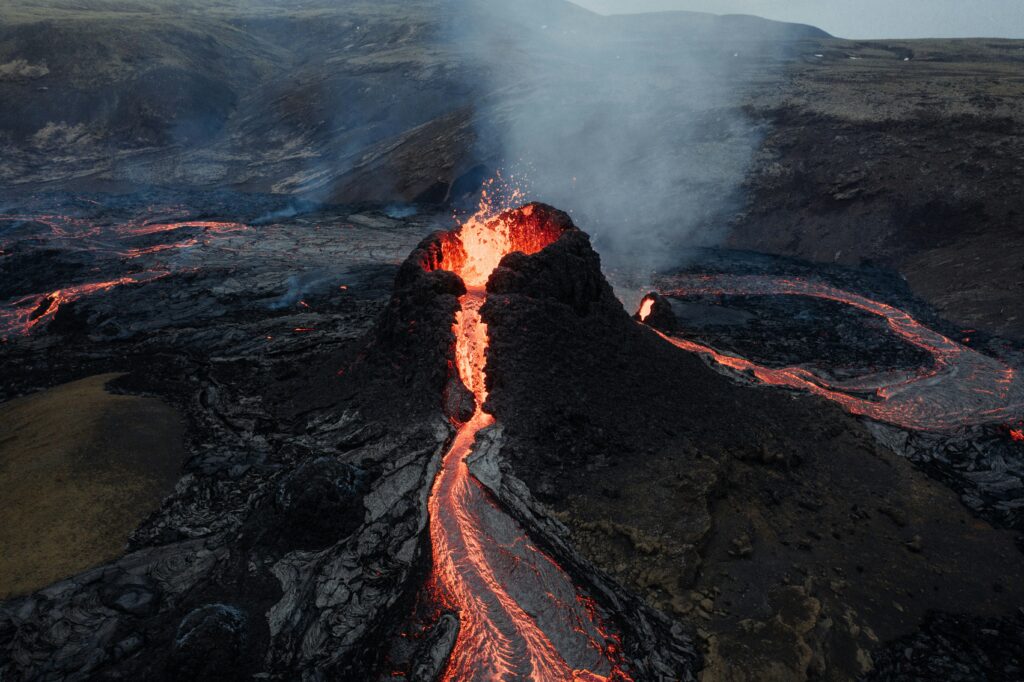
Mount Etna, Europe’s most active and largest volcano, continues to showcase its raw power as it enters its second week of sustained eruptive activity.
This ongoing event has brought significant challenges to Sicily’s transportation network, particularly at Catania’s main airport, which remains shuttered for a third consecutive day due to heavy ash fallout.
The eruption traces its recent escalation back to late June, when a fissure opened at the Voragine summit crater. This led to initial ash releases and the emergence of lava flows from a vent situated around 3,000 meters up the mountain.
Activity ramped up sharply over the weekend of July 5, featuring powerful Strombolian explosions that propelled dense columns of ash high into the sky. Aviation officials responded by issuing the highest-level red alert under the Volcano Observatory Notice for Aviation system, citing risks to aircraft engines and visibility.
Catania-Fontanarossa Airport, the island’s primary gateway for both tourists and locals, swiftly suspended all operations as a precaution.
Passengers have faced widespread cancellations and diversions, with many flights rerouted to Palermo, Sicily’s secondary hub. Major carriers such as Ryanair, easyJet, and British Airways have been among those affected, forcing thousands of travelers to adjust plans amid the peak summer holiday period.
On the ground, however, authorities maintain a more moderate yellow alert level. This indicates that nearby communities face no immediate threat, and no evacuations have been necessary.
Volcanologists from Italy’s National Institute of Geophysics and Volcanology (INGV) are closely tracking developments at the summit craters, while airport operators note that any reopening—potentially as early as Tuesday morning—will depend entirely on improving ash conditions.
The situation highlights the unique vulnerabilities of volcanic regions. While lava and ash may not endanger residents directly, the airborne particles create serious hazards for jet engines and flight safety.
This has ripple effects across Sicily’s tourism-driven economy, with hotels fielding anxious calls and local businesses noticing reduced activity around the airport. Even high-profile visitors have not been spared; television personality Whoopi Goldberg shared her experience of being stranded on the island during a recent broadcast.
For those planning travel to the area, experts recommend checking flight statuses directly with airlines and remaining flexible. European passenger rights typically cover rebooking and basic assistance in such natural disruption cases, though financial compensation is generally not provided for events beyond carriers’ control.
As Etna’s dramatic displays persist, the episode serves as a reminder of nature’s influence on modern infrastructure. Scientists continue monitoring for signs of further intensification, hoping the current phase will soon subside and allow normal operations to resume across Sicily’s skies. Travelers and residents alike are watching developments closely in this dynamic volcanic landscape.