
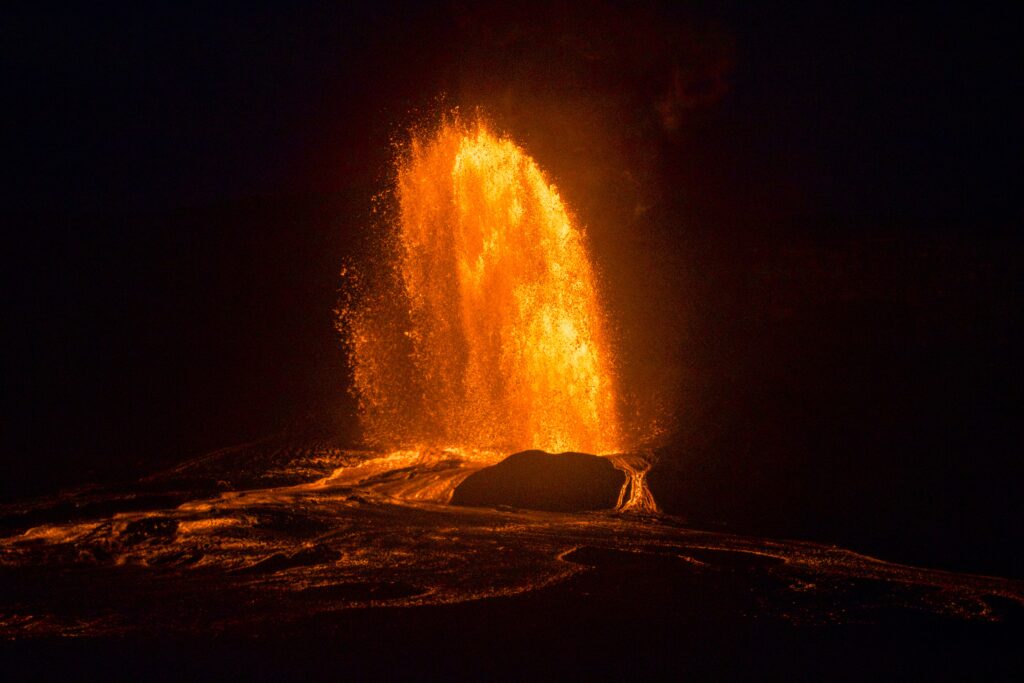
On Wednesday, July 15, 2026, Hawaii’s Kilauea volcano wrapped up another dramatic chapter in its ongoing summit eruption series.
According to the U.S. Geological Survey, the 51st episode of lava fountaining in Halema‘uma‘u crater lasted just over eight hours before coming to an abrupt close.
The activity kicked off around 8:30 a.m. local time, with powerful fountains shooting lava skyward to heights of approximately 950 feet.
Observers noted the intensity building quickly, reaching a peak effusion rate of about 370 cubic yards per second shortly after 10:30 a.m. Over the full duration of the episode, the average rate held steady at roughly 200 cubic yards (150 cubic meters) per second.
By late afternoon, the fountains had gradually diminished, and the episode wrapped up at 4:46 p.m. A minor shallow magnitude-2 earthquake was recorded beneath the southeast corner of Halema‘uma‘u crater during the afternoon, a common occurrence tied to these energetic events.
As the eruption progressed, a volcanic plume rose from the north vent, carrying tephra and other materials. Forecasters from the National Weather Service indicated that prevailing low-level trade winds would primarily direct the lower portions of the plume southwestward, leading to tephra fallout in that direction.
However, shifting south winds raised the possibility of ash and fine strands of Pele’s hair drifting northward toward Hawaii Volcanoes National Park and surrounding communities.
While such fallout can linger in the atmosphere depending on local wind patterns and weather conditions, these fountaining episodes typically remain relatively short-lived—often concluding within 12 hours or less. In this case, the impacts appeared limited, with much of the material confined to areas within the national park.
Kilauea has been exhibiting this episodic pattern of inflation followed by intense but brief fountaining events for months, captivating both scientists and visitors alike.
The volcano remains closely monitored, and authorities advise the public to stay informed through official channels for any updates on future activity or potential hazards like vog (volcanic smog) and falling debris.
This latest episode adds to the remarkable tally of eruptive bursts at Kilauea, highlighting the dynamic nature of one of the world’s most active volcanoes.
Residents and tourists in the area should continue to heed park guidelines and air quality advisories during periods of heightened activity.