
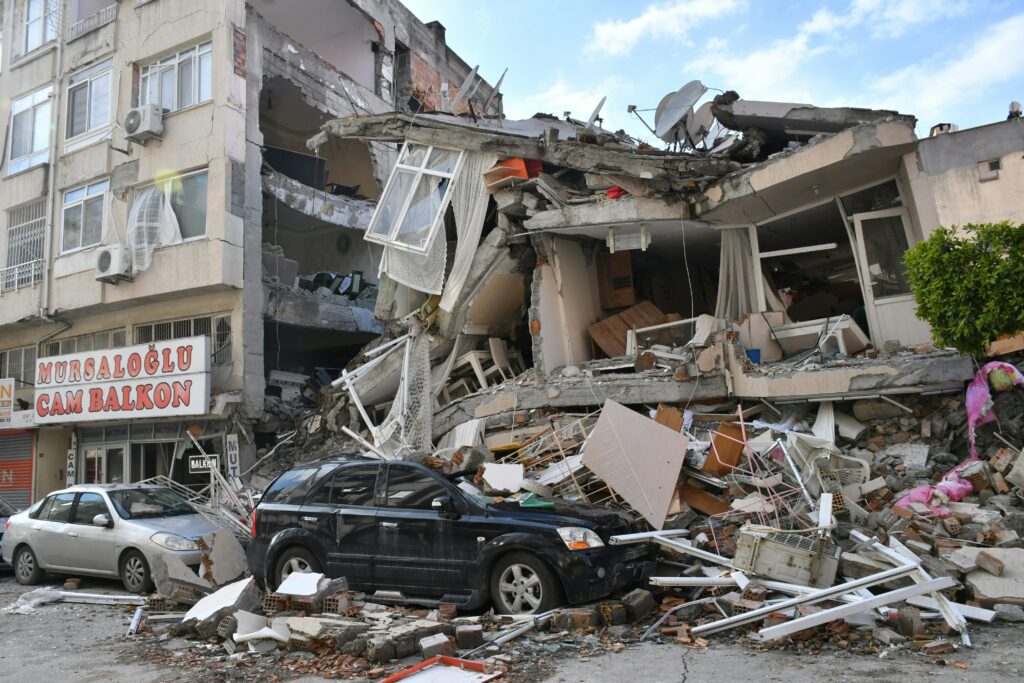
Southern California experienced a notable cluster of earthquakes over a short period, coinciding with scientific findings that certain segments of the San Andreas fault system are under the highest levels of tectonic stress seen in the past 1,000 years. While the quakes themselves caused no reported injuries or significant damage, they have drawn attention to the region’s long-term seismic risks and the importance of ongoing preparedness efforts.
The sequence began early on a Sunday morning with a magnitude 4.1 tremor near Frazier Park in Kern County. This event was felt across a wide area, including parts of Santa Barbara, San Diego, and even farther north, prompting hundreds of reports from residents through the U.S. Geological Survey’s systems. Seismologists quickly determined that it originated on the Pleito Fault, a relatively minor structure, rather than the more prominent San Andreas or Garlock faults. A smaller aftershock followed later that day.
The following Monday brought another quake in the same county: a magnitude 4.3 event near Johannesburg, in the Rand Mountains area north of Edwards Air Force Base. This shallow tremor, occurring at a depth of around seven to eight kilometers, sent shaking into neighboring counties like Los Angeles, Orange, Riverside, Ventura, and San Bernardino. At roughly the same time, a stronger magnitude 6.3 earthquake struck in the Pacific Ocean southeast of New Caledonia’s Loyalty Islands, though its remote oceanic location limited any widespread impact.
These local events unfolded against the backdrop of a recent peer-reviewed study that modeled earthquake cycles over the last millennium along the southern San Andreas and San Jacinto fault systems.
Led by geophysicist Liliane Burkhard of the University of Bern and affiliated with the University of Hawaiʻi at Mānoa, the research used advanced four-dimensional simulations to assess Coulomb stress—a measure combining forces that promote or resist fault movement. The results indicated that key segments, including the San Jacinto Bernardino area northeast of Los Angeles, are currently experiencing stress levels exceeding any point in the modeled 1,000-year history.
Researchers highlighted the Cajon Pass as a critical “earthquake gate” where the San Andreas and San Jacinto faults intersect. Historical patterns suggest that when stress differences across this junction drop to certain thresholds, ruptures can jump between fault systems, potentially leading to much larger events.
While the current configuration has not yet reached that precise trigger point, the overall loading state of the faults is described as critically elevated, more than 160 years after the last major rupture in the region. A through-going event in this area could potentially reach magnitudes between 7.4 and 7.8, impacting a broad swath of Southern California simultaneously.
Importantly, experts stress that small to moderate quakes like those in Kern County do not serve as reliable predictors of imminent larger ones, nor do they meaningfully relieve built-up stress on the primary faults. They represent typical background seismicity in a highly active tectonic zone, but their occurrence in an already stressed environment serves as a timely reminder for residents.
Southern California’s earthquake early warning system, known as ShakeAlert, performed as designed during the Frazier Park event. By detecting initial compressional waves that travel faster than the more damaging shear waves, the network provides seconds to tens of seconds of advance notice in many areas—enough time for people to take cover or for automated systems to secure critical infrastructure. This capability has improved with a nearly complete network of seismic stations across the state.
The broader context includes heightened activity along the Pacific Ring of Fire, a vast tectonic belt responsible for the majority of the world’s earthquakes. Events like the recent Loyalty Islands quake are not uncommon in subduction zones where plates converge rapidly, but when combined with nearby activity, they underscore the dynamic nature of Earth’s geology.
For the millions living in the region, the key takeaway remains proactive preparation rather than alarm. Maintaining emergency supplies for at least 72 hours, securing heavy furniture, knowing local building vulnerabilities, and familiarizing oneself with safety protocols such as “Drop, Cover, and Hold On” are recommended steps. Authorities continue to monitor the faults closely, emphasizing that while the long-term risk is elevated, precise timing of major earthquakes remains beyond current scientific capabilities.
This cluster of tremors offers an opportunity for reflection on resilience in earthquake country, reinforcing the value of infrastructure investments and public awareness in mitigating future impacts.