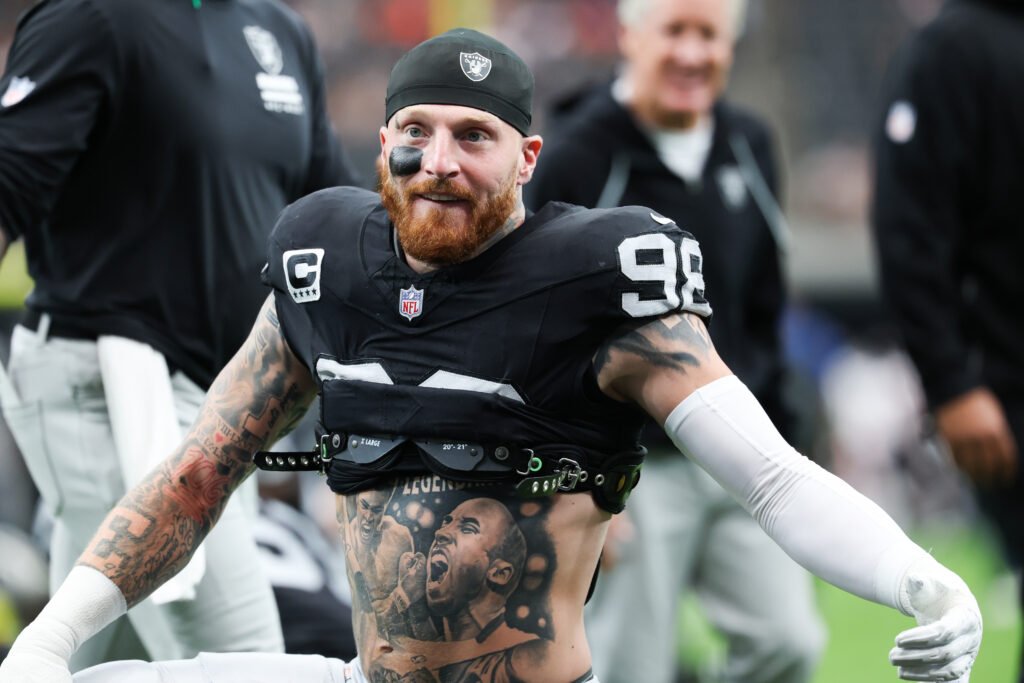
The Las Vegas Raiders enter the upcoming NFL campaign amid significant uncertainty surrounding one of their most prominent defensive anchors. Maxx Crosby remains a central figure in franchise discussions, yet the possibility of his departure looms larger than ever following a turbulent offseason.
What began as a high-profile transaction has evolved into a broader conversation about the team’s future direction and roster management priorities.
During the offseason, Crosby was involved in a deal that would have sent him to the Baltimore Ravens, only for the agreement to fall through after he did not pass the team’s physical examination. This development highlighted a mutual willingness between the star defensive end and the Raiders organization to explore new opportunities.
While loyalty remains part of the narrative, practical considerations in professional football often take precedence over sentimental attachments.
Crosby has publicly expressed strong allegiance to the Silver and Black, insisting he envisions himself as a Raider for the long term. Nevertheless, observers recognize that such declarations do not always dictate outcomes in a league driven by performance, salary structures, and competitive windows. The situation leaves both parties at a crossroads as the 2026 season approaches.
One NFL analyst strongly recommends that the Raiders capitalize on the current market for Crosby rather than waiting. With his trade value holding steady despite recent setbacks, acting decisively could provide the franchise with valuable assets to rebuild around a younger core. This perspective underscores the pragmatic realities facing teams that are not immediate contenders.
Brent Sobleski of Bleacher Report recently published guidance directed at all 32 franchises, offering targeted strategies for roster improvement. In his assessment for Las Vegas, the recommendation centers on moving the veteran pass rusher promptly to maximize return before any further decline in perceived value.
“In Crosby’s case, he’s already been traded once. Considering how many teams still need pass-rush help, his value should still remain relatively high, even if it’s not quite to the level the Raiders were supposed to receive from the Baltimore Ravens,” Sobleski wrote.
The analyst draws a parallel to another elite edge defender, emphasizing Crosby’s immediate impact potential.
“Like Myles Garrett, Crosby is a player ready to win now when the organization isn’t.”
This comparison illustrates why Crosby continues to attract attention across the league. At his age and with his established production, he represents a plug-and-play solution for squads seeking to bolster their defensive fronts without lengthy development periods. Multiple contending teams could benefit from his presence as they pursue postseason success.
Speculation has already linked Crosby to several potential landing spots, including the San Francisco 49ers and the Philadelphia Eagles. Reports suggest a wider pool of interested clubs exists, each evaluating how his skill set could address specific defensive shortcomings. Any such move would likely involve draft picks or young talent heading back to Las Vegas in exchange.
The timing of any potential transaction adds another layer of complexity. Teams may prefer to see Crosby perform in preseason action or early regular-season games to gauge his recovery from the injury that complicated the earlier deal. Conversely, the Raiders might benefit from resolving the situation sooner, avoiding distractions once the campaign officially begins.
Ultimately, the coming weeks will prove critical in determining Crosby’s fate. The Raiders must weigh short-term competitiveness against long-term flexibility, while the player himself balances individual ambitions with team loyalty.
Whatever path unfolds, the decision will carry substantial implications for both the franchise’s trajectory and the broader landscape of NFL pass-rush dynamics.