
The Green Bay Packers are navigating an unusual financial squeeze for a franchise long known for stability. After handing Micah Parsons a massive contract that included a large signing bonus, the team posted a rare financial loss in 2025 — the first non-pandemic shortfall since 1990.
Because of the Packers’ unique public ownership structure, they can’t simply inject outside capital the way most NFL teams can. That reality is forcing the front office to think carefully about cash flow, not just the salary cap.
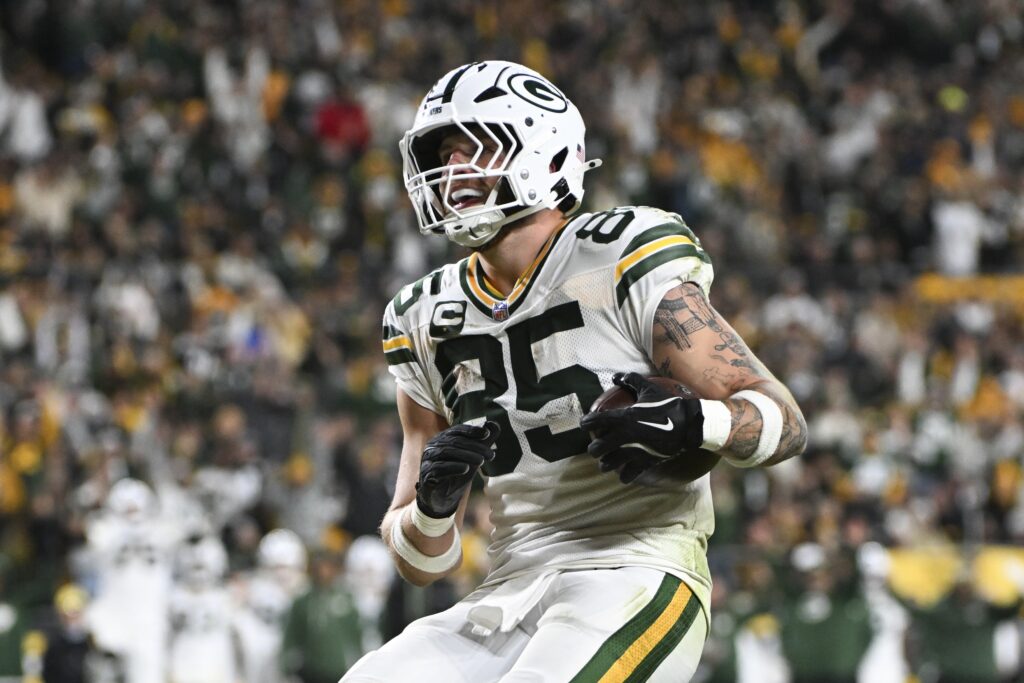
One of the clearest potential casualties of that caution is tight end Tucker Kraft, at least according to Justin Carter of FanSided.
“This, I think, is the big one to watch if the Packers’ financial situation gets too dire,” Carter wrote. “Kraft is set to hit free agency in 2027 and has shown flashes of being one of the league’s elite tight ends. At a position where it can be hard to find great players, could a team swoop in with enough upfront money that it makes the Packers blink?”
Kraft has already shown he can be a high-level producer at a premium position: in his last full healthy season in 2024, he hauled in 50 receptions for 707 yards and seven touchdowns.
Even after missing nine games in 2025, he remains one of the more intriguing young tight ends in the league. A strong, healthy 2026 campaign would likely elevate him into the top tier of available free-agent tight ends.
That’s exactly where the Packers’ cash concerns become relevant. Large extensions or free-agent deals in the NFL typically require significant upfront signing bonuses.
Those bonuses hit a team’s cash ledger immediately, even if the salary-cap hit is spread out. Green Bay has signaled it may be reluctant to commit big cash outlays while it works to shore up its finances and explore new revenue streams. That hesitation could leave Kraft without a competitive long-term offer from the only organization he has known.
The 2027 tight-end market may compound the problem. Several established veterans will be available, but many of them will be on the wrong side of 30. If the Detroit Lions retain Sam LaPorta, Kraft could emerge as the most attractive younger option on the open market. Rival teams with healthier cash positions would have every incentive to offer him the kind of guaranteed money Green Bay might prefer not to match.
None of this means Kraft is certain to leave. The Packers have a strong track record of retaining their own when they view a player as foundational, and Kraft’s combination of size, athleticism, and production makes him a natural fit for the offense.
But the current financial climate changes the calculus. What once might have been a relatively straightforward extension conversation is now tangled up in questions of cash reserves, signing-bonus appetite, and long-term organizational priorities.
For a Packers fan base accustomed to continuity, the possibility that a rising tight end could be priced out of town is a new and uncomfortable development.
Kraft’s 2026 performance will determine how loud the market gets. Green Bay’s willingness — or ability — to meet it will determine whether he stays.