
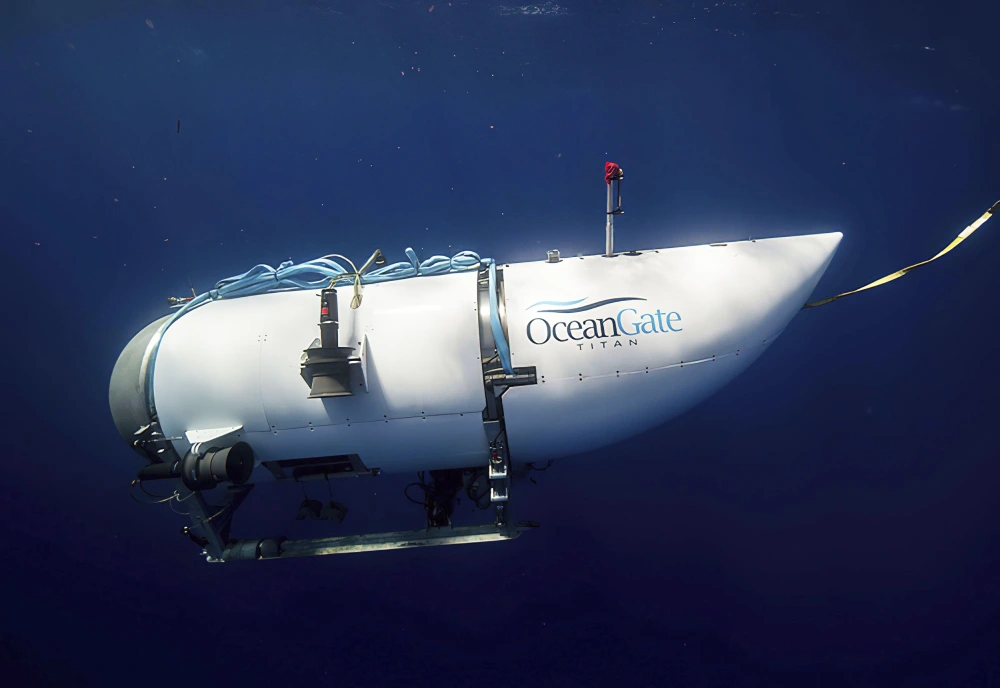
The catastrophic implosion of the Titan submersible in June 2023, which claimed the lives of everyone aboard during a descent to the Titanic wreck site, stemmed from a combination of serious engineering shortcomings, overlooked safety risks, and insufficient government supervision, a comprehensive Canadian investigation has determined.
Canada’s Transportation Safety Board (TSB) released its final 136-page report on the tragedy, pinning responsibility on fundamental problems in how the vessel was designed and constructed. Investigators concluded that the experimental craft never received the rigorous scrutiny required for operations at extreme ocean depths.
“The investigation determined that the as-built properties of the Titan’s carbon fibre cylinder were never validated to ensure they met the theoretical values used in the design process and that the construction and testing of the Titan did not follow standard engineering practices,” the agency concluded in its 136-page report.
The TSB found that the company behind the expedition, OceanGate, underestimated the hazards its passengers faced. Decision-makers appeared caught in a pattern of collective overconfidence and selective interpretation of data that reinforced their existing beliefs rather than challenging them.
Material analysis played a central role in the findings. When examiners studied spare sections of the same carbon-fiber composite used in the Titan’s hull, they discovered inherent weaknesses that undermined the vessel’s overall strength from the outset. These flaws meant the pressure hull was vulnerable in ways that standard quality controls should have identified long before any dive.
Testing procedures also fell far short of industry norms. While OceanGate had subjected the submersible to pressures simulating the depth of the Titanic—roughly 12,500 feet—the evaluation did not account for the cumulative wear caused by repeated missions.
“The as-built properties of the Titan’s carbon fibre cylinder were never validated to ensure they met the theoretical values used in the design process, and the construction and testing of the Titan did not follow standard engineering practices,” TSB wrote.
“As a result, OceanGate did not know for how long the Titan’s pressure hull would remain structurally intact when used repeatedly for dives to the depth of the Titanic.”
These conclusions align closely with an earlier investigation by the U.S. National Transportation Safety Board. That October report similarly highlighted how flawed engineering choices produced a composite pressure vessel riddled with inconsistencies and incapable of meeting required standards for strength and longevity. Both agencies noted that OceanGate lacked a clear understanding of the craft’s actual limits under operational stress.
The fatal dive occurred on June 18, 2023, marking the Titan’s 88th excursion. Roughly two hours after submerging, the vessel lost communication with its surface support ship. When it failed to resurface on schedule, search efforts began in earnest across a remote patch of the North Atlantic, approximately 435 miles southeast of St. John’s, Newfoundland.
Despite an international mobilization of vessels, aircraft, and specialized equipment, no signs of life emerged after several days. Debris later confirmed the hull had suffered a sudden, violent collapse.
Those lost in the disaster included OceanGate founder and CEO Stockton Rush, veteran French diver Paul-Henri Nargeolet—affectionately called “Mr. Titanic”—British explorer Hamish Harding, and Pakistani businessman Shahzada Dawood with his 19-year-old son Suleman. The pair had joined the trip after Shahzada’s wife, Christine, generously stepped aside so father and son could share the experience.
In the months that followed, Christine Dawood endured profound sorrow. The mere sight of the sea triggered waves of anguish as she processed the sudden absence of her loved ones. Her story brought a deeply personal dimension to a tragedy already marked by technical failure.
OceanGate officially shut down its operations in July 2023, only weeks after the incident. The dual investigations serve as stark reminders of the risks inherent in pushing experimental technology into one of the planet’s most unforgiving environments without exhaustive validation and independent oversight.