The Miami Dolphins dropped their fifth consecutive game on Sunday, falling 31-24 to the Cincinnati Bengals at Hard Rock Stadium and remaining winless through the early portion of the 2026 season.
While the result extended a difficult start under new head coach Jeff Hafley, the offense managed its highest point total of the year and scored multiple touchdowns for the first time.
Even so, the passing attack continued to lag, producing just 114 yards through the air against a Bengals secondary that capitalized on early mistakes.
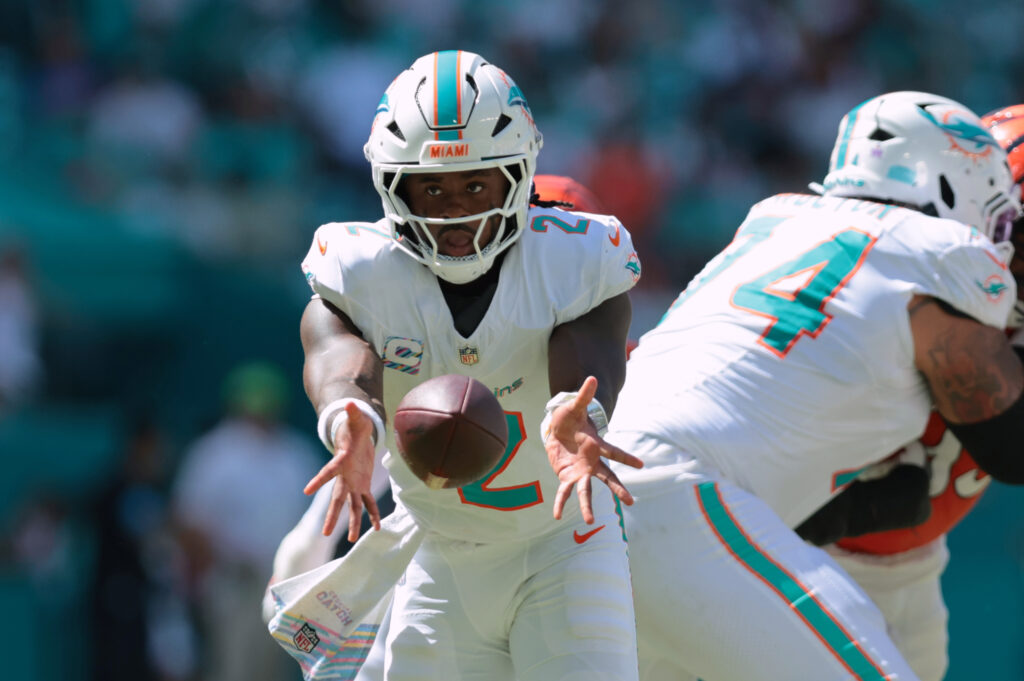
Quarterback Malik Willis, who signed a contract that included $45 million in guarantees during the offseason, finished 15 of 27 for 137 yards with one touchdown and two interceptions.
He also rushed for a season-high 74 yards and scored on the ground, but the turnovers and inconsistent accuracy overshadowed those contributions.
Early in the contest, Willis had more interceptions than completions, and a red-zone sequence that began near the goal line ended with a sack and a field-goal attempt rather than a touchdown.
Willis later acknowledged the need for better coordination, saying the group still has to find a way to get everyone on the same page.
After the loss, Hafley addressed the broader offensive issues without placing sole blame on the quarterback, but it was hard not to read Hafley’s remark as a slight jab at Willis.
“We’re going to need better consistency in our passing game, overall, in order to take the next step offensively,” the coach said.
The Dolphins nearly doubled their aerial production on the ground, totaling 217 rushing yards led by Ollie Gordon II and Willis’s own contributions. That balance kept the game competitive late, yet it also highlighted how dependent the unit remains on the run when the passing game stalls.
Observers outside the organization were more pointed. One analysis labeled Willis the biggest disappointment of the afternoon, noting three turnovers in a contest where the margin for error was thin against Joe Burrow and Cincinnati’s offense.
The piece pointed to a young receiving corps still developing chemistry and to repeated decision-making lapses, including an earlier unnecessary sack that Willis himself had already identified as a mistake he cannot continue to make.
Pressure and inexperience may explain some of the inconsistency, the assessment argued, but they do not excuse the repeated miscues.
Miami now enters its bye week with an opportunity to recalibrate before returning in Week 7. The ground game has shown flashes, and the defense has moments of resilience, yet the offense’s ceiling remains tied to the development of the passing attack.
Whether Willis can build greater consistency with his receivers and limit the self-inflicted errors will shape how the Dolphins look once they resume play. For a team still searching for its first victory, the coming weeks offer a chance to address the gaps Hafley identified before the schedule resumes.