
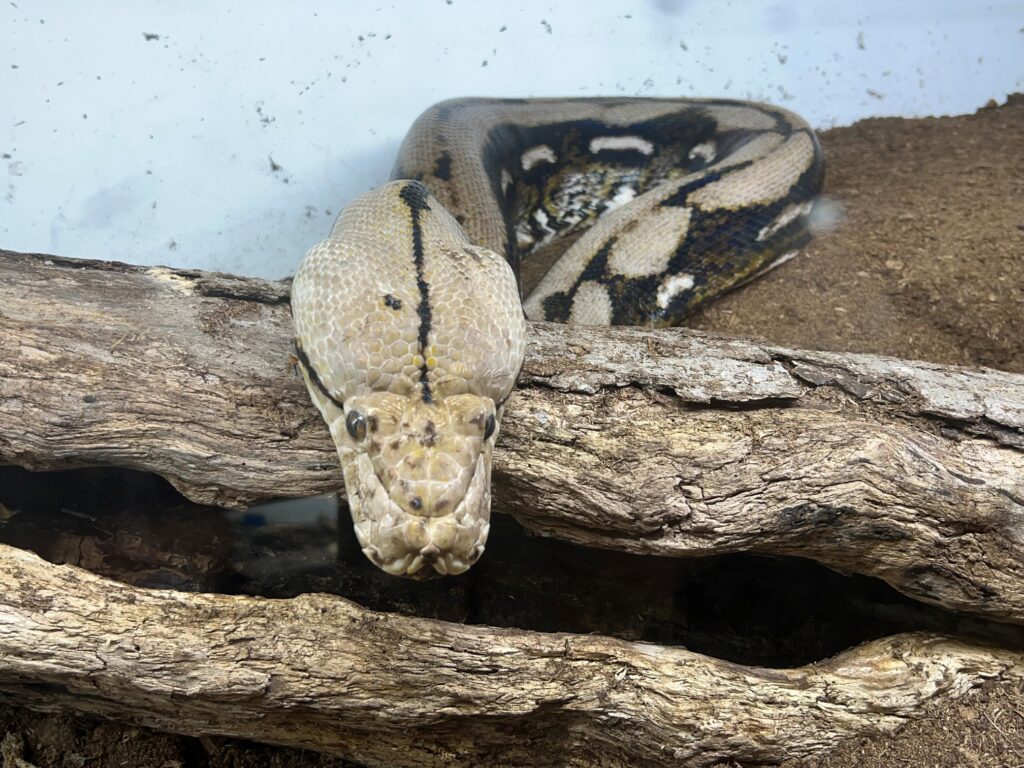
In the coastal marshes of Charlotte County, where rivers meet the Gulf waters of Charlotte Harbor, a troubling new chapter in Florida’s battle against invasive species is unfolding.
Burmese pythons, long a dominant threat in the Everglades, have now established a foothold in this area farther north and west, raising alarms about their potential to spread into new territories.
The Florida Fish and Wildlife Conservation Commission (FWC) has confirmed an established breeding population in the region, marking it as the only significant hotspot outside the Greater Everglades ecosystem.
This development comes as officials intensify efforts to contain the snakes before they can gain a stronger grip on the local environment. Annisa Karim, the FWC’s coordinator for nonnative fish and wildlife, highlighted the area during a recent water management meeting, pointing to mapping data that showed two primary red-flagged zones: the vast southern invasion and this smaller but concerning pocket in Charlotte County.
Records from the Early Detection and Distribution Mapping System indicate that around 78 pythons have been documented in the county through captures, sightings, or recoveries of deceased snakes.
A significant portion of these reports—about 61 percent—have occurred since 2024, suggesting rapid growth. Most sightings cluster around communities like Rotonda West, Placida, Englewood East, and South Gulf Cove. FWC officials suspect the snakes originated from released or escaped pets rather than natural migration from southern populations, a common pathway for many invasive reptiles in the state.
To address the issue, the FWC began deploying two dedicated part-time python removal technicians in June 2024. These specialists conduct regular surveys and removals in high-density areas three times a week.
The agency is also calling on local residents to assist by reporting sightings through volunteer channels, specifically noting interest in Charlotte County python surveys.
This localized population arrives amid broader challenges for Florida’s wildlife managers. Burmese pythons, which first became established in Everglades National Park by the mid-1980s through releases, function as formidable apex predators. They consume a wide range of native animals, from small mammals and birds to larger prey like white-tailed deer and even alligators, disrupting delicate ecosystems in the process.
Experts emphasize the urgency of early intervention. University of Florida wildlife ecology professor Frank Mazzotti noted that a population is considered established once breeding and nesting evidence appears. “The pythons are popping up everywhere farther north,” he warned. “We are going to have to do much more extensive monitoring because once they get established, it’s probably too late.” Mazzotti stressed the importance of preventing new colonies rather than accepting defeat in areas already overrun.
The upcoming 2026 Florida Python Challenge, set to launch on July 10, offers cash prizes and draws hunters to designated South Florida zones. However, it does not currently extend to Charlotte County, though future expansions remain under consideration as the snakes continue their northward creep.
Isolated individuals have been spotted even farther north, such as in areas near Jacksonville, but no other established breeding groups have been identified outside the main southern stronghold and this new Charlotte County site.
Environmental factors may aid the pythons’ expansion. Man-made canals on the Cape Haze Peninsula provide convenient travel corridors, while major rivers feeding into Charlotte Harbor could facilitate further movement.
Additionally, warming trends linked to climate change are shifting temperature zones, potentially allowing the cold-sensitive snakes to survive in regions previously thought inhospitable. Researchers point to microhabitats, such as warm springs, as possible refuges that could support populations well beyond current expectations.
Local wildlife removal professionals have observed similar patterns with other invasives like iguanas, underscoring a need for greater public awareness about the dangers of releasing exotic pets. As officials work to contain this latest incursion, the situation serves as a reminder that Florida’s invasive species challenges are far from over, with proactive monitoring and rapid response remaining critical to protecting native biodiversity.