
The Miami Dolphins are still living with the financial aftermath of a wholesale roster reset, and on Wednesday they took another small step to keep that reset from boxing them in during the regular season.
According to Spotrac, the club converted portions of four existing deals into signing bonuses and generated roughly $2.5 million in additional 2026 salary-cap space.
The largest slice came from right tackle Austin Jackson. Miami turned $1.51 million of his per-game roster bonus into a signing bonus, which lowered his current-year charge by about $1.2 million.
Jackson, a former first-round pick out of USC, remains one of the few holdovers with real starting experience on a line that is otherwise in flux.
Tight end Greg Dulcich and defensive lineman Zach Sieler saw similar treatment on their per-game bonuses, saving the team $272,000 and $408,000 respectively.
Cornerback JuJu Brents was handled differently: $792,000 of his base salary was converted, creating $634,000 in room. Those four conversions add up to the $2.5 million figure that now sits on the books.
The timing is not accidental. After cutting or trading Tua Tagovailoa, Tyreek Hill, Jaylen Waddle, Minkah Fitzpatrick and several other veterans, Miami is carrying a historic dead-cap bill that still exceeds $180 million.
That leaves the active roster looking inexpensive on paper and still tight in practice, because injured players continue to count against the cap and midseason additions eat into whatever space remains.
After the latest moves, Spotrac has the Dolphins around $8.8 million under the cap, a mid-pack total that looks more useful once the season is underway than it did in August.
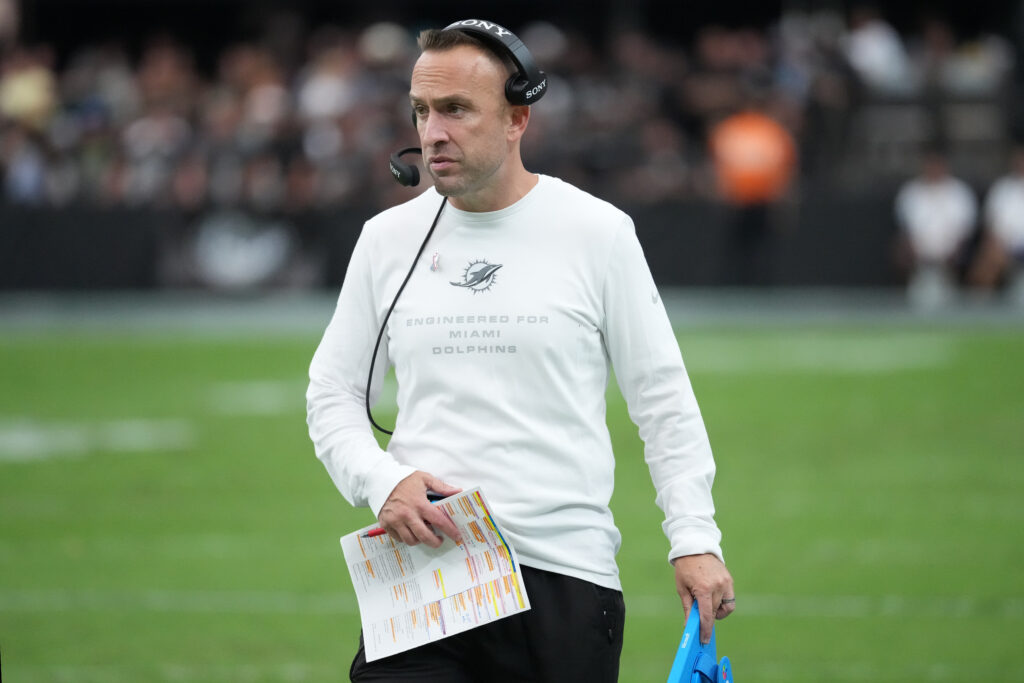
New general manager Jon-Eric Sullivan and coach Jeff Hafley have made clear they expect to keep shopping for depth as injuries pile up.
An extra couple of million will not buy a star, but it can cover a veteran minimum signing, a practice-squad elevation, or the incremental cost of replacing someone who lands on injured reserve.
It can also make Jackson or Sieler slightly easier to move if a contender calls before the trade deadline, because the remaining cash a new team would inherit is lower.
None of this changes the larger picture. Miami is in year one of a rebuild and will almost certainly finish near the bottom of the AFC East. What the restructures do is give the front office a little more oxygen while that process plays out.
In a league where one missed week of availability can force an emergency signing, $2.5 million is not glamorous, but it is the kind of unglamorous work that keeps a depleted roster from becoming completely frozen.