
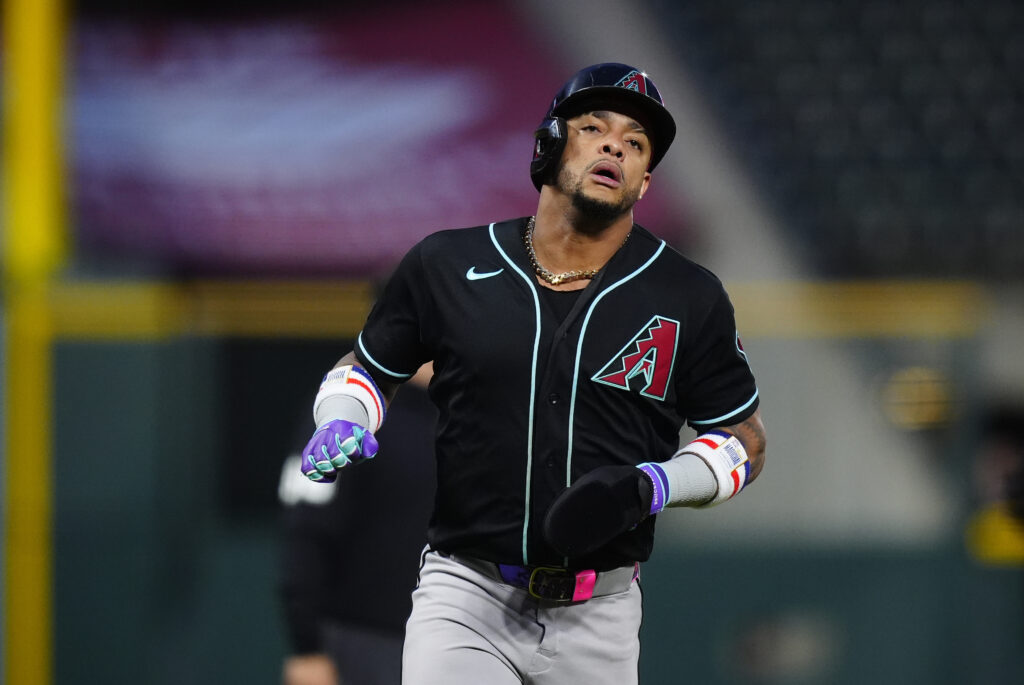
The Arizona Diamondbacks enter another offseason still grappling with the complicated reality surrounding second baseman Ketel Marte.
At 33 years old and coming off a down season by his standards, Marte remains one of the more productive switch-hitters in the National League, yet the long-term fit in Arizona has grown increasingly uncertain.
His contract, which averages under $20 million annually through 2030 and includes a player option for 2031, still represents solid value, but questions about his desire to remain in the desert, combined with clubhouse friction and a need for pitching depth, have kept his name in trade conversations.
For a Diamondbacks front office that has prioritized building around controllable arms while managing a roster with clear holes at first base and in the rotation, exploring a deal for Marte is less about unloading a star and more about whether any return can meaningfully improve the team’s chances of contending.
Christopher Kline of FanSided recently outlined a hypothetical package in which the St. Louis Cardinals would send catcher-first baseman Leo Bernal and right-hander Kyle Leahy to Arizona in exchange for Marte.
From the Diamondbacks’ perspective, the proposal invites careful scrutiny rather than automatic rejection. Bernal, a 22-year-old who debuted last season and posted an .807 OPS in limited action, offers immediate help at first base, a position that has troubled Arizona, while also providing insurance behind Gabriel Moreno at catcher.
Leahy, who emerged as one of St. Louis’ more reliable starters, projects as a mid-rotation option who could absorb innings without the long-term risk attached to higher-upside but less proven arms.
Those pieces address tangible needs, yet they do not scream as the kind of transformative haul that would make parting with a switch-hitter who finished in the top three of MVP voting just two seasons ago feel like a clear win.
The larger calculation for Arizona hinges on whether the clubhouse benefit of moving on from a sometimes polarizing veteran outweighs the offensive drop-off.
Marte’s bat has remained a steady source of production even in a lesser year, and his switch-hitting ability has historically lengthened the lineup.
Sending him away would force the Diamondbacks to replace that thump elsewhere, either through free agency or by elevating younger players who have yet to prove they can match his consistency.
At the same time, the baggage Kline referenced—and the simple fact that Marte holds a no-trade clause he would need to waive—complicates any negotiation. Arizona cannot force a deal, and any package must be attractive enough that Marte is willing to approve it.
In the end, a return centered on Bernal and Leahy might intrigue the Diamondbacks if their internal evaluations of both players are high and if they view 2027 as a season in which depth and flexibility matter more than star power.
Still, the organization would be wise to demand additional value or a clearer path to replacing Marte’s production before seriously entertaining such a move.
The relationship may be strained, but trading a proven bat for complementary pieces is only worthwhile if those pieces help Arizona win more games than they would with Marte still in the lineup.