
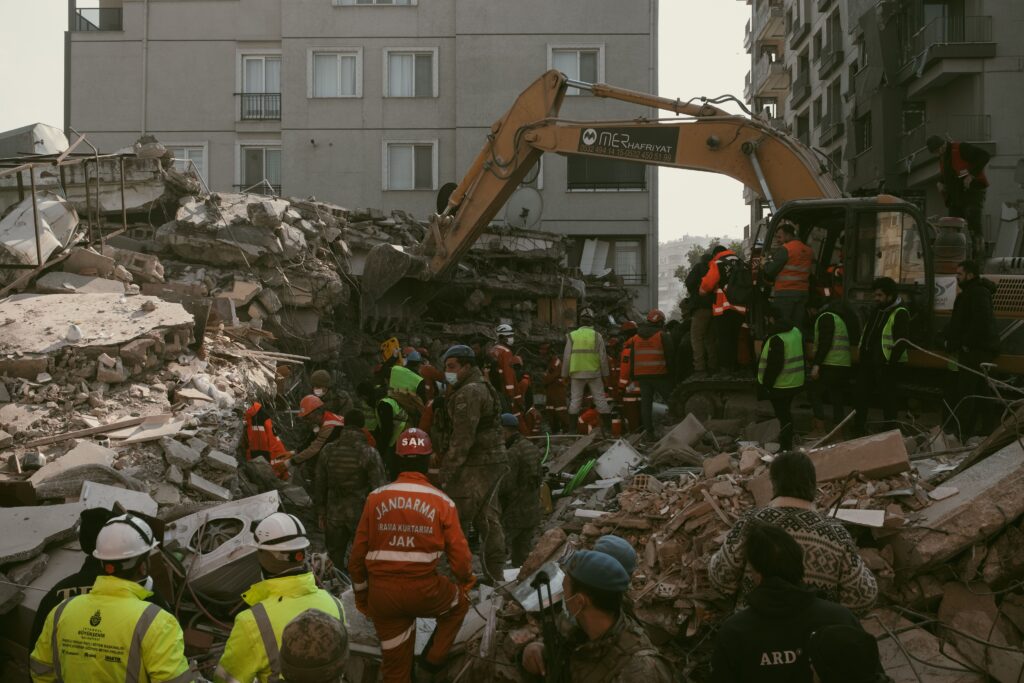
A recent major earthquake in Mexico has sent ripples of concern far beyond its epicenter, serving as a stark and troubling wake-up call for neighboring California.
While the immediate destruction and human toll remain centered south of the border, seismologists and tectonic experts view the event as a grim preview of what likely lies ahead for the Golden State, emphasizing the shared geological vulnerabilities of the West Coast.
Expert Stefan Burns detailed why during a recent YouTube video, and his explanation should absolutely have California residents on high alert.
The primary reason this event spells bad news for California lies in the complex network of interconnected fault lines that span the region.
The Pacific Rim is a hotbed of seismic activity, and the tectonic forces that triggered the disaster in Mexico belong to the same broader system that governs California’s subterranean landscape. When a massive quake occurs along this margin, it alters the stress distribution across nearby fault systems.
Experts warn that a major rupture to the south can occasionally trigger a subterranean domino effect, potentially increasing tectonic strain on volatile systems like the San Andreas Fault.
Beyond the direct physical strain on the Earth’s crust, the earthquake exposes a troubling reality about California’s structural preparedness. The destruction observed in Mexico’s urban centers highlights the catastrophic potential of prolonged, high-magnitude shaking on modern infrastructure.
Despite California having some of the strictest building codes in the United States, thousands of older, unreinforced masonry and soft-story buildings across Los Angeles and San Francisco remain highly vulnerable to collapse.
Seeing how modern concrete structures fared in Mexico provides emergency management officials with a sobering assessment of the gaps that still exist in American disaster readiness.
Furthermore, the disaster highlights the critical limitations of early warning systems. While technology has advanced to provide residents with a few precious seconds of notice before the heaviest shaking arrives, a massive, fast-moving rupture leaves very little room for error.
If a similar event strikes closer to home, the sheer speed of the seismic waves could outrun the digital alerts for those living closest to the epicenter, rendering the technology less effective for the communities in immediate danger.
Ultimately, the earthquake in Mexico serves as a powerful reminder that nature recognizes no international borders. The event strips away any sense of complacency, forcing California to confront its own inevitable seismic future.
With the geological clock ticking, the disaster to the south is a clear signal that the time to reinforce infrastructure, update emergency plans, and prepare for the “Big One” is rapidly running out.