
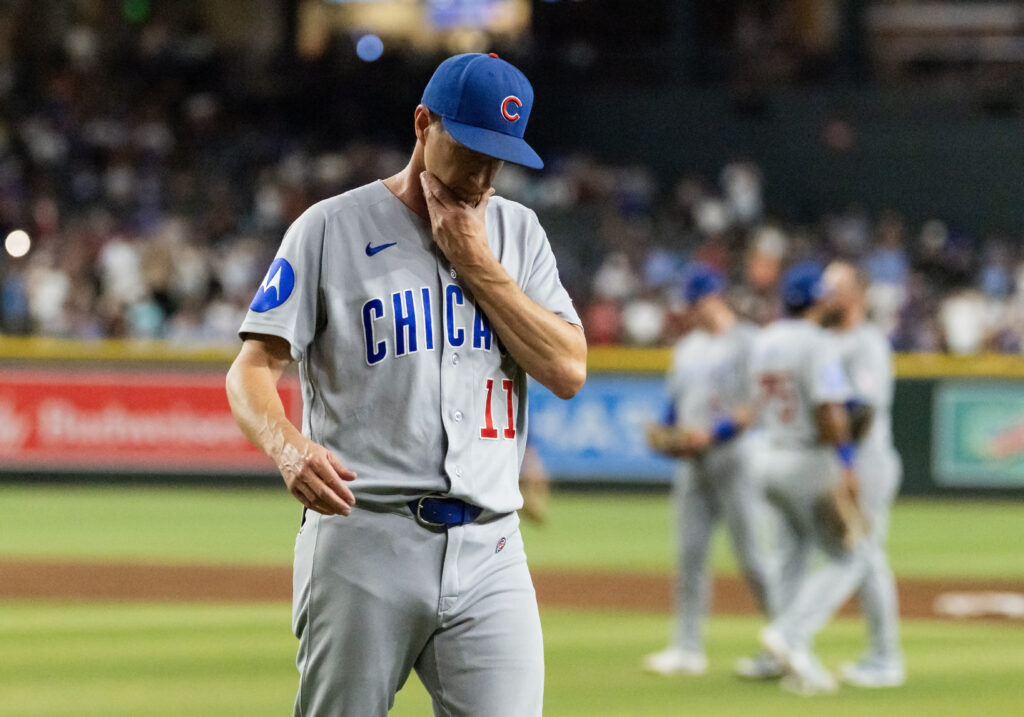
The Chicago Cubs enter free agency facing a familiar but uncomfortable reality with Seiya Suzuki.
After five seasons on the North Side that began with a five-year, $85 million deal out of Japan, the right fielder is set to test the open market.
He just completed the strongest year of his major-league career, posting a .270/.368/.473 slash line with 26 home runs and a 131 OPS+ while improving enough defensively in right field to become a clear asset rather than a liability.
For a franchise that has leaned on his consistent production, the possibility of him walking has loomed larger with each passing week.
Jim Bowden of The Athletic underscored that likelihood in his ranking of the top free agents. He slotted Suzuki sixth overall and projected a five-year, $120 million contract, yet listed only the Toronto Blue Jays and Philadelphia Phillies as the best team fits.
Bowden cited industry chatter that Toronto wants to add another right-handed bat to protect Vladimir Guerrero Jr., while the Phillies remain an obvious destination for power.
The absence of the Cubs from that short list stands out, especially when Bowden projected Randy Arozarena, ranked one spot ahead, to land a similar five-year deal in the $120 million range with several clubs named as fits.
For a Cubs team that already watched Kyle Tucker leave last winter, the message is hard to miss: retaining Suzuki is not viewed as a priority or even a realistic outcome by at least one prominent voice around the game.
That framing carries weight inside Wrigleyville.
President of baseball operations Jed Hoyer has already signaled that the Cubs cannot keep everyone from a large free-agent class that includes multiple outfielders and a pitching staff in need of reinforcement.
Resources that become available this winter are widely expected to tilt toward the mound rather than a bidding war for a corner bat who will turn 32 next season.
A qualifying offer remains likely, and its rejection would at least yield a draft pick, but that is cold comfort for a lineup that has counted on Suzuki’s right-handed power and on-base skills.
Fans who watched him become a reliable middle-of-the-order presence may hope for a reunion, yet the market signals point elsewhere.
If Toronto or Philadelphia pushes toward the $24 million annual range Bowden outlined, the Cubs appear positioned to move on, reshape the outfield around younger options, and redirect their spending.
The result would close a productive chapter while leaving Chicago to answer how it replaces the production it just watched walk out the door.