
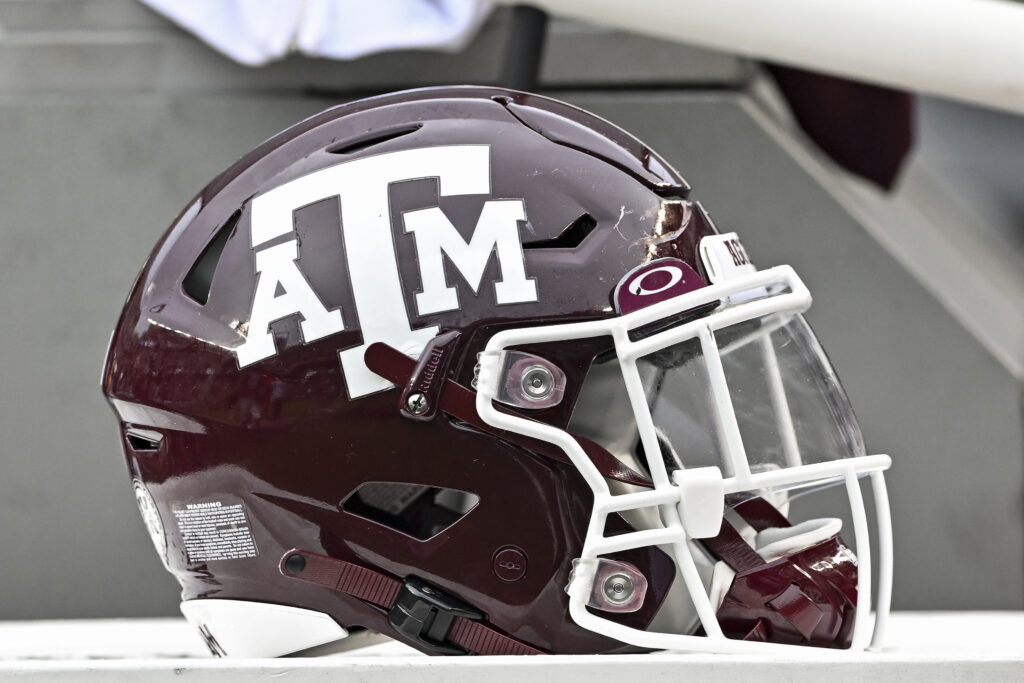
The Aggie family is mourning the loss of one of its own. Jerry Hopkins, a standout two-way player for Texas A&M in the early 1960s who went on to a six-year professional career that included a memorable stop with the Oakland Raiders, has died at the age of 85.
Hopkins arrived in College Station after building a strong reputation at Mart High School, where his performances eventually earned him a place in the Texas High School Football Hall of Fame. Once he put on the maroon and white, he quickly established himself as a leader and a versatile force.
He served as a team captain and started on both sides of the ball, anchoring the offensive line at center while also contributing as a linebacker. His senior season in 1962 brought first-team All-Southwest Conference recognition, a clear mark of the respect he commanded among his peers and coaches across the league.
That same year, he represented the Aggies in the Blue-Gray Game, started at center in the Southwest Challenge Bowl, and participated in the All-American Classic, further underscoring the high regard in which he was held as his college career drew to a close.
The next chapter took him into the professional ranks. Selected in the fourth round of the 1963 AFL Draft by the Houston Oilers, Hopkins was waived before the season began and signed with the Denver Broncos.
There he began carving out a solid role, appearing in seven games that first year while seeing time at both linebacker and center. By 1964 he had become a starter, first at middle linebacker and then on the left side, finishing the season with eight sacks and two interceptions.
He remained with the Broncos through 1966 before spending the 1967 season with the Miami Dolphins.
His final year in the league came in 1968 with the Oakland Raiders. That postseason he delivered a timely interception of a Kansas City Chiefs quarterback in the AFL West Division playoff, helping fuel a decisive 41-6 victory.
The Raiders advanced to the AFL championship game but fell just short against the New York Jets. Across six professional seasons Hopkins appeared in 69 games, leaving behind a résumé defined by toughness, versatility, and the same competitive fire that marked his days in Aggieland.
For those who followed Texas A&M football in that era, Hopkins represented the kind of player the program has long prized: a captain who could handle the physical demands of both sides of the ball, a competitor who earned conference honors, and an Aggie who carried the values of the university into the professional ranks.
His passing closes a chapter that began on the high school fields of Central Texas and stretched through Kyle Field into the rough-and-tumble AFL of the 1960s.
The Texas A&M community extends its deepest sympathies to his family and friends as they remember a former captain whose contributions on the field helped shape an important period in Aggie football history.