
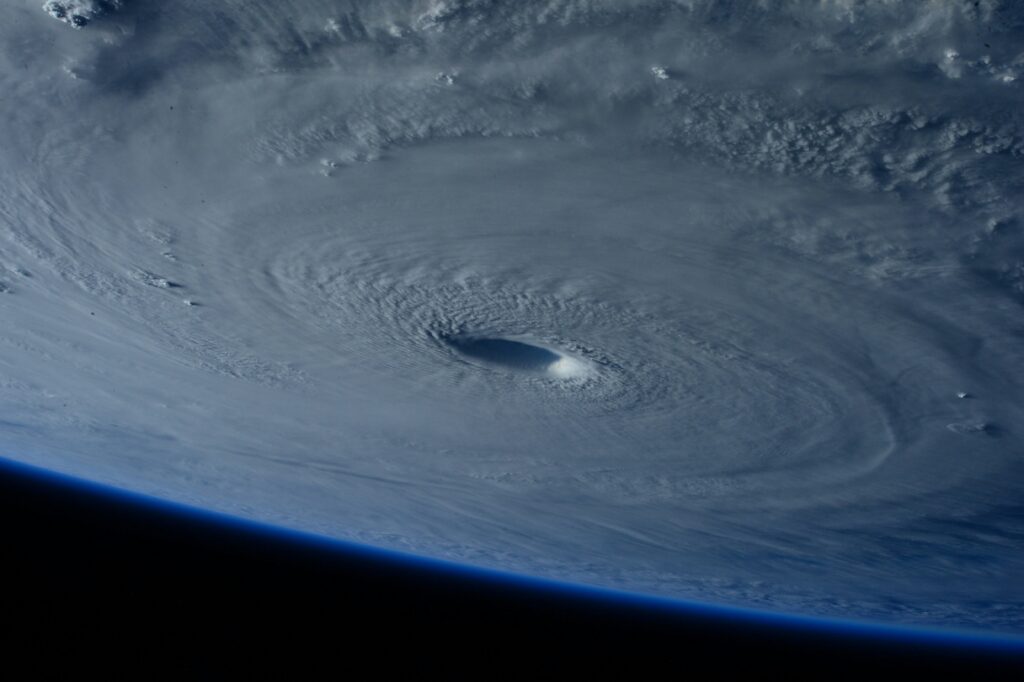
Super Typhoon Bavi, a formidable Category 5 system, struck the United States Pacific territories early Monday, unleashing powerful forces that disrupted daily life and transportation networks across multiple islands.
The massive storm moved through the region with intense ferocity, prompting widespread safety measures and leaving communities to deal with its aftermath.
Prior to the arrival of the typhoon, weather authorities had issued timely alerts over the weekend. Warnings covered Guam along with the Northern Mariana Islands, specifically Rota, Tinian, and Saipan, which serves as the regional capital. As the system intensified, officials urged residents to prepare for extreme conditions that could last for days.
On Monday morning local time, the storm made direct landfall. With sustained winds reaching 175 miles per hour, its center passed straight over Rota, where it inflicted notable structural harm, including to the local mayor’s office. Such powerful gusts highlighted the typhoon’s capacity to reshape landscapes in its path.
Beyond the immediate strike zone, heavy rains and scattered debris triggered extensive power disruptions on both Guam and Saipan. Residents faced sudden blackouts, complicating efforts to maintain essential services and communication during the height of the emergency.
Anticipating dangerous flying conditions, local governments and aviation operators acted decisively. Flights were suspended from Sunday through Tuesday across key facilities, including Guam’s A.B. Won Pat International Airport and the smaller terminals on Saipan, Rota, and Tinian. This proactive step aimed to protect passengers and crew from the hazardous weather.
In Guam specifically, reports indicated that 44 flights faced cancellation during that period. The tally included 23 departing services and 21 incoming ones, according to local coverage from Pacific Daily News. These interruptions affected connections to several major Asian hubs.
International routes linking to Tokyo in Japan, Incheon in South Korea, Manila in the Philippines, and Koror in Palau experienced significant setbacks. Travelers found their plans upended as airlines worked to reschedule once conditions improved, underscoring the storm’s far-reaching influence on regional connectivity.
Even areas farther away felt secondary effects from the powerful system. Honolulu in Hawaii saw two flights canceled on Monday—one early departure and one evening arrival—demonstrating how weather events in the western Pacific can ripple outward to neighboring destinations.
Six carriers operating at Guam’s main airport bore the brunt of the disruptions. United Airlines accounted for 28 cancellations, split evenly between 14 arrivals and 14 departures. Korean Air saw six flights affected with three in each direction, while Jin Air had four total. Air Seoul recorded two, Philippine Airlines faced two arrivals, and Star Marianas Air dealt with one arrival and one departure.
The typhoon’s strength extended well beyond aviation challenges. Described as comparable to a major hurricane, it produced widespread destruction through high winds and flooding that impacted infrastructure and daily routines throughout the islands.
“Super Typhoon Bavi brought damaging winds and torrential rain to the Northern Mariana Islands on Monday,” AccuWeather wrote on X. “The storm is equivalent to a Category 4 hurricane.”
Looking ahead, officials maintained vigilance with a flood watch extending through late Tuesday for Guam and the three Northern Mariana Islands. Some locations had already recorded up to 15 inches of rainfall, and forecasters warned that additional precipitation could exacerbate existing hazards in the coming hours.
Recovery efforts were expected to focus on restoring power, clearing debris, and assessing overall damage in the storm’s wake.