
The Alabama Crimson Tide have stood as a benchmark of excellence in college football for well over a century, building a legacy that few programs can match. With a history that nearly reaches 1,000 victories, the team has secured 15 national titles and 30 conference championships.
Legendary figures like Wallace Wade, Bear Bryant, and Nick Saban have guided the program through its most triumphant eras, shaping its identity as a consistent powerhouse.
Under Saban’s leadership, Alabama experienced one of the most dominant stretches in modern sports. Across 17 seasons, the Crimson Tide compiled a remarkable 206-29 record and claimed six national championships. This period solidified the program’s status as the sport’s premier dynasty, setting extraordinarily high expectations for sustained success.
Following the conclusion of the 2023 campaign, Saban chose to step away from coaching. His successor, Kalen DeBoer, arrived with strong credentials after steering the Washington Huskies to a national championship game berth. Fans and observers hoped the hire would ensure a seamless continuation of Alabama’s winning tradition.
In his first two seasons at the helm, DeBoer has produced solid results, posting a 20-8 overall mark. While the team has shown flashes of competitiveness, it has yet to emerge as a genuine threat for a national title. This transitional phase has prompted questions about whether the Crimson Tide are experiencing an inevitable decline in the post-Saban landscape.
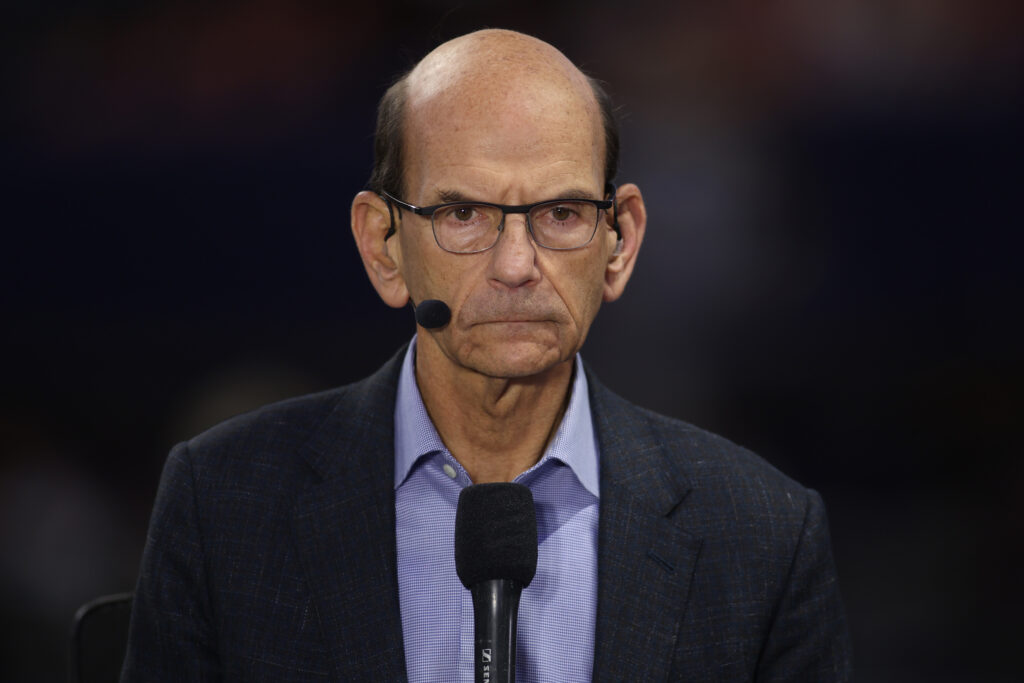
ESPN analyst Paul Finebaum addressed these concerns directly during an episode of “The Paul Finebaum Show.” He offered a measured perspective on the program’s trajectory.
“I don’t know how much longer Alabama will be among the elite,” Finebaum said. “But last year they were up there.”
Finebaum’s comments do not represent a forecast of total collapse but rather acknowledge the practical difficulties of maintaining supremacy. Replicating the extraordinary achievements of coaches like Bryant and Saban remains an immense challenge for any successor. Historical precedents across college football suggest that even the most storied programs encounter periods of adjustment.
Between 1997 and 2006, for instance, Alabama endured noticeable struggles. The team recorded five seasons at or below .500 during that span, alongside three campaigns with double-digit wins that still fell short of positioning them as national contenders. Such cycles illustrate that dips are part of the long-term story for elite programs.
Similar patterns have appeared elsewhere in the sport. The Nebraska Cornhuskers currently navigate their own rebuilding efforts, while the Texas Longhorns faced extended challenges throughout the 2010s. In earlier decades, the Oklahoma Sooners dealt with hardship in the 1990s, and the Notre Dame Fighting Irish experienced lean years from the mid-1990s into the 2000s. These examples highlight that temporary setbacks are common even among traditional giants.
The modern college football environment, shaped heavily by NIL opportunities, has intensified these pressures. Programs can no longer rely exclusively on their historic prestige to attract top talent. Success now demands effective coaching decisions paired with robust financial backing to remain competitive on the recruiting trail and in player retention.
For Alabama, the core expectations remain unchanged regardless of evolving rules or external factors. DeBoer’s primary task extends beyond simply restoring prior levels of achievement; it involves preserving dominance in an era where consistency at the highest level has grown far more elusive. The program’s deep-rooted standards continue to demand excellence season after season.
Ultimately, the coming years will reveal how the Crimson Tide adapt to this new chapter. While the challenges are significant, Alabama’s established foundation provides a strong platform for navigating the complexities of contemporary college athletics.
The program’s response to these realities will determine whether its elite status endures for future generations.