
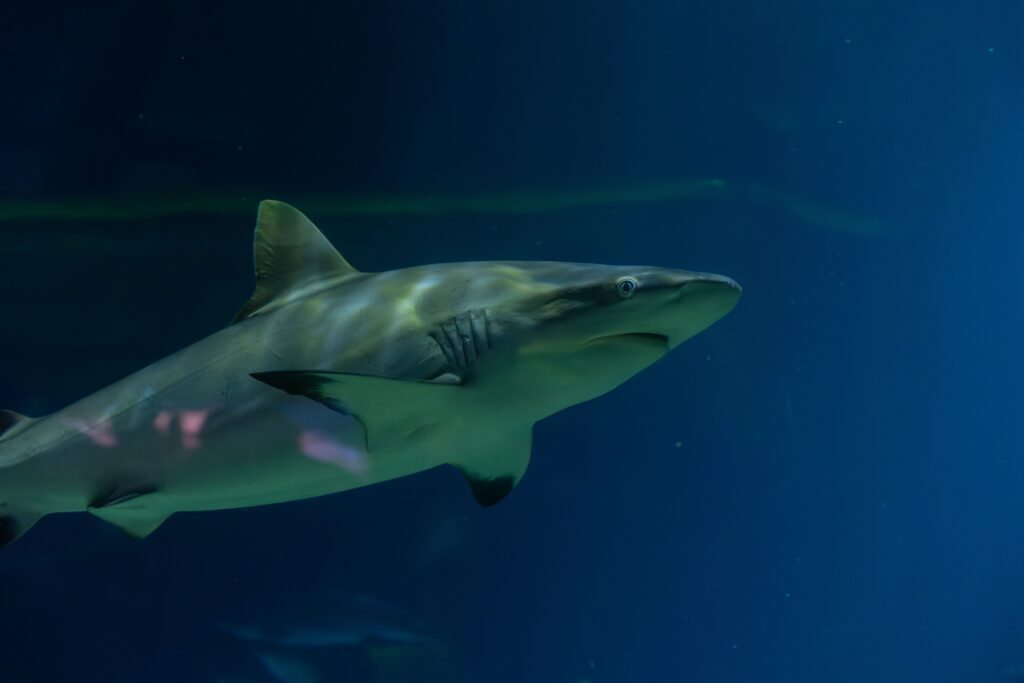
On a quiet Saturday morning in mid-July, a 31-year-old scuba diver was enjoying a dive in Adventure Bay, off the southeastern coast of Tasmania, Australia. What started as a routine outing with two friends quickly turned into a frightening ordeal when he was bitten on the lower forearm by what authorities believe was a broadnose sevengill shark around six and a half feet long.
The incident happened about 165 feet from shore while the diver was spearfishing. According to a witness speaking to the Australian Broadcasting Corporation, the man had just retrieved a fish when the shark struck.
The bite was described as substantial but not life-threatening — more like a solid “dog-sized” chomp near the top of his arm. Thankfully, his injuries weren’t severe, and he was quickly stabilized before being airlifted by helicopter to Royal Hobart Hospital, where he remains in stable condition.
Tasmania Police described the event as an isolated one and urged local swimmers and divers to stay alert and follow standard water safety guidelines.
Sevengill sharks, with their distinctive seven gill slits (unlike the usual five on most sharks), are fairly common in the temperate coastal waters around Tasmania, often hanging out in bays at depths up to around 150 feet. They can grow close to ten feet long and are known to get more assertive when food or blood is in the water, which may explain what happened here.
What makes this story particularly notable is just how uncommon attacks from these sharks really are.
According to the International Shark Attack File, broadnose sevengill sharks have only been linked to a handful of documented unprovoked incidents on humans — just five in total across centuries of records.
They’re encountered regularly by divers in places like southern Australia, South Africa, and California, yet verified bites remain extremely rare. In Tasmania itself, there have only been about 15 confirmed shark bites of any kind since European settlement, with this marking the first in over a decade.
Experts point out that while sevengills are classified as potentially dangerous when provoked, they generally pose little threat to people.
Most interactions between humans and sharks, especially this species, don’t end in contact at all. Broader statistics drive this home: even as more people head into the ocean each year, unprovoked shark bites worldwide stay remarkably low — often in the dozens annually across the entire planet, compared to the millions who swim, dive, and surf without issue.
This diver’s experience is a reminder of the wild, unpredictable nature of the ocean, but it also highlights how safe most marine outings truly are.
Quick medical response helped ensure a positive outcome, and it’s likely he’ll make a full recovery. For anyone planning time in the water down under, a healthy respect for the environment — and maybe skipping spearfishing if conditions feel off — goes a long way. Nature commands our caution, but it doesn’t need to keep us on shore.