
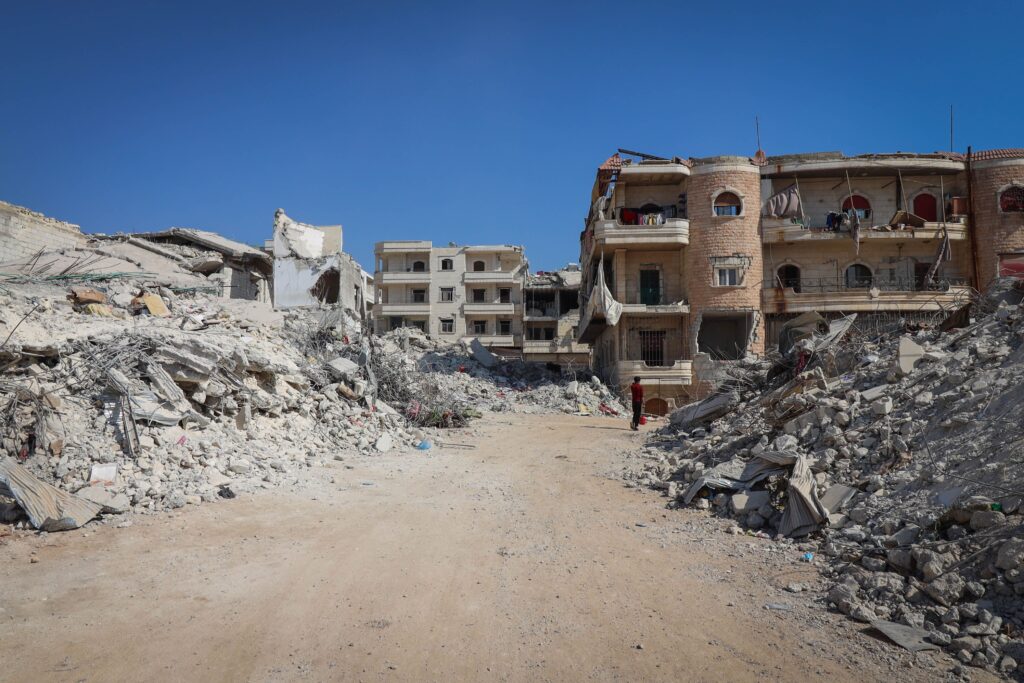
While no one can predict exactly when an earthquake will occur, the combination of intense solar activity, a rare planetary alignment, and ongoing global quake clusters paints a picture worth paying attention to.
In a recent video titled “I Can’t Believe This Is Actually Happening…,” geophysicist Stefan Burns highlights a striking convergence of factors that could heighten seismic risks around the world right now.
Burns opens by addressing the wave of powerful earthquakes we’ve seen lately. Events like the devastating double quake in Venezuela (M7.2 and M7.5), along with significant tremors in Japan, Mexico, the Philippines, Indonesia, and Russia, have raised alarms.
These haven’t been isolated; they’ve clustered in ways that feel unusually intense, especially following last year’s major M8.8 event. For many viewers, the human toll—particularly in Venezuela—has been heartbreaking and has sparked widespread questions about what’s driving this uptick.
At the heart of the discussion is our Sun. A massive coronal hole, a vast scar in the Sun’s outer atmosphere where high-speed solar wind streams out, has reappeared and grown larger.
This same feature was active just before the late June quakes in Venezuela and Japan. Coronal holes create direct magnetic connections to Earth, compressing our magnetosphere and triggering geomagnetic storms. Research and historical patterns often link these high-speed streams to spikes in higher-magnitude earthquake activity. As this stream heads our way again, Burns warns we could see another round of heightened seismic unrest in the coming days.
Adding another layer is an extraordinary planetary alignment unfolding right now. Multiple planets are positioned in precise geometric relationships—harmonious aspects like conjunctions and other angles—that astrologers and researchers have anticipated for decades.
Earth sits notably in the center of key parts of this configuration. Such multi-planet setups are rare, and Burns notes a growing body of observations connecting them to periods of increased solar and geophysical activity. We’ve seen similar planetary clusters since 2020 correlating with major events, but this one stands out for its complexity and timing.
The video doesn’t claim these forces cause quakes in a simple way. Instead, it points to interconnected systems: the Sun’s plasma and magnetic influence on Earth, modulated by planetary positions, interacting with our planet’s own stressed fault lines.
Solar maximum periods, like the one we’re in, already boost overall activity, and the descending phase can bring some of the strongest flares and storms. When you layer on a giant coronal hole and this alignment, the conditions align for potential global seismic bursts.
Importantly, Burns emphasizes preparation over panic. Earthquakes are part of living on a dynamic planet, and while we can’t forecast the exact “big one,” awareness helps.
He references live data sources for monitoring space weather, earthquakes, and more, encouraging viewers to stay informed through reliable channels like USGS and space weather models. The rest of July and early August look particularly active based on these indicators, including an upcoming full moon alignment involving Jupiter and Pluto.
This isn’t doom-saying—it’s a call to respect the forces shaping our world. From tectonic stress building over centuries to the subtle electromagnetic pushes from space, everything is connected.
Staying prepared with emergency kits, building codes that account for risks, and community plans remains the best defense. As Burns shares, paying attention to these patterns can help us navigate an uncertain but fascinating Earth.