
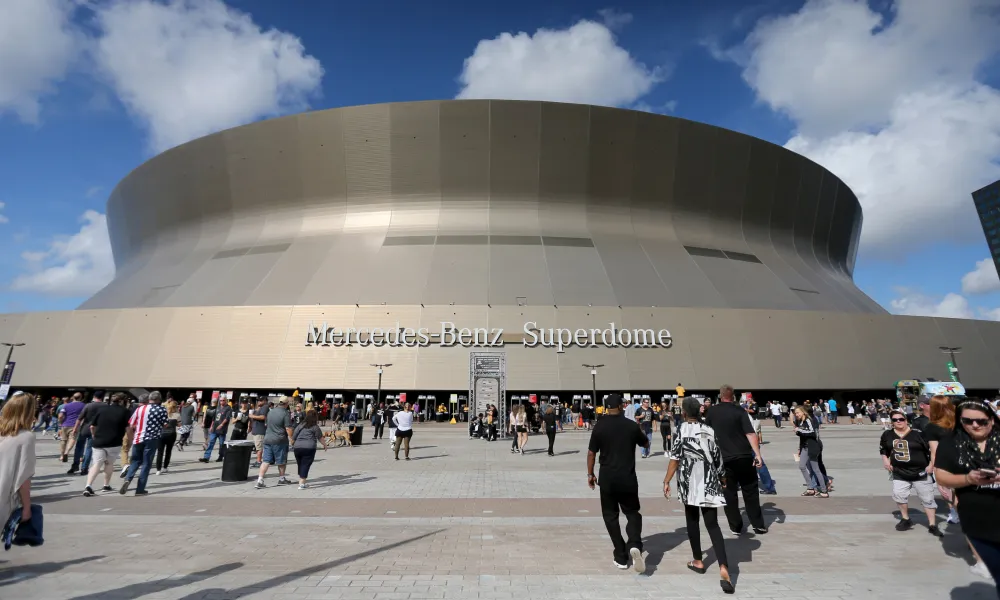
In response to the deadly terrorist attack on Bourbon Street on New Year’s Day, the NFL and federal law enforcement are ramping up security for Super Bowl LIX in New Orleans.
The January 1st attack, in which a man drove a truck into a crowd, killing 14 people, prompted officials to increase security measures around the city as the Super Bowl approaches.
Eric DeLaune, Special Agent in Charge of Homeland Security Investigations in New Orleans, emphasized that the heightened security presence is part of an effort to reassure the public ahead of the event.
“We’ve increased our security posture significantly so that people can come here and see a strong law enforcement presence,” DeLaune said.
Cathy Lanier, the NFL’s Chief Security Officer, acknowledged that while security planning for the Super Bowl had already been in place, the recent attack changed how authorities approached the event.
“We are doing things differently,” Lanier said. “This changes things, but we’ve been preparing for it.”
More than 125,000 NFL fans are expected to attend the Super Bowl on February 9, just five weeks after the attack, which postponed the Sugar Bowl. Authorities have increased patrols and will deploy additional resources, including SWAT team members, armored vehicles, surveillance drones, and bomb-sniffing dogs.
The U.S. Coast Guard and U.S. Customs and Border Protection will patrol the Mississippi River, while extra security cameras will be added throughout the city.
“My goal was that you couldn’t walk a city block in downtown New Orleans without at least encountering one law enforcement official,” DeLaune said.
The January 1st attack, attributed to a U.S. military veteran inspired by ISIS, was called a “wakeup call” by former Secretary of Defense Leon Panetta, highlighting the ongoing threat of terrorism. Law enforcement has added intelligence analysts to help detect potential threats.
The Super Bowl, classified as a top-tier event by the Department of Homeland Security, will see support from federal agencies like the FBI and the Bureau of Alcohol, Tobacco, Firearms, and Explosives. Hundreds of federal officers will be deployed to assist local and state law enforcement throughout the event, DeLaune said.
In the wake of the attack, local officials in New Orleans have taken steps to address security gaps, including replacing faulty street bollards that failed to prevent the attacker’s vehicle from entering Bourbon Street. These changes are part of a broader initiative to bolster public safety across the city.
Lanier, who has been working in New Orleans since the attack, compared the security planning for the Super Bowl to that of a presidential inauguration, underscoring the resources required to ensure a safe event.
Chuck Wexler, a security expert, noted that the challenge of securing the Super Bowl extends beyond the stadium.
“The Super Bowl itself will have so much protection that it may be the safest place in the world,” Wexler said. “But securing the other places fans will visit, like hotels, restaurants, and parties, is a significant challenge.”
With Super Bowl LIX only weeks away, authorities are working diligently to ensure attendees’ safety while maintaining the event’s festive spirit.