
The Green Bay Packers spent months insisting they would finish games after last season’s late-game failures, including a Wild Card collapse against Chicago. Week 1 in Minnesota offered an early chance to prove the talk was more than rhetoric.
For three quarters it looked possible. Green Bay built a 22-10 lead late in the third and appeared ready to start the year with a convincing road win over a division rival playing without its starting quarterback.
Then the fourth quarter arrived and the familiar script returned. Minnesota scored 22 unanswered points. The Packers never found the end zone again.
What should have been a statement victory became another night that ended with questions about whether anything had actually changed.
Evan Massey of Packers Roundtable has been among those arguing that the organization’s choice to keep Matt LaFleur after last year’s finish already looks worse in the harsh light of another blown lead, and he detailed his discontent with the organization in a recent piece.
Massey, who said that the Packers’ decision to keep LaFleur has “aged like fine milk,” mentioned a particularly scrutinized moment that came with just over 13 minutes left and Green Bay still ahead.
Rookie kicker Trey Smack made a 40-yard field goal that would have stretched the margin to eight points.
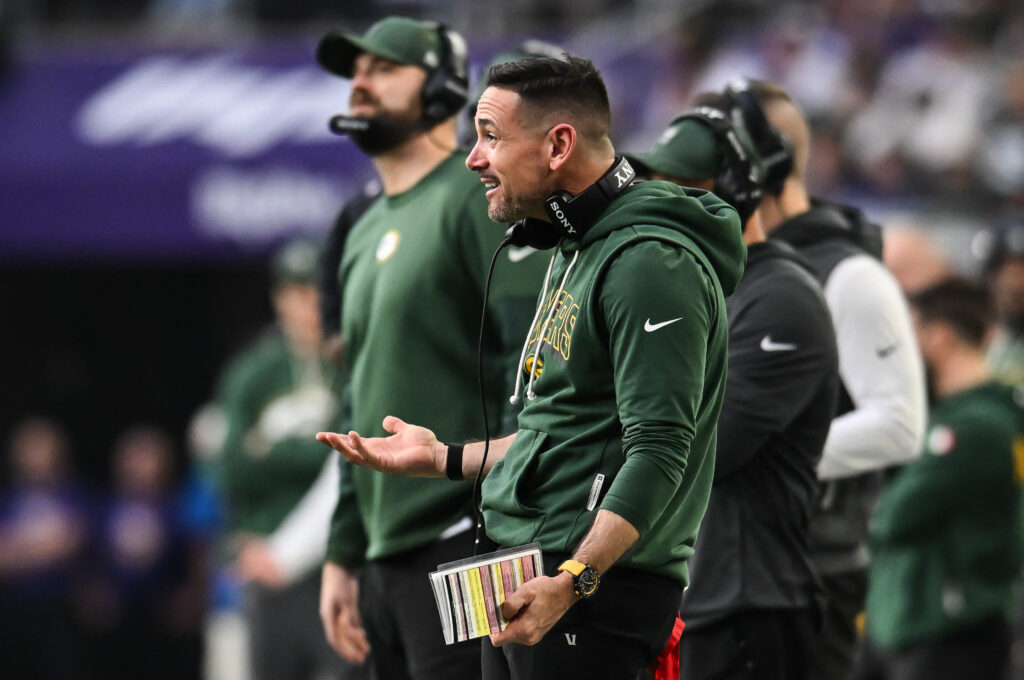
Minnesota was flagged for offsides. LaFleur accepted the penalty, moved the ball closer, and sent Jordan Love on a quarterback sneak on fourth-and-1. The sneak failed. Possession flipped. Momentum followed.
From that point the Packers’ offense stalled, the offensive line struggled to protect Love, and two turnovers helped the Vikings turn a deficit into a 39-22 win.
LaFleur later said the call reflected a desire to stay aggressive rather than settle for an eight-point lead with plenty of time remaining. He also acknowledged that closing games will remain a topic until the team actually does it.
That answer may be honest, but it does little to ease the sense that the same patterns keep repeating. Last season featured multiple double-digit leads that evaporated. The playoff loss to the Bears was the last of them. Sunday’s fourth quarter felt like a continuation rather than a reset.
One game does not define a season, and Green Bay still has time to show growth. The Packers have talent at quarterback and skill positions, and the schedule will offer more chances to prove they can protect a lead on the road.
Yet the early evidence is that the problems that defined the end of 2025 have not vanished. Decision-making in critical spots, execution when the game tightens, and the ability to put an opponent away all remain unfinished business.
For a franchise that chose continuity at head coach, the first Sunday of the new year offered an unwelcome reminder of why that choice was already under debate.