
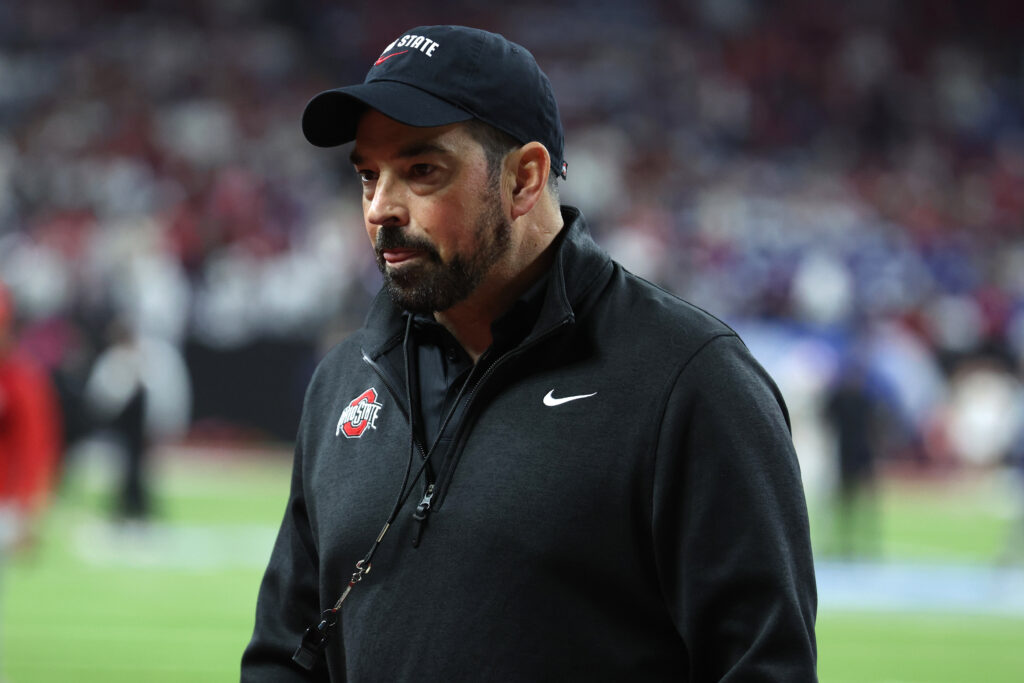
The new year has brought anything but celebration for Ryan Day and the Ohio State Buckeyes, who entered the expanded College Football Playoff as one of the top contenders despite a Big Ten Championship Game loss to Indiana.
Many analysts viewed the Buckeyes as strong candidates to advance deep into the bracket and compete for a national title repeat.
That vision evaporated with an upset defeat to Miami in the Cotton Bowl quarterfinals, shifting the program’s immediate focus from championship aspirations to urgent roster reconstruction.
With the transfer portal now open, Ohio State faces a swift and substantial wave of departures that underscores the transformed realities of modern college football.
Historically dominant recruiting powers like Ohio State, Alabama, and Georgia once relied on unparalleled depth to weather attrition, developing high-profile prospects patiently over multiple seasons. That luxury has largely vanished in an era where immediate playing time and financial incentives drive player movement more than ever.
The Buckeyes are experiencing this shift acutely, as approximately a dozen players have either announced their intentions or formally entered the portal following the postseason loss.
Among those heading elsewhere are quarterback Lincoln Kienholz, linebacker C.J. Hicks, offensive lineman Isaiah Kema, wide receiver Damarion Witten, and edge rusher Logan George.
These athletes, often highly rated recruits who contributed to Ohio State’s sustained excellence through depth and future potential, now seek opportunities to start sooner rather than wait behind established veterans.
Several are reportedly eyeing programs like Indiana and Miami, where they can secure significant NIL compensation alongside immediate roles on the field.
The Hoosiers’ surprising rise to Big Ten champions this season serves as a prime example of portal-driven success, built around experienced transfers who honed their skills elsewhere but found stardom in Bloomington.
Their Heisman-winning quarterback, Fernando Mendoza, arrived from California last offseason and has since emerged as the projected top selection in the upcoming NFL Draft.
For Ryan Day and his staff, adapting to this new landscape demands aggressive participation in the portal to replace outgoing talent and maintain competitive edge.
Failure to evolve could cap once-elite programs at early playoff exits rather than consistent title contention.
The current transfer window remains active until January 16, 2026, giving Ohio State just over two weeks to navigate both losses and potential additions in a rapidly changing market.