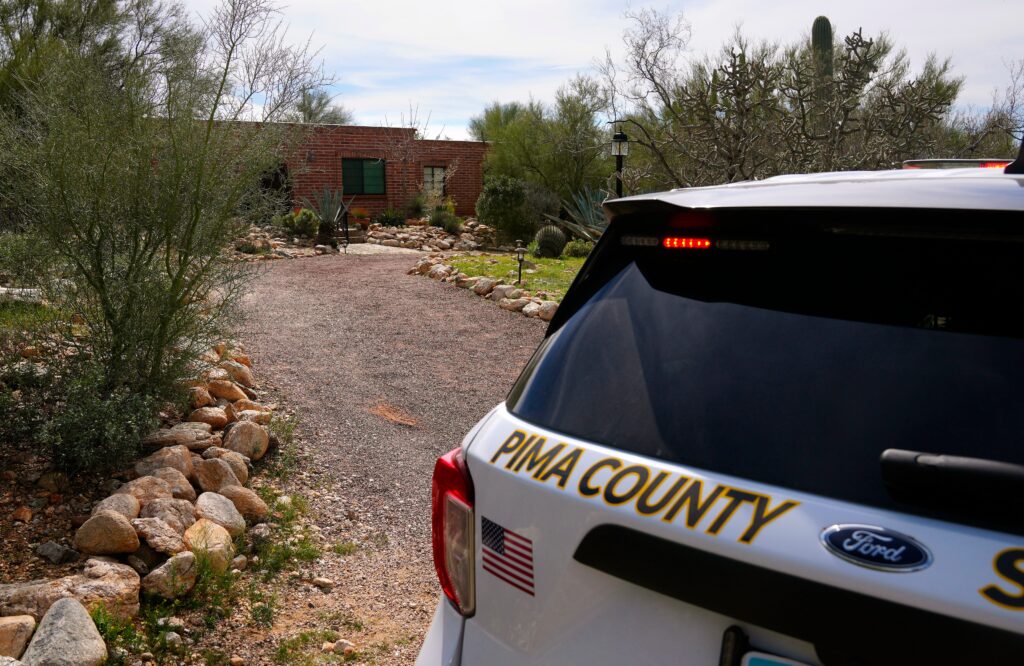
The disappearance of Nancy Guthrie from her Arizona residence has captivated audiences nationwide, especially given her connection to Savannah Guthrie, the well-known co-anchor of the Today show.
For months, observers have tracked every development in the probe, searching for answers about what befell the missing woman. Recent disclosures have now introduced a surprising angle that could reshape how earlier coverage is interpreted, highlighting potential complications in the high-profile inquiry.
This latest twist emerged from an unexpected source with deep legal and journalistic experience. Harvey Levin, the founder of TMZ, brings substantial credentials to any discussion of criminal matters. He holds a law degree from the University of Chicago Law School, earned after completing a bachelor’s in political science at the University of California.
Following his studies, Levin worked as a practicing attorney in California before transitioning into roles as a legal reporter and consultant. Over the years, he has built a reputation for dissecting major crime stories across the country, lending added weight to his observations on the Guthrie investigation.
On July 4, 2026, Levin appeared as co-host on the podcast “2 Angry Men” alongside prominent attorney Mark Geragos. Roughly 20 minutes into the discussion, he shared fresh details that had not previously been made public. According to Levin, an inside contact at the FBI had confided that agents once considered the possibility of evidence being deliberately placed by someone connected to the press during the initial stages of the case.
“Early on in the investigation, there were certain items that were found that got a lot of news attention,” Levin said. “I’m not going to say what it is because they haven’t done anything with this, but there was one particular item. I talked to somebody in the FBI who said, ‘We believe that somebody in the media may have planted that item to get attention.’ And if they could prove that and they believed it to be true, they would prosecute the individual.”
Levin continued by explaining that no charges ever materialized from this line of thinking. He recalled the insider’s strong conviction on the matter yet acknowledged the absence of follow-through.
“We never really talked about it. We never reported that. But I remember somebody told me that, and they really believed it. But again, maybe there’s no proof of it because they never prosecuted anybody on that.”
The veteran journalist emphasized the broader context that made such suspicions noteworthy. Intense public fascination with the case had created challenges for authorities trying to manage the flow of information.
“It was just an interesting kind of sidebar for me that they were really having trouble containing things because there was so much interest. Everybody was getting in everybody’s way.”
While no one was ever arrested or formally accused of tampering, the mere consideration of planted evidence introduces fresh questions about the reliability of early leads that dominated headlines. This possibility suggests that some details amplified in media reports might have originated from questionable sources rather than solid investigative findings. It encourages a more cautious review of how information spread in the days and weeks following the disappearance.
NewsNation contributor and former FBI agent Jennifer Coffindaffer offered a pointed response to Levin’s statements. She described the commentary as “troublesome” and voiced appreciation for the agency’s decision to officially classify the matter as a kidnapping for ransom. In her view, that designation helped reduce rampant guesswork and speculation swirling around the case.
The emergence of this account underscores the difficulties law enforcement faces when a story draws overwhelming attention from both the public and the press. High visibility can sometimes complicate efforts to keep sensitive details secure and maintain the integrity of the investigative process. In this instance, the heavy scrutiny appears to have prompted internal discussions within the FBI about potential interference that could mislead detectives or fuel misinformation.
Ultimately, the revelation serves as a reminder of the complex interplay between media coverage and ongoing criminal probes. Even without formal action against any individual, the fact that such concerns were raised internally casts a different perspective on prior reporting.
As the search for Nancy Guthrie continues, these insights may prompt both journalists and the audience to weigh new information with greater care, prioritizing verified facts over sensational developments that could stem from external pressures.
The case remains active, and authorities continue working to uncover the truth behind her vanishing.