
In the woodlands and edges of human settlements across Michigan, a lesser-known member of the canine family moves quietly through the landscape.
While red foxes are a common sight for many residents, the gray fox remains something of a mystery—one that wildlife officials are now eager to solve with assistance from everyday observers.
Recent collaborative studies involving the Michigan Department of Natural Resources (DNR), Northern Michigan University, and several tribal partners suggest that gray foxes may be far less common in the state than earlier estimates indicated. This has prompted a statewide appeal for sightings, both old and new, to build a clearer picture of where these animals persist.
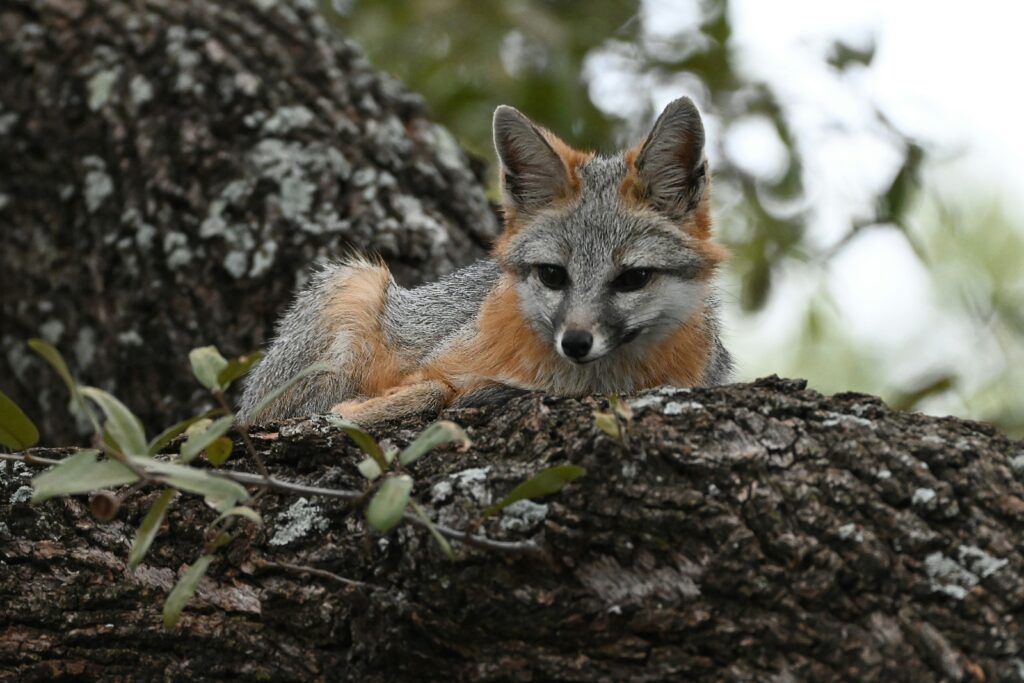
Gray foxes stand out among their relatives for their remarkable ability to scale trees, thanks to semi-retractable claws and flexible wrists that allow them to navigate trunks with surprising agility. This adaptation helps them evade threats and pursue food sources high above the ground, setting them apart from the more ground-oriented red fox.
Visually, they feature a distinctive grizzled gray coat accented by reddish tones on the neck, chest, and legs, along with a black-tipped tail. They tend to be smaller and stockier than red foxes, with shorter legs.
Despite their presence in Michigan, which marks the northern edge of their broad range across much of North and Central America (extending even into northern South America), gray foxes have proven difficult to track through standard wildlife surveys.
Detections have been sparse, concentrated mostly in the Upper Peninsula and parts of southern Lower Michigan. Experts suspect they may favor habitats overlooked by conventional methods or simply avoid detection due to their secretive habits.
One notable aspect of their behavior is how readily they adapt to areas near human activity. They frequently take shelter in or around structures like garages, sheds, and outbuildings bordering wooded patches. This proximity means that homeowners, trail camera users, and those with security systems could hold key pieces of the puzzle.
DNR specialists emphasize the value of photographic evidence. Because gray foxes can sometimes be confused with red foxes, coyotes, or even cats at a glance, clear images help verify identifications and map distributions more accurately. Reports can include details from trail cams, doorbell cameras, or casual encounters in backyards and forests alike.
Cody Norton, the DNR’s furbearer specialist, has highlighted how little is currently known about this species in Michigan. “Gray foxes are one of Michigan’s least understood mammals,” he noted, underscoring the potential for citizen contributions to inform future studies and protection strategies.
Tyler Petroelje, a DNR research specialist in the Upper Peninsula, echoes this sentiment, pointing out that local residents and “community scientists” are ideally positioned to spot these animals in everyday settings where professional surveys might not reach.
The species faces broader challenges, with population declines noted in various Midwest and Northeast regions. Michigan’s effort aims to assess local status and identify any contributing factors, helping guide conservation amid these regional trends.
Anyone who has encountered a gray fox—recently or even years in the past—is encouraged to share their experience through the DNR’s Eyes in the Field reporting system, available under the mammals category. Including photos, location details, and contact information greatly enhances the usefulness of each submission.
Every observation, no matter how small it seems, adds to a growing body of knowledge. By coming together to document these elusive climbers, Michiganders can play a direct role in shining a light on a fascinating but underappreciated part of the state’s natural heritage.