
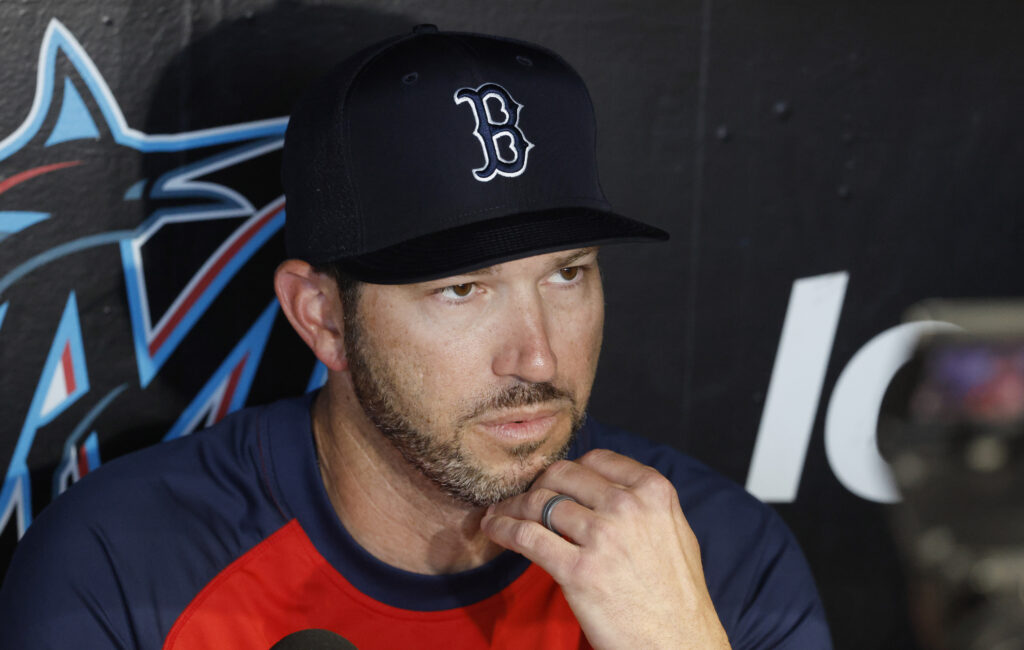
Jake Bauers has turned heads this October, emerging as a central figure for the Milwaukee Brewers during their postseason run. That visibility has drawn speculative interest from the Boston Red Sox, who face the familiar challenge of adding reliable offense without disrupting an already crowded lineup.
While Patrick McAvoy of Red Sox on SI has floated Bauers as a potential designated-hitter option, any pursuit would rest more on his full-season production than on playoff highlights alone.
In 2026, the left-handed hitter delivered career-best numbers for Milwaukee, posting a .266 batting average, a .389 on-base percentage, and a .484 slugging percentage across 578 plate appearances, including 26 home runs.
He walked 94 times, a rate that reflected an ability to lengthen at-bats and create opportunities for the hitters behind him.
For a Red Sox club seeking more consistent run production, that blend of patience and power carries appeal on paper. A player who reaches base at that clip can ease pressure on the rest of the order rather than simply supplying isolated home runs.
Still, the performance stands well above Bauers’ career line of roughly .223/.326/.391.
A single strong season can signal genuine adjustments in approach or contact quality, yet it can also prove difficult to sustain once opposing pitchers adjust and the sample grows.
Teams evaluating him will want to examine whether the elevated walk rate stemmed from a refined plate discipline or from specific matchups and lineup spots that may not travel as cleanly to another club. Exit velocity, hard-hit rates, and results against varied pitch types offer more useful clues than raw counting stats alone.
Boston’s roster adds another layer of complexity. Willson Contreras occupies first base, and several existing players already compete for designated-hitter opportunities.
Signing Bauers would require a concrete plan for distributing at-bats rather than simply inserting another bat into an already crowded mix.
The organization would also need to weigh any addition against other offseason moves, including potential trades or shifts in how current players are deployed. Bauers can handle first base or the corners when needed, yet he profiles most naturally as a hitter first, which limits the flexibility he provides compared with a true two-way contributor.
Market dynamics further complicate the picture. Bauers sits outside the top tier of free agents, but a breakout campaign and postseason exposure can still push his price higher than teams expect.
Spotrac projections have circulated in the neighborhood of multi-year deals in the mid-to-high eight figures annually, though final numbers will depend on how the market develops and whether Milwaukee itself makes a push to retain him. Paying as though the 2026 season represents a new baseline rather than an outlier carries risk for any club.
For the Red Sox, Bauers belongs on the research list precisely because his regular-season gains in on-base ability and power address real needs. The case strengthens if front-office evaluators find evidence that the improvements reflect durable skills rather than a temporary spike.
Without a clear role and a contract that accounts for the career track record, however, the October narrative alone would not justify the commitment. The prudent path remains careful diligence over reactive interest.