
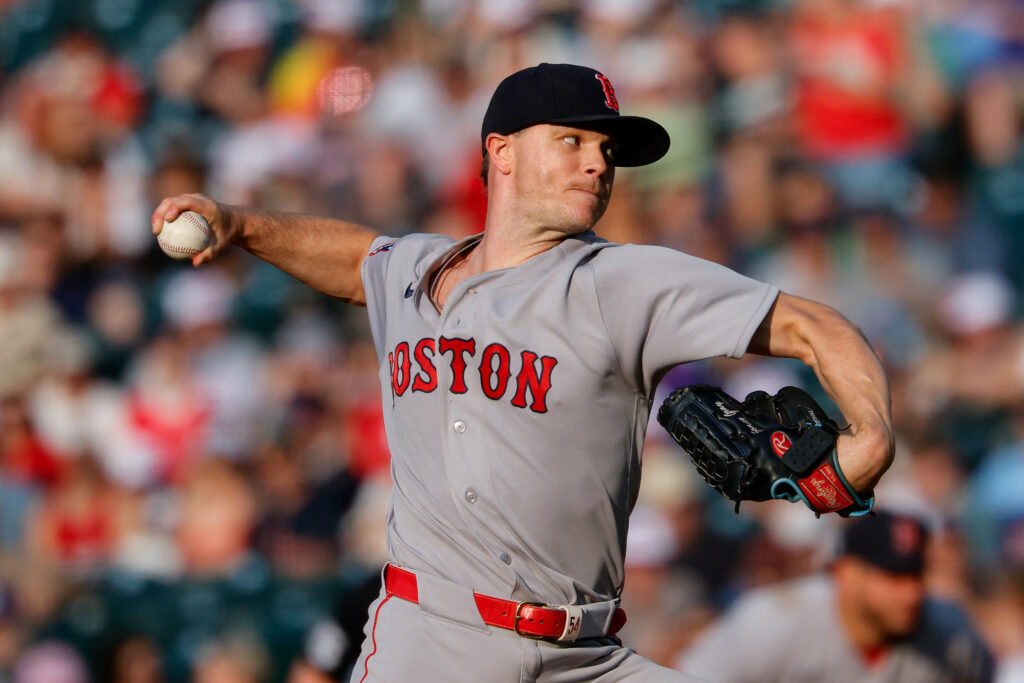
Sonny Gray entered the 2026 postseason as the Boston Red Sox’s most reliable starter, carrying an 18-5 record and a 2.72 ERA across 29 starts after the club acquired him from the St. Louis Cardinals.
That production made him a clear candidate for offseason interest once Boston exited in the American League Wild Card Series, yet the 36-year-old right-hander’s own comments immediately complicated the picture.
He briefly floated the idea of retirement after the series loss to the New York Yankees, only to reverse course and confirm he intends to pitch in 2027.
At the same time, he left open whether that would happen in Boston, particularly after expressing frustration when manager Chad Tracy removed him early in the decisive game.
In a recent FanSided piece examining the futures of players from eliminated playoff teams, John Perrotto noted that Gray should still command a robust free-agent market despite his age and the late-season friction.
Perrotto highlighted the veteran’s strong numbers and his ultimate decision to keep playing, while observing that Gray remained noncommittal about returning specifically to the Red Sox after the early hook.
The prediction attached to that analysis was relatively modest: a one-year return to Boston at $25 million.
That figure sits below the $30 million mutual option in Gray’s current contract and below some external projections that have floated multiyear guarantees in the $50-60 million range, suggesting a view that Gray’s preference for a shorter commitment—and possible desire to reassess retirement after one more season—could limit his leverage.
Gray’s contract structure further shapes the decision. The mutual option for 2027 includes a $10 million buyout, and most observers expect both sides to decline it, sending the pitcher into free agency.
He has already indicated through the Boston Globe that winning a World Series remains the priority, whether with the Red Sox or elsewhere, and he previously spoke positively about the city itself.
Boston’s rotation picture is not entirely settled; a healthy Garrett Crochet would reclaim the top spot, with younger arms such as Payton Tolle, Ranger Suárez, and Brayan Bello also in the mix.
Retaining Gray on a one-year deal would still give the club a proven mid-rotation or better presence while avoiding a longer commitment that could age poorly.
Other clubs are expected to show interest. Teams in need of immediate starting depth, particularly those with openings at the top of the rotation, could view the right-hander as a low-risk addition given his 2026 results.
Geographic preferences and his stated goal of contending for a title will likely narrow the field, but the combination of his recent performance and willingness to accept a shorter term should keep multiple suitors engaged.
Whether Boston ultimately matches or exceeds the one-year projection remains to be seen, yet the early signs point to a market that values Gray’s immediate contributions even as questions about age and commitment linger.