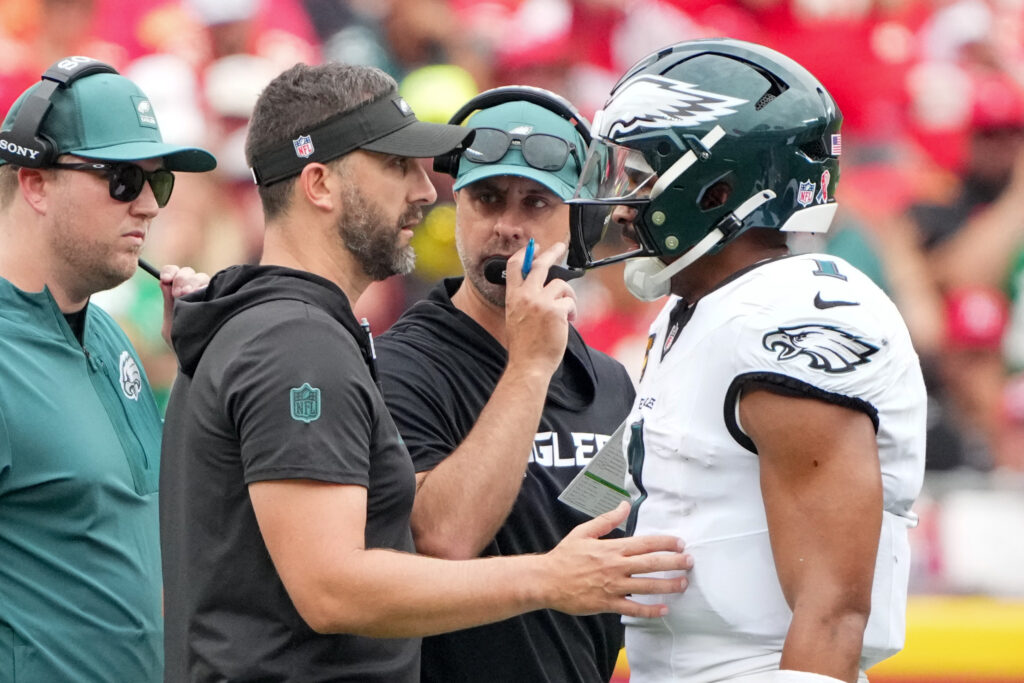
Tensions surfaced publicly between Philadelphia Eagles head coach Nick Sirianni and quarterback Jalen Hurts following the team’s narrow 19-17 loss to the Jacksonville Jaguars in London.
The defeat hinged on late-game decisions that left the Eagles with just eight seconds after Jake Elliott’s field goal put them ahead 17-16. Rather than forcing a touchback, the kickoff stayed in play, allowing Ameer Abdullah a 53-yard return that set up Cam Little’s game-winning kick as time expired.
In the immediate aftermath, Hurts was asked why the offense had not managed to drain more clock on its final drive.
He replied that the responsibility ultimately was not his, adding that he is prepared as a quarterback to honor the plays that come in and focus on execution.
He acknowledged lying awake afterward wondering whether he should have spoken up or stepped back in the moment, yet emphasized the commitment to carrying out what is called even when the outcome does not favor the team.
Sirianni addressed those remarks the next day during his media availability and appeared to take a pretty clear shot at Hurts in the process.
“Jalen’s playing, we’re coaching and calling the plays, and Jalen’s got to go execute what we call in that moment, 100 percent,” he said. “And so, we’re not asking him to make play calls in that scenario. He’s already got enough to worry about to go out and execute. So, that’s where we were there in that situation.”
The coach made clear that the division of roles remains fixed: the staff designs and calls the plays while the quarterback carries them out under pressure.
At the same time, Sirianni took full ownership of the kickoff decision that ultimately cost the game.
He told reporters he had not made the right choice, that the players had fought hard only for him to fail at the end, and that the loss rested squarely on his shoulders.
The admission stood in contrast to his firm stance on play-calling authority, underscoring both accountability for the special-teams misstep and an insistence that Hurts stay within his defined responsibilities during the preceding drive.
The exchange has fueled frustration among Eagles fans already uneasy about the team’s offensive direction.
Many have long argued that Hurts should be granted greater freedom to adjust at the line rather than being tightly bound to the calls coming from the sideline.
The public back-and-forth, however measured, has added another layer of scrutiny to a relationship that has produced a Super Bowl title yet continues to draw questions about how much autonomy the quarterback truly holds when the game is on the line.