
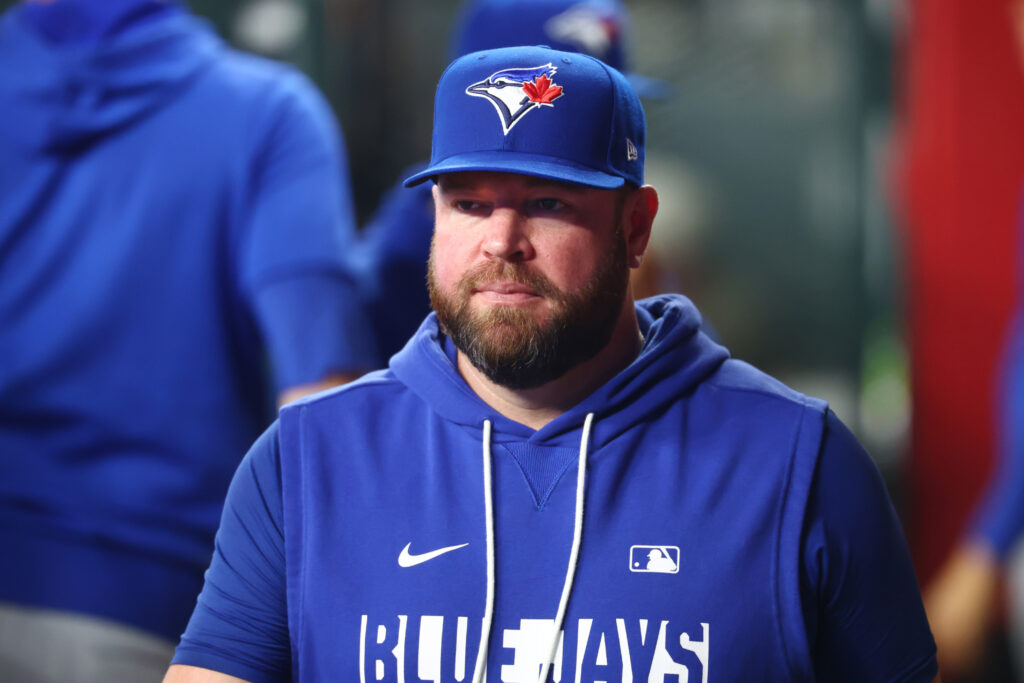
Toronto Blue Jays manager John Schneider sitting on a betting board for the next MLB manager to be fired still feels like a clerical error. Nevertheless, it has become a thing.
BetOnline has the Blue Jays skipper at 16/1 odds to get canned, the same price as Seattle’s Dan Wilson and well behind the names that actually look vulnerable.
Kurt Suzuki of the Angels is the heavy favorite at 2/3. Matt Quatraro, Joe Espada, A.J. Hinch and Terry Lovullo all sit closer to the flame. Schneider is listed more as a curiosity than a candidate.
That placement is the story.
Less than a year ago he was managing Game 7 of the World Series. In 2025 he took a club that had finished last in the American League East and turned it into a 94-win division champion that beat the Mariners for the pennant and pushed the Dodgers to the final out of the season.
Toronto picked up his option after that run and then signed him through 2028. Those are not the usual breadcrumbs that lead to a September firing.
The 2026 Blue Jays are 68-70 and fifth in a loaded East, 14 and a half games behind Tampa Bay. That is a disappointment relative to last October, and baseball is famously impatient when a roster is supposed to contend.
Front offices sometimes treat the manager as the easiest variable to change when results lag the payroll. Schneider’s name appearing at all is a reminder of that reflex. It is not evidence that Toronto is actually preparing to use it.
A 16/1 price is still a longshot. Bookmakers are not saying he is next. They are saying the market wants a complete field, and even recent World Series managers can show up on it once a season tilts sideways. The Jays have won three straight, including a sweep of Seattle, and they still have a faint wild-card pulse.
Firing the man who just took them to Game 7, after giving him a multi-year extension in March, would be one of the stranger midstream decisions in recent memory. Organizations do make those moves when they decide they need a new voice before winter. History is full of September changes that look premature until the next season starts.
Even so, Schneider’s presence on the board is more commentary on the sport than on his job security. Last year’s October run bought him time. A contract through 2028 bought him more.
A firing now would require the front office to decide that a year-old pennant and a fresh extension no longer matter. That would be surprising. The odds say the people setting the market think so too.