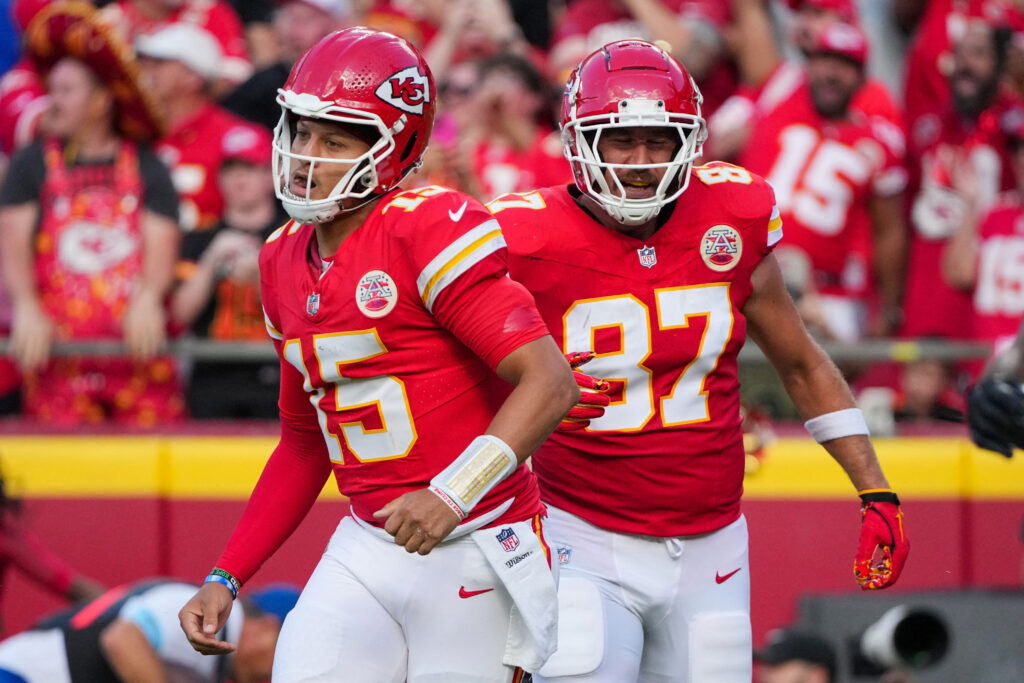
Kansas City Chiefs stars Patrick Mahomes and Travis Kelce have become entangled in a lawsuit stemming from their Kansas City steakhouse, 1587 Prime.
The restaurant, launched with hospitality partners Noble 33, takes its name from the pairing of Mahomes’ jersey number 15 and Kelce’s 87.
A company known as 1587 Sneakers, which sells shoes and apparel, has sued the two players along with several associated corporate entities, claiming trademark infringement and unfair competition.
The apparel firm says it has used the 1587 name since 2023. James Molen, an intellectual property attorney at Greenberg Glusker who is not involved in the litigation, told reporters that the early stage of the case is not the straightforward trademark clash many observers expect.
“At the current stage of the proceeding, this case isn’t the trademark fight most people assume it is — it’s a fight over how close two celebrity investors have to be to a business before a court can drag them into it personally,” Molen said.
The action is pending in the Southern District of New York, where no decision has yet been reached on the core allegations. Mahomes and Kelce have asked the court to dismiss the complaint, arguing that the New York court lacks personal jurisdiction over them, that the venue is improper, and that the lawsuit fails to show either player personally committed an infringing act.
Molen explained their position this way: “Mahomes and Kelce’s primary argument is that they’re several corporate layers removed from the restaurant’s operating LLC and never personally touched a New York transaction, while the plaintiff says their jersey numbers are the mark, which makes them ‘moving forces’ by definition.”
The players also deny the complaint’s claim that they are members of the LLC that operates the restaurant. Their reply brief supporting the motion to dismiss is due September 1.
1587 Sneakers began selling products in April 2023 and filed a trademark application in October 2025 that remains under review. The steakhouse submitted its own application in December 2023. The two filings cover different categories of goods and services—one for clothing and the other for restaurant and bar operations.
Molen noted that the dispute could be resolved without any ruling on which side has the stronger trademark rights.
“While I can’t predict the outcome, here’s what’s worth watching: the athletes’ motion raises three separate grounds for dismissal — no personal jurisdiction, wrong venue, and failure to state a claim — and any one of those, if the court agrees, could result in dismissal,” he said.
He also observed that the plaintiff has largely addressed only one of those arguments.
“But the plaintiff only really engages with the failure to state a claim, leaving the jurisdiction and venue arguments essentially unanswered,” Molen said. “That’s likely to come up in the athletes’ reply brief, and courts generally don’t look kindly on unaddressed arguments.”
That procedural posture could allow the court to end the case on a threshold issue. Even so, Molen declined to dismiss the underlying complaint as lacking substance. “I wouldn’t call this case frivolous; a smaller company saying ‘we used this mark first and now we’re getting drowned out’ is the kind of dispute trademark law is built for,” he said.