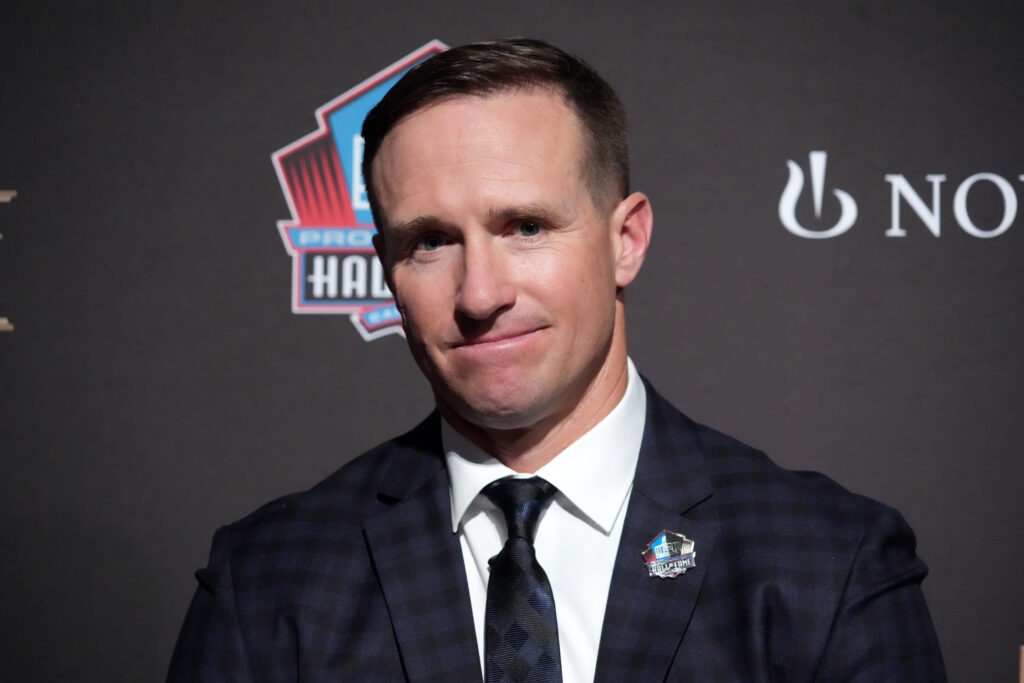
Six years have passed since Drew Brees last stepped onto an NFL field and delivered a pass as a professional quarterback. The former New Orleans Saints signal-caller earned his place as a first-ballot inductee into the Pro Football Hall of Fame this year, cementing a legacy built on precision, consistency, and remarkable production over two decades in the league.
While fans and analysts continue to celebrate his contributions to the game, Brees is confronting some difficult realities in retirement that stem directly from the physical toll of his playing days.
Brees will forever be regarded as one of the most accomplished passers the NFL has ever seen. His ability to dissect defenses and deliver accurate throws made him a cornerstone of the Saints’ offense for many seasons. Yet that storied career continues to impact his daily life well after hanging up his cleats, particularly in ways that limit his ability to engage in the sport he loves even casually.
In a recent appearance on the “Bussin’ With the Boys” podcast, Brees opened up about the challenges of considering any kind of return to competitive play, even on a limited basis similar to what Philip Rivers attempted last year. He pointed to one specific injury as the primary obstacle standing in his way during retirement.
“I would know where to throw it — I just don’t know if I could get it there,” Brees said. “That’s one lingering effect from the shoulder surgery. I don’t throw with my right arm anymore. I actually throw left-handed.”
The veteran quarterback explained how this adaptation began as a practical solution at home.
“I started doing that toward the end of my career with my kids, because I’d come home after a long day of practice, I didn’t have anything left in my right arm, but the boys wanted to play catch so I’d throw left handed. I’m pretty mean inside 30 with this left arm.”
This shift in throwing mechanics highlights the lasting consequences of a significant medical procedure Brees underwent early in his professional journey. Back in 2006, he faced a major shoulder surgery to address a dislocation, labral tear, and rotator cuff damage. At the time, many wondered if the issue might cut his career short, but the operation instead allowed him to play for another 15 seasons at a high level.
Unfortunately, the surgery also left Brees with permanent degenerative osteoarthritis in the shoulder. This condition has become a constant reminder of the physical price paid during his time in the league, affecting everything from everyday comfort to any thoughts of picking up a football again in a meaningful way.
Despite these ongoing struggles, Brees’ on-field accomplishments remain extraordinary. He concluded his 20-year NFL tenure with an impressive 80,358 passing yards, 571 touchdowns, and 243 interceptions. His career completion percentage stood at 67.7, paired with a passer rating of 98.7 that underscored his efficiency as a quarterback.
Beyond the raw numbers, Brees collected numerous honors throughout his career. He earned 13 Pro Bowl selections, five All-Pro nods, two Offensive Player of the Year awards, Comeback Player of the Year recognition, Super Bowl MVP honors, and a Super Bowl championship ring. His dominance extended to leading the league in passing yards on seven occasions, completion percentage six times, touchdowns four times, and passer rating twice.
The story of Drew Brees serves as a powerful illustration of both the brilliance and the brutality of professional football. While his statistical achievements and leadership on the field will inspire future generations, his experiences in retirement reveal the human side of a legendary career marked by sacrifice and resilience.
Even as he adjusts to life after football, Brees continues to share insights that offer fans a deeper appreciation for the journey of elite athletes.
His candor about the shoulder limitations shows that the game’s impact extends far beyond the final whistle, shaping former players long after their final snaps.