
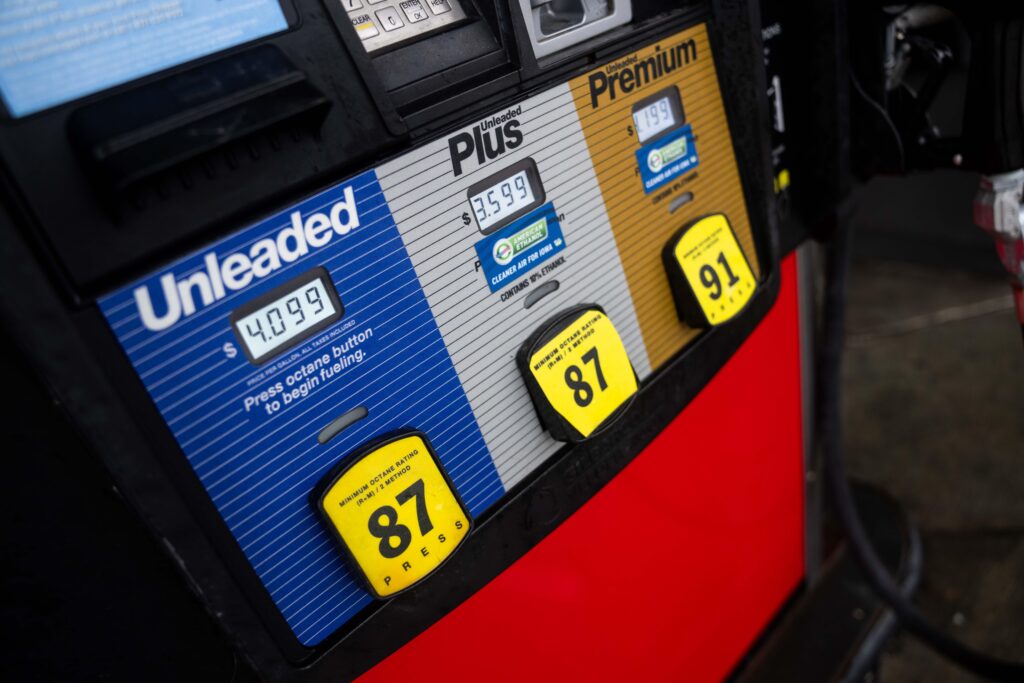
Even though the United States continues to rank among the top oil-producing nations worldwide, many American drivers are still experiencing significant discomfort when filling up their tanks. Ongoing tensions in the Middle East, combined with uncertainty surrounding key shipping routes, have sent ripples through energy markets.
In response, some industry executives are delivering a straightforward piece of advice to help ease pressure on household budgets: cut back on driving. The suggestion, while practical on the surface, has left some observers wondering why such basic measures are being highlighted now.
“People should try to drive less. They should try to conserve energy,” Chevron President of Downstream & Midstream Andy Walz told CBS News.
“Energy’s essential for people’s lives, but we should conserve it.”
A common question circulating among frustrated consumers is why gasoline prices in the United States are climbing despite the country’s robust domestic oil production. Experts highlight two important structural reasons that help explain the disconnect between local output and pump prices.
First, crude oil functions as a globally traded commodity, meaning its value is determined by worldwide supply and demand dynamics rather than solely by what happens inside American borders. Any disruption at a vital passage such as the Strait of Hormuz, which accounts for roughly 20 percent of the world’s liquefied natural gas shipments, can push up benchmark prices like Brent crude. Those increases then translate directly to higher costs at gas stations across the country, no matter where the oil itself originates.
Second, a technical mismatch exists in the types of crude oil the United States produces compared with what many domestic refineries are designed to process efficiently. American wells tend to yield “light” crude, whereas a substantial portion of U.S. refining capacity is built to handle “heavy” crude more effectively. Because of this difference, the nation cannot fully shield itself from fluctuations in supplies coming from other regions, including the Middle East.
The current environment in energy markets continues to shift rapidly. After several days of limited vessel traffic and the presence of a U.S. military blockade, there was a momentary sense of relief on Friday. News that the strategic waterway could soon reopen triggered a sharp drop in oil prices, with some benchmarks falling by more than 10 percent in a single session.
That optimism proved short-lived, however. By Saturday, Iran’s joint military command declared that restrictions on the Strait of Hormuz were being reinstated. Officials stated that control of the area had “returned to its previous state” under the management of their armed forces.
The announcement has once again heightened concerns across the energy sector, especially since the strait serves as the main route for approximately 21 million barrels of oil each day.Compounding the uncertainty is the fragile state of regional diplomacy. Although a 10-day ceasefire agreement was reached between Israel and Lebanon on Thursday, maritime activities in the broader area remain highly volatile.
The U.S. Central Command has confirmed that a substantial naval force, consisting of more than a dozen ships and around 10,000 personnel, stays actively engaged in monitoring developments to maintain stability.
For everyday Americans hoping for a quick fix to bring down fuel costs, no simple solution appears available at the moment. Industry voices caution that prolonged instability could create even greater challenges ahead.
“If this goes on for an extended period of time, it’s probably gonna get tougher,” Walz warned, noting that while the U.S. has local production to buffer some of the impact, the global supply chain is beginning to show signs of strain that could lead to broader product shortages if stability isn’t restored.
In the meantime, consumers may need to adjust their habits and expectations as they navigate this period of elevated energy prices. Whether through reduced driving, greater attention to fuel efficiency, or other conservation steps, the emphasis from leaders in the sector remains on careful management of demand until global conditions improve.
The coming weeks will likely prove critical in determining how deeply these pressures affect American wallets and daily routines.