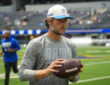
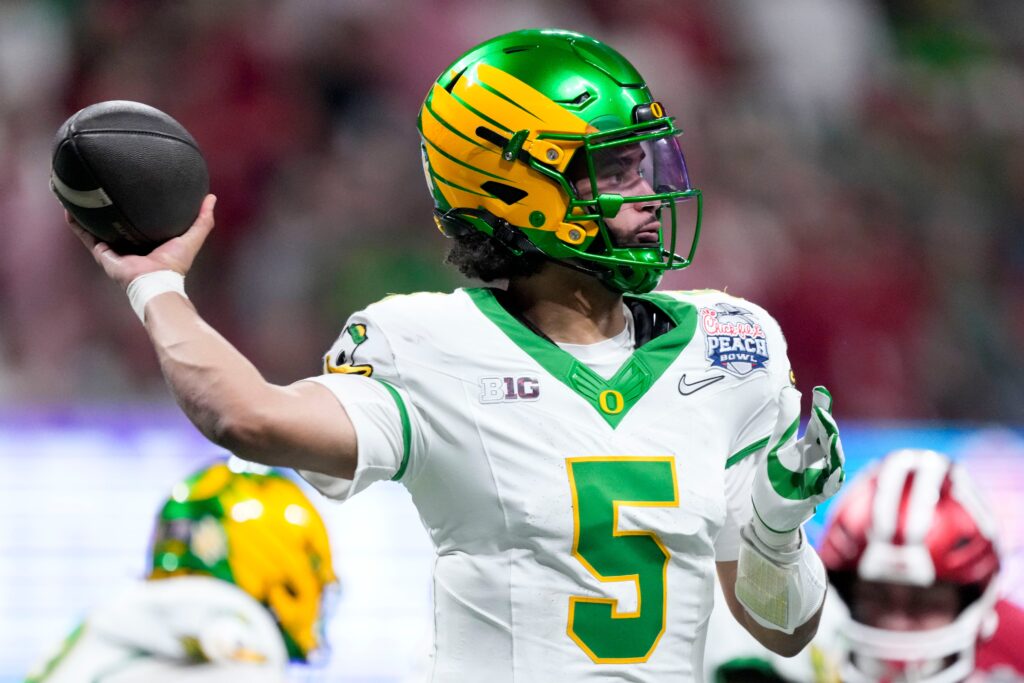
The Oregon Ducks entered their College Football Playoff semifinal matchup against the top-seeded Indiana Hoosiers with high expectations. Quarterback Dante Moore, once a five-star high school recruit, had endured early challenges at UCLA before flourishing under head coach Dan Lanning in Eugene.
With one more victory, Oregon could have advanced to face Miami in the national championship game, positioning themselves as strong contenders for the program’s first title.
A dominant performance in that contest might have also elevated Moore’s standing ahead of the 2026 NFL Draft. Many analysts viewed him as a consensus top-five selection, potentially even the No. 1 overall pick in Pittsburgh, especially if he outperformed his direct rival, Indiana’s Heisman Trophy-winning quarterback Fernando Mendoza.
The game, held at the Peach Bowl in Atlanta on January 9, 2026, unfolded in the opposite direction. Indiana delivered a commanding 56-22 victory, marking a second win over Oregon that season.
The Hoosiers capitalized early, with defensive back D’Angelo Ponds intercepting Moore on the opening play and returning it 25 yards for a touchdown. That pick-six set the tone for a night filled with struggles for the Ducks’ offense.
Moore faced relentless pressure from Indiana’s defense throughout the evening. He committed multiple turnovers in the first half, including fumbles and another interception, which allowed the Hoosiers to build an insurmountable lead.
Despite the setbacks, Moore managed to accumulate 285 passing yards and two touchdowns by the final whistle, but the damage was done early, with the game effectively decided by halftime.
Mendoza, showcasing the precision that earned him the Heisman, completed 17 of 20 passes for 177 yards and five touchdowns. His clinical efficiency highlighted the contrast between the two quarterbacks, as Indiana’s offense operated smoothly while Oregon’s faltered under duress.
The Ducks’ locker room carried a heavy atmosphere after the defeat. With their season concluded and dreams of a championship dashed, attention quickly shifted to Moore’s future. Reporters surrounded him, eager for clarity on whether he would declare for the NFL Draft or return for another year in college.
“I don’t know my decision yet,” he said bluntly.
The timeline adds urgency to Moore’s choice. The NCAA transfer portal for the 2026 cycle closes on January 16, leaving limited time for any potential moves if he opts to stay. Should he enter the draft, Oregon would face a significant challenge in replacing him at the starting quarterback position, with little margin for error in rebuilding the offense.
If Moore declares for the NFL, head coach Dan Lanning and the Ducks’ staff will turn to the transfer portal for solutions. Names like Dylan Raiola, who has shown promise despite injury setbacks at Nebraska, and Husan Longstreet, a former five-star talent from USC, have surfaced as potential targets. Additionally, Sam Leavitt, a highly regarded quarterback from Arizona State with Oregon ties, could emerge as a top option if he becomes available.
The outcome of this decision will ripple through Oregon’s program and the broader landscape of college football. A return by Moore could provide continuity and another shot at national contention, while an early departure would force quick action in a competitive portal window.
As the Ducks process the disappointment of their playoff exit, the focus now rests squarely on what comes next for their talented quarterback.