House Minority Leader Hakeem Jeffries on Thursday delivered a pointed rebuke of President Donald Trump’s actions during the World Cup trophy ceremony, telling reporters that the president had disgraced himself in front of players, officials and fans.
Jeffries, a Democrat from New York, spoke during a news conference alongside other House Democratic leaders as the party detailed its priorities ahead of the midterm elections. The gathering took place the same day the House approved a Democratic-sponsored war powers resolution designed to constrain the president’s authority to conduct military operations against Iran without further congressional approval.
“He disgraced himself after the World Cup final,” Jeffries said. “He looked like the old man in a club that no one wanted around and he’s the only one that couldn’t figure it out.”
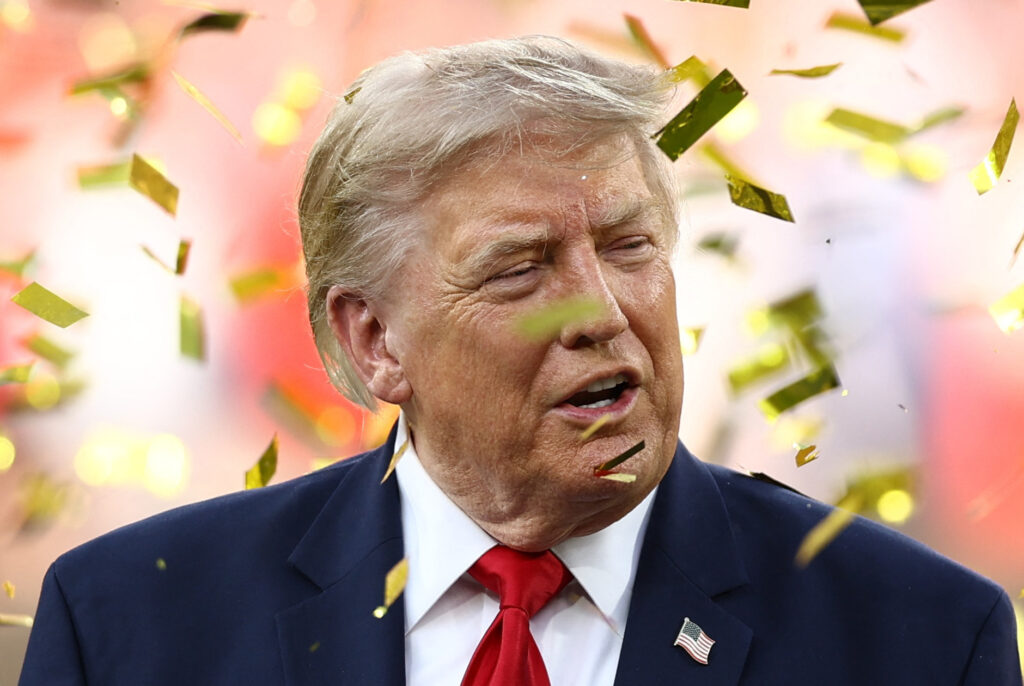
The comments centered on Trump’s presence at MetLife Stadium in New Jersey on Sunday, when Spain defeated Argentina 2-0 to claim the World Cup title. As Spanish players gathered to lift the trophy, Trump walked onto the field and was met with widespread booing from the crowd.
FIFA President Gianni Infantino moved to guide the president away from the celebration. Trump, however, stayed near the edge of the group of athletes and officials. He then performed a short version of the dance move that has become a familiar part of his public appearances.
Jeffries framed the episode as an awkward and unwelcome intrusion into a moment that belonged to the victorious Spanish team. His remarks came amid broader Democratic efforts to highlight differences with the administration on both foreign policy and domestic issues.
The war powers measure that passed the House earlier Thursday sought to reassert Congress’s role in decisions involving the use of military force. Democratic leaders presented the resolution as a necessary check on executive power, particularly in the context of tensions involving Iran.
At the news conference, party officials also outlined legislative goals they intend to emphasize in the coming months. Those priorities include economic measures, health care proposals and oversight of the executive branch. Jeffries used the platform to connect the World Cup incident to what he described as a pattern of self-centered behavior by the president.
MetLife Stadium, located in the New York metropolitan area, hosted the final match of the tournament and drew a large international audience. The venue has long been a site for major sporting events, and the championship game attracted significant attention from fans of both Spain and Argentina.
Spain’s victory marked the culmination of weeks of competition. Players and coaches celebrated on the field as the trophy was presented, creating a scene of collective joy that stood in contrast to the political reaction that followed days later.
Trump’s appearance at the stadium had been anticipated, given the host nation’s role in the tournament. Yet the reception he received from sections of the crowd and the subsequent interaction near the trophy presentation quickly became the subject of political commentary.
Jeffries’ criticism added a new layer to the partisan exchanges that have characterized relations between House Democrats and the White House. The minority leader has frequently used public appearances to challenge the president’s conduct and policy choices.
Democratic aides said the midterm agenda discussion was intended to give voters a clear sense of the party’s direction. The inclusion of the World Cup remarks underscored how even sporting events can become part of the ongoing political conversation in Washington.
The House vote on the war powers resolution reflected longstanding debates over the balance of authority between Congress and the president in matters of national security. Supporters argued the measure would prevent unilateral military actions without adequate legislative input.
Jeffries, who has represented his Brooklyn-based district for years, has emerged as a leading voice for Democrats in the House. His willingness to address the trophy ceremony moment directly illustrated the intensity of current political divisions.
As Spanish players continued their celebrations on Sunday, the brief presence of the president near the group remained a focal point for critics. Infantino’s attempt to move Trump along highlighted the desire of organizers to keep the focus on the athletes.
The episode occurred against the backdrop of a highly competitive World Cup that captured global attention. Argentina, as the defending champions from the previous tournament, had entered the final with strong expectations, only to fall short against a determined Spanish side.
By Thursday, the on-field result had given way to political interpretation in the nation’s capital. Jeffries’ description of the president as an unwanted presence at the celebration left little ambiguity about the minority leader’s view of the events.
House Democrats plan to continue pressing their agenda in the weeks ahead, combining legislative votes with public messaging that contrasts their approach with that of the administration. The World Cup comments formed one element of that broader strategy.
Trump has not issued an immediate public response to Jeffries’ specific characterization. The president has previously defended his appearances at major events as expressions of national pride and support for American interests on the world stage.
The combination of the sports spectacle, the diplomatic role of FIFA leadership and the subsequent political fallout demonstrated how quickly international athletic competitions can intersect with domestic partisan debates. For Jeffries and his colleagues, the trophy ceremony provided an opportunity to criticize the president’s judgment and presence in a highly visible setting.
As the midterm campaign season intensifies, such exchanges are likely to continue. Democrats signaled they will keep focusing on both policy differences and moments they believe illustrate larger questions of leadership and decorum.