
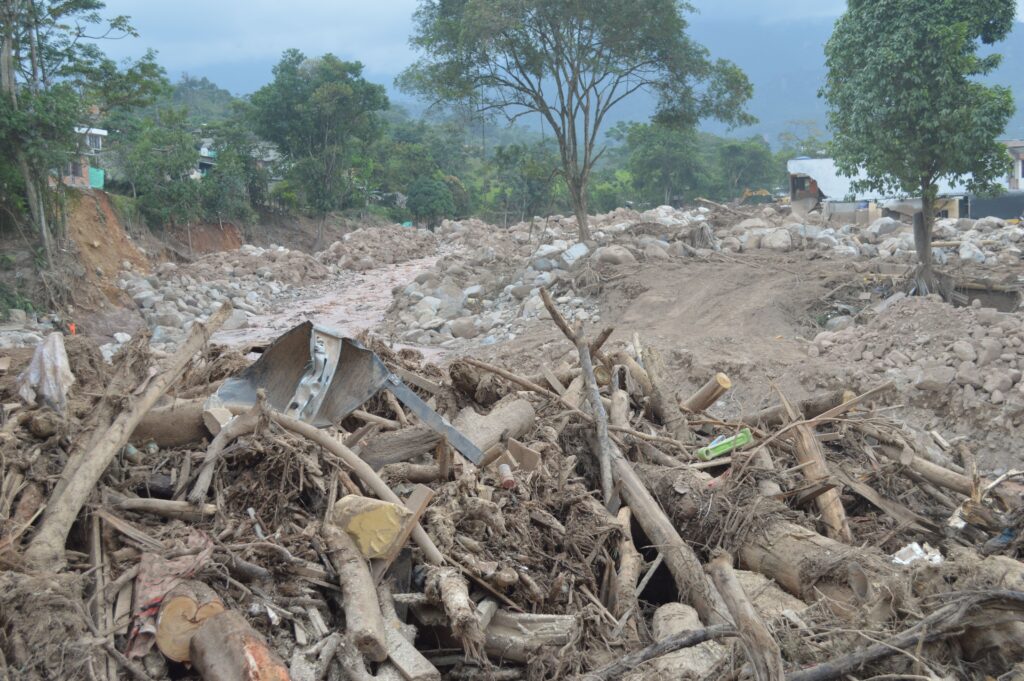
Recent heavy rains across Colorado’s Western Slope have triggered several destructive mudslides, prompting local communities to roll up their sleeves and begin the hard work of recovery.
While the precipitation offers welcome relief from lingering drought conditions, it has also highlighted the persistent dangers posed by flash flooding and debris flows in a region still recovering from past wildfires.
In one notable event near Gunnison, a thunderstorm unleashed at least three significant mudslides along East Portal Road and the associated campground in Curecanti National Recreation Area.
The slides temporarily stranded 21 people and deposited massive amounts of boulders, rocks, and mud—up to six feet deep in places—across the roadway.
This area had previously been affected by the 2025 South Rim Fire, leaving the landscape more vulnerable to rapid runoff. Park officials have since closed the road, campground, and picnic areas while assessments and repairs get underway.
Further south and west, storms over the weekend impacted the Telluride area. Mud and debris flowed onto Main Street, inundated classrooms at the Telluride Intermediate School, and caused extensive flooding inside the beloved Michael D. Palm Theatre—home to major events like the Telluride Film Festival.
San Miguel County officials described the damage to the historic venue as particularly heartbreaking for the community. Mudslides also temporarily blocked Highway 145, stranding motorists who required assistance from deputies to escape the thick muck.
Local residents have already started clearing streets and properties, demonstrating the resilience typical of mountain towns that regularly contend with nature’s unpredictability. Yet the challenges are far from over. A slow-moving storm system has been delivering nearly daily afternoon thunderstorms, feeding monsoonal moisture into the region and keeping flood risks elevated.
Cameron Simcoe, a meteorologist with the National Weather Service in Pueblo, captured the situation succinctly: “With chances of heavy rain showers and thunderstorms every day, that’s going to be a risk pretty much every day, unfortunately,” he said.
Experts note that while the rains are beneficial for easing drought in western Colorado, the same moisture that nourishes the land can quickly turn hazardous when storms linger.
Similar patterns are expected to shift toward the Front Range and Eastern Plains in the coming days, with meteorologists urging everyone to monitor forecasts closely before heading into the backcountry or burn-scar zones. Burn areas from fires as recent as 2024 and 2025 remain particularly sensitive, requiring far less rainfall to produce dangerous debris flows.
As cleanup continues in Telluride, Gunnison, and surrounding communities, the incidents serve as a timely reminder of Colorado’s dynamic environment.
Residents and visitors alike are being encouraged to stay informed, heed weather warnings, and respect the power of mountain storms. The balance between much-needed moisture and the ever-present threat of mudslides defines the current summer reality across the Western Slope.