
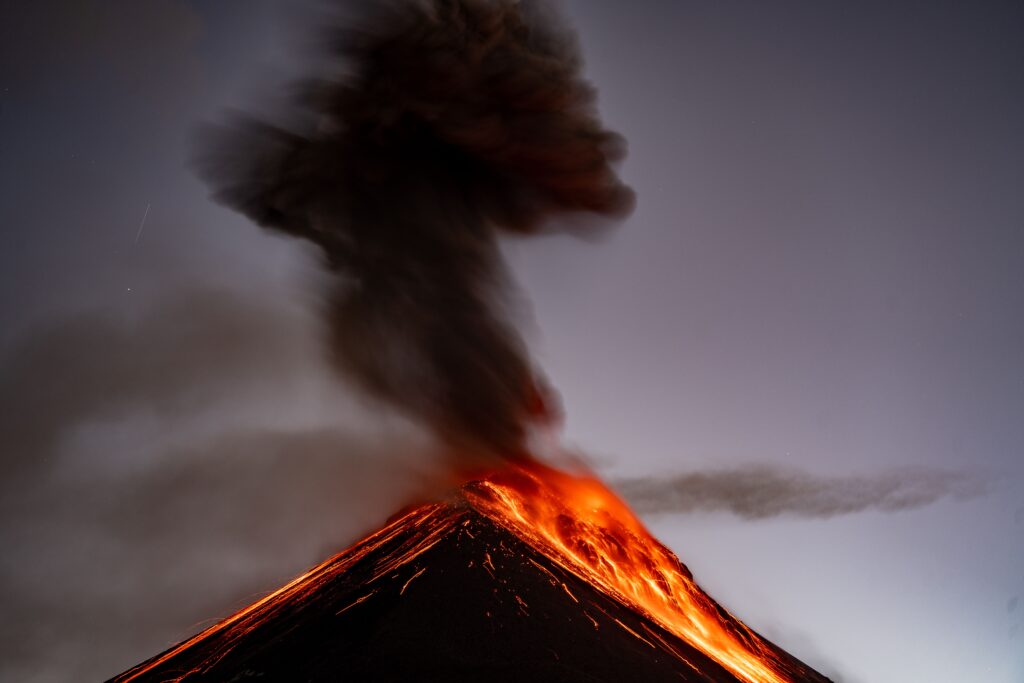
In the remote wilderness of Russia’s Kamchatka Peninsula, perhaps the region’s most restless volcano has reminded everyone of its power.
Early on the morning of July 19, Shiveluch erupted forcefully, propelling a massive column of ash and gas high into the sky. According to satellite observations, the plume climbed to an impressive 12 kilometers (over seven miles) above sea level, captured between roughly 7:17 and 7:32 a.m. local time.
This dramatic event underscores the volatile nature of the peninsula, a place where tectonic forces constantly shape the landscape.
Shiveluch stands as one of Kamchatka’s most active volcanic systems, formed by a complex that includes the ancient remnants of Old Shiveluch, a broad caldera, and the younger, more vigorous dome known as Young Shiveluch. Geologists estimate the entire structure dates back between 60,000 and 70,000 years, giving it a long history of powerful outbursts.
Situated about 50 kilometers from the small village of Klyuchi in the Ust-Kamchatsky District, and roughly 450 kilometers from the regional hub of Petropavlovsk-Kamchatsky, Shiveluch’s latest activity has drawn attention from monitoring services.
The Kamchatka branch of the Russian Academy of Sciences’ Geophysical Service tracked the eruption closely through satellite imagery, highlighting how modern technology helps scientists stay ahead of these unpredictable natural events.
While eruptions like this can pose risks to aviation—ash particles can damage aircraft engines and reduce visibility—authorities have not reported any immediate threats to nearby communities or significant disruptions on the ground.
The peninsula’s sparse population helps limit potential impacts, though residents and travelers are wise to heed any updates from local officials.
Shiveluch’s behavior fits into a broader pattern for this part of the world. Kamchatka sits along the Pacific Ring of Fire, a zone of intense seismic and volcanic activity.
Over the years, the volcano has produced everything from steady lava dome growth to explosive episodes that send ash drifting far across the region. Each event offers scientists valuable data on how these mountains evolve and interact with the atmosphere.
As the ash begins to settle and disperse, this eruption serves as a vivid illustration of Earth’s dynamic geology. It is a stark reminder that even in remote corners of the planet, nature can stage spectacular—and humbling—displays at a moment’s notice.
Monitoring continues, and further developments will likely provide more insight into Shiveluch’s ongoing activity.