
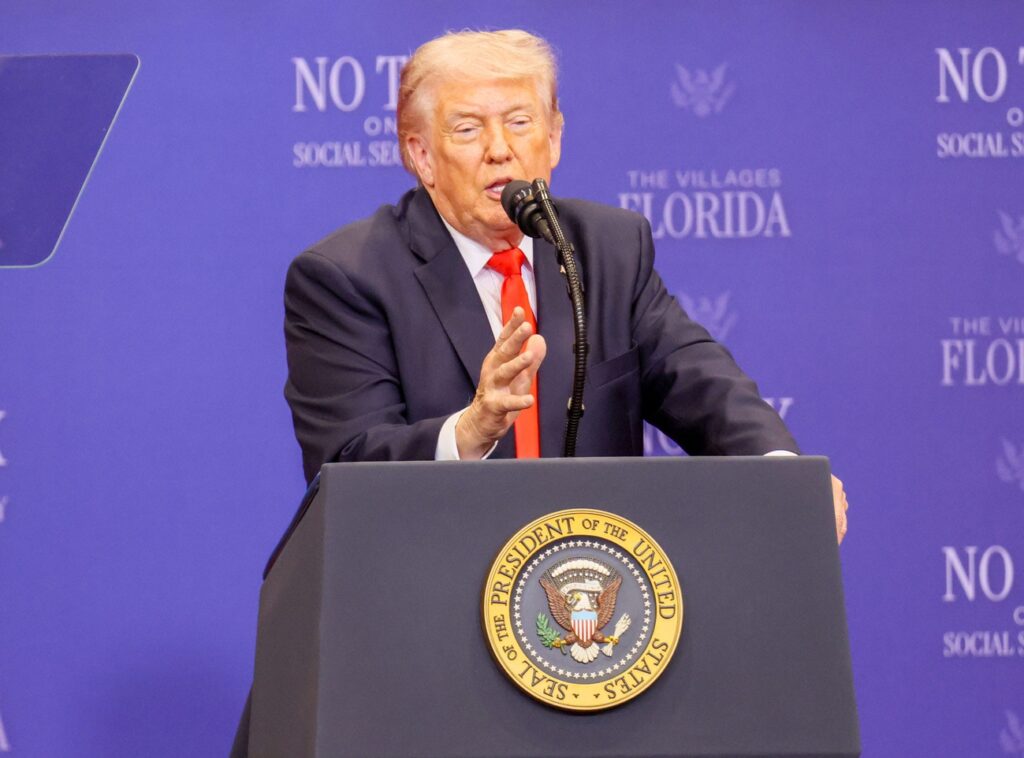
President Donald Trump just fired off a Truth Social post, shared via the platform he owns, that underscores the ongoing tensions surrounding U.S. involvement in the conflict with Iran. The post reflects his characteristic direct style in addressing foreign policy challenges, emphasizing strength against perceived threats from Tehran.
In the post, Trump stated: “Republicans should add Iran to the Russian Sanctions Bill. That’s what Lindsey [Graham] wanted to do, and it was going to happen. IMPORTANT!!! President DJT.”
The Iran conflict has become a flashpoint for the Republican Party, revealing significant internal controversies that pit traditional hawkish instincts against the “America First” isolationist sentiments that helped propel Trump to victory.
Many Republicans initially rallied behind strikes aimed at degrading Iran’s military capabilities and preventing nuclear breakout, viewing it as a necessary correction to years of perceived weakness under previous administrations. Figures like Sen. Lindsey Graham and others praised the operations for targeting threats that had long menaced U.S. allies and interests.
However, the war’s prolongation has exposed fractures. A core tension lies in the party’s evolution away from endless foreign entanglements. Trump campaigned on avoiding “forever wars,” resonating with a base weary of Middle East quagmires that drain resources and American lives.
Anti-interventionist voices within the GOP, including Rep. Thomas Massie, Sen. Rand Paul, and influencers like Tucker Carlson, have criticized the engagement as unconstitutional without clear congressional approval and contrary to MAGA priorities of focusing on domestic issues like the economy and border security.
Fiscal conservatives worry about the soaring costs—potentially hundreds of billions in funding requests—exacerbating the national debt at a time when voters are sensitive to inflation and gas prices spiked by disruptions in energy markets, such as threats to the Strait of Hormuz.
Midterm elections loom, and polls show the conflict is broadly unpopular with the American public, including segments of the Republican base, creating political liability for incumbents.
Constitutional concerns add another layer. Debates rage over whether the president has unilateral authority for sustained operations or if Congress must authorize them under its war powers. Some GOP lawmakers have broken ranks to support resolutions demanding greater legislative oversight, highlighting unease even among Trump allies about executive overreach in military matters.
Additionally, the shifting nature of the conflict—periods of intense strikes followed by ceasefires, negotiations, and renewed threats—has fueled perceptions of inconsistency.
Hardliners fear incomplete regime change leaves Iran emboldened, while others dread mission creep into nation-building or prolonged occupation. This divide mirrors broader party realignments: neoconservative interventionism versus pragmatic restraint.
Trump’s approach, often communicated in real-time via Truth Social, amplifies these debates. While it energizes supporters who see him as tough on adversaries, it alienates those prioritizing de-escalation and domestic focus.
As the situation evolves, Republicans must navigate loyalty to the president against electoral realities and ideological consistency. The controversy ultimately stems from balancing national security imperatives with the costs—human, financial, and political—of another major Middle East conflict.
This dynamic will likely shape GOP strategy heading into future elections, testing whether the party can unify around a coherent foreign policy vision.