
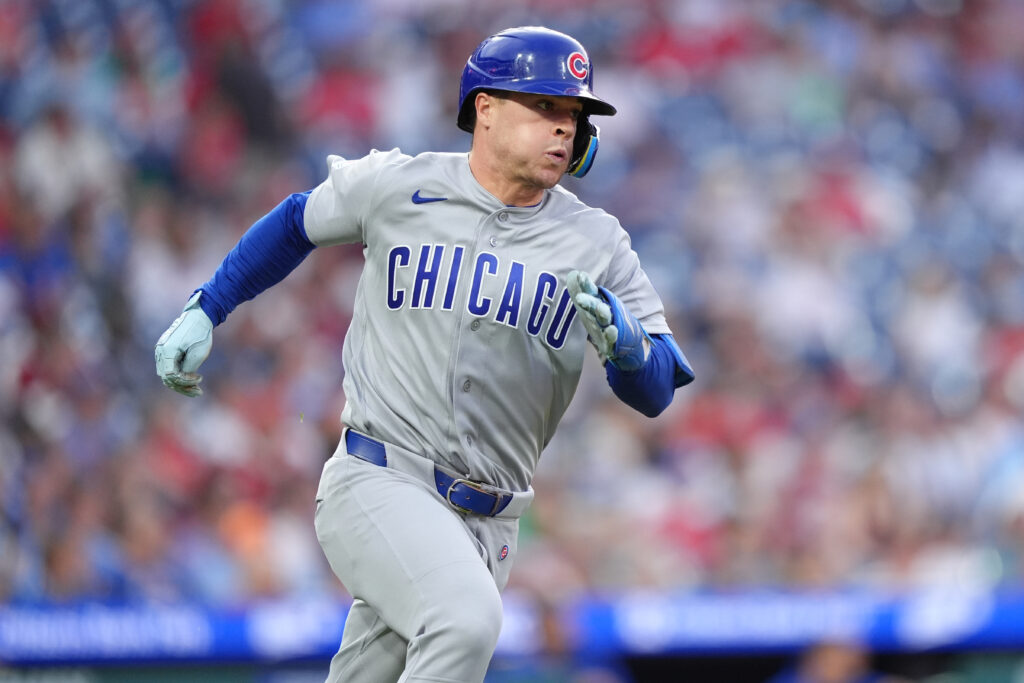
The Chicago Cubs’ winter will be defined as much by what the they decide to keep as by whom they add, and few names sit more squarely at that intersection than Matt Shaw.
The versatile infielder-outfielder has spent years on rumor boards, not because his talent is in doubt, but because Wrigley Field’s infield is already crowded and the club’s pitching needs remain obvious.
As free agency looms for corner outfielders Seiya Suzuki and Ian Happ, the organization faces a choice that is less about whether Shaw belongs in the majors and more about where he can actually play every day.
Mark Feinsand of MLB.com framed that dilemma in an early look at 2026-27 trade candidates, noting that Shaw has long been a staple of those lists and that Chicago could slide him to a corner outfield spot if it keeps him.
Feinsand also pointed out the other side of the ledger: if the Cubs hunt for starting pitching in a relatively thin free-agent market, Shaw’s ability to handle both second and third base makes him an appealing chip for clubs that need infield help rather than another nameless prospect.
That combination of present-day utility and years of remaining control is why his name keeps resurfacing even when the Cubs are not openly shopping him.
The logic is straightforward. Chicago has already committed to a core that occupies the dirt, which leaves Shaw as a high-floor piece without a locked-in home.
Moving him to the grass is possible, especially if the club lets Happ and Suzuki walk and prefers to fill those spots internally. Trading him, however, would address a more urgent problem.
The Cubs have spent recent winters trying to stabilize a rotation that still looks thinner than their lineup, and a young, major-league-ready defender who can play multiple positions tends to command more from pitching-rich teams than another lottery ticket from a farm system that has already been thinned by earlier deals.
None of this means a trade is inevitable. Shaw’s value as right-handed depth and as a potential long-term outfielder gives Chicago a reason to pause.
A new landing spot would need to offer both a clear everyday role and a pitcher who can change the 2027 outlook. For now, he remains what he has been for two winters running: a player whose versatility is an asset and a complication at the same time.
How the Cubs resolve that tension will say as much about their winter strategy as any free-agent signing they announce.