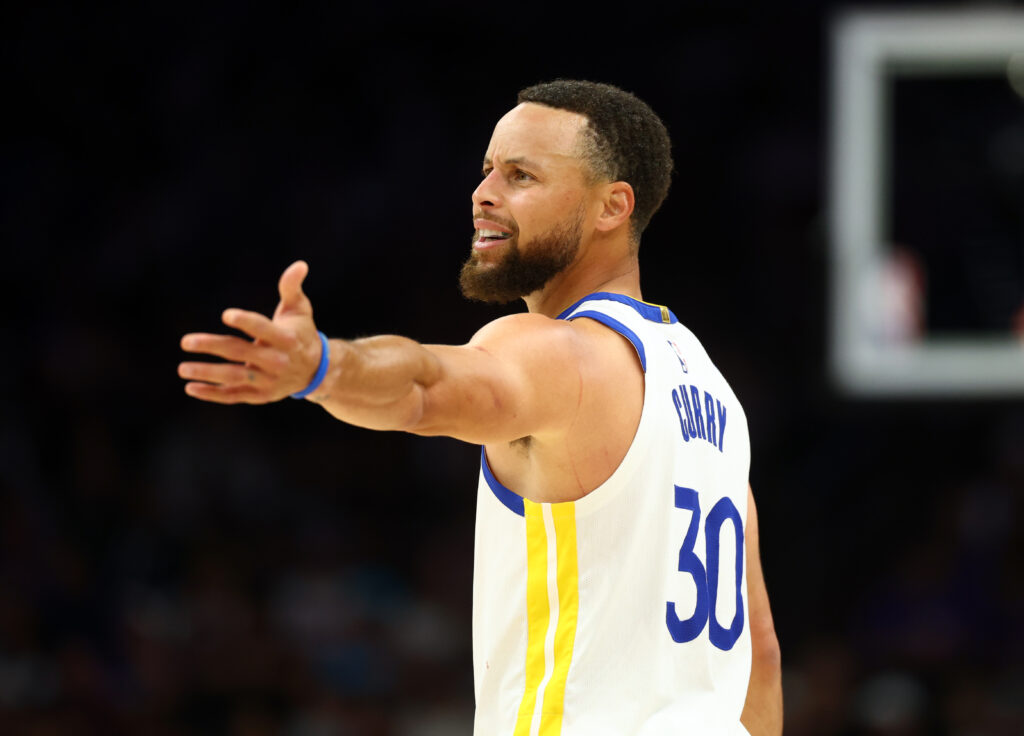
Golden State Warriors general manager Mike Dunleavy Jr. offered a revealing look at the franchise’s long-term plans for Stephen Curry this week, acknowledging a scenario few expected to hear aloud.
While the organization remains committed to seeing the greatest shooter in basketball history finish his career in the only uniform he has ever worn, Dunleavy made clear that the final say ultimately belongs to Curry himself.
“Ultimately it’s his call, his decision, whether that’s allowing his contract to run out and move on or — look, if he comes to me and wants to be moved, Joe [Lacob] and I will talk it through,” Dunleavy said. “We wouldn’t love it. But he’s earned the right to do what he wants.”
The comments marked the first time Warriors leadership has publicly left the door open to a trade involving their franchise cornerstone. At the same time, Dunleavy stressed that no such conversation is underway and that he fully expects Curry to remain in the Bay Area.
“I’m pretty confident Steph will finish his career with the Warriors,” he said. “But as far as the messaging or any idea that he’d be anywhere else, that’s not a thing we’re looking at or he’s looking at.”
The remarks arrive at a delicate moment for the organization. Curry becomes eligible to sign a two-year extension on Aug. 29 that could keep him under contract through the 2028-29 season and be worth roughly $136.7 million at the maximum. Dunleavy noted that Curry has never suggested he wants to retire elsewhere.
“He hasn’t,” Dunleavy said. “That’s always been the message. That’s always been what he’s discussed. I think that’s tracking quite well.”
Behind the public confidence lies a more complicated reality. The Warriors spent the offseason exploring bold moves that could have extended Curry’s championship window, including serious interest in LeBron James and Anthony Davis, as well as an unsuccessful pursuit of Jaylen Brown.
Those efforts fell short, leaving the team to balance the desire to maximize Curry’s remaining years against owner Joe Lacob’s stated interest in building a competitive roster that can succeed after Curry eventually retires.
Dunleavy has repeatedly emphasized a measured approach to roster construction, one that avoids emptying the draft cupboard for short-term gains.
That philosophy creates an inherent tension: the Warriors want to give Curry every realistic chance at another title, yet they are reluctant to mortgage the future in the process.
Still, Dunleavy left little doubt about Curry’s priorities. “There are two things I’m confident about with Steph,” he said. “He really, really wants to win and he wants to finish his career as a Warrior.”
For a franchise defined by Curry’s brilliance, the coming weeks will test whether those twin desires can continue to align.